
Strategic Partnerships and ESG Value Creation: Wärtsilä's Role in Powering Senegal's Boto Gold Mine with Renewable-Ready Energy Solutions
The global mining sector is undergoing a transformative shift toward renewable energy integration, driven by both regulatory pressures and the economic advantages of cleaner technologies. At the forefront of this transition is Wärtsilä, a Finnish energy technology firm, whose recent five-year Operation and Maintenance (O&M) agreement with Boto Gold Mine in Senegal exemplifies how strategic partnerships can unlock long-term ESG value while ensuring operational resilience in remote, off-grid locations.
A Model for Renewable-Ready Mining: The Wärtsilä-Boto Collaboration
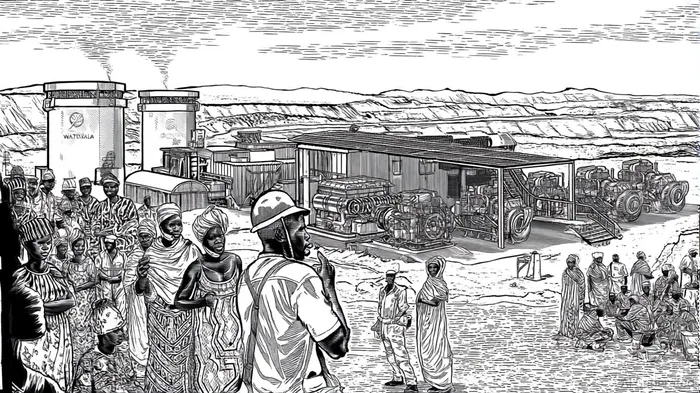
Wärtsilä's 23 MW power plant at the Boto Gold Project, operated by Moroccan mining group Managem, is a case study in tailored energy solutions for the mining sector. The plant, comprising six Wärtsilä 32 engines (2.7 MW each) and four high-speed diesel generators (1.5 MW each), is designed to meet the mine's energy demands while enabling future integration of solar power[1]. This flexibility is critical for Senegal's Plan Sénégal Émergent, a national strategy emphasizing industrial growth and energy independence[2].
The partnership leverages Wärtsilä's AI-powered anomaly detection and remote operational support to optimize fuel efficiency and minimize downtime[1]. By 2025, the power plant is expected to support over 1,500 direct and indirect jobs in the Kédougou region, aligning with the mine's broader economic development goals[3]. For investors, this project underscores the value of energy providers that combine technological innovation with localized socio-economic impact.
ESG Metrics and Long-Term Value Creation
Wärtsilä's sustainability targets, including a 20% reduction in Scope 1 and 2 emissions by 2023 (compared to a 2021 baseline) and a 15% cut in Scope 1 emissions by 2025, position the company as a leader in decarbonizing industrial energy systems[4]. While specific ESG metrics for the Boto project are not yet disclosed, the mine's alignment with the SMO Gold ESG Benchmark—a 2025 framework emphasizing renewable energy integration, job creation, and community investment—suggests a structured approach to accountability[5].
The Boto Gold Mine itself has committed to significant community development initiatives, including urban infrastructure projects and clean water access programs[6]. These efforts, paired with Wärtsilä's flexible power solutions, create a dual pathway for ESG value: reducing environmental footprints while enhancing social equity. For instance, the mine's €350 million investment is projected to yield 170,000 ounces of gold annually for the first three years of operations, with a 12-year mine life[3]. Such longevity ensures sustained economic benefits for Senegal, reinforcing the project's appeal to impact-focused investors.
Strategic Partnerships as a Catalyst for Renewable Adoption
The success of the Wärtsilä-Boto collaboration hinges on its strategic framework. Africa Power Services (APS), the EPC contractor, played a pivotal role in commissioning the power plant by December 2024, with operations slated for Q1 2025[7]. This timeline reflects the importance of multi-stakeholder coordination in deploying renewable-ready infrastructure. Wärtsilä's regional presence in Dakar further ensures localized support, a critical factor in maintaining reliability in remote mining operations[8].
For investors, the project highlights a broader trend: energy firms with modular, scalable technologies are better positioned to meet the mining sector's evolving needs. Wärtsilä's 32 engines, for example, have a proven track record of 30 years of global deployment, generating over 8,000 MW of power[9]. This reliability is essential for mines like Boto, where grid connectivity is nonexistent and energy security is a top priority.
Future Outlook and Investment Implications
The Boto Gold Mine-Wärtsilä partnership is a microcosm of the mining industry's shift toward sustainable energy systems. By 2030, renewable integration in mining is projected to reduce greenhouse gas emissions by over 50%[10]. Wärtsilä's role in this transition—through flexible power solutions and AI-driven optimization—positions it as a key player in the renewable energy value chain.
For investors, the project underscores the importance of evaluating ESG performance not just in isolation but through the lens of strategic collaboration. The Boto mine's alignment with Senegal's national goals, coupled with Wärtsilä's decarbonization roadmap, offers a blueprint for scalable, replicable models in other resource-rich, off-grid regions.
Conclusion
The integration of renewable energy in mining operations is no longer a niche pursuit but a strategic imperative. Wärtsilä's partnership with Boto Gold Mine demonstrates how energy providers can align technological innovation with ESG objectives, creating value for stakeholders while supporting national development agendas. As the mining sector continues to prioritize sustainability, investments in companies like Wärtsilä—those that bridge energy resilience and environmental stewardship—will be critical to unlocking the next phase of responsible resource extraction.







Comentarios
Aún no hay comentarios