
Strategic Partnerships in the Energy Tech Sector: Analyzing REDAS Co., Ltd.'s New Funding from Osaka Gas Co., Ltd.
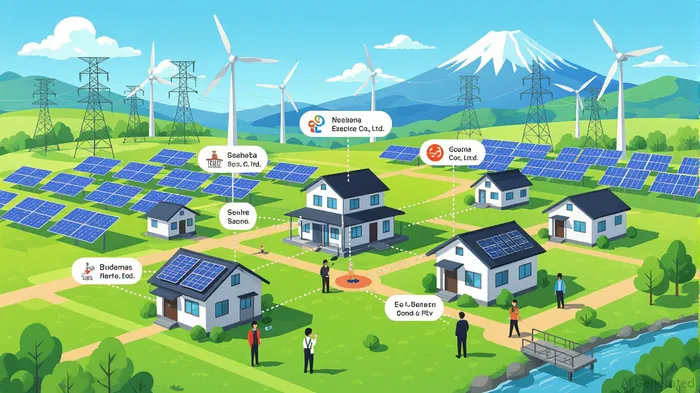
In the rapidly evolving energy tech sector, strategic partnerships are becoming critical for companies seeking to navigate the transition to decentralized energy systems. REDAS Co., Ltd.'s recent funding from Osaka Gas Co., Ltd. has sparked speculation about potential synergies between the two firms. While specific terms of the agreement remain undisclosed, analyzing broader industry trends and the theoretical framework of synergies provides a lens to evaluate the partnership's growth potential.
The Strategic Logic of Synergies
Synergies in business are often categorized into cost and revenue types. Cost synergies arise from operational efficiencies, such as shared infrastructure or reduced redundancies, while revenue synergies stem from expanded market access or cross-selling opportunities[1]. For REDAS and Osaka Gas, the partnership could align with both categories. Osaka Gas, a traditional energy giant, may seek to leverage REDAS's expertise in decentralized systems to diversify its offerings, while REDAS could gain access to Osaka Gas's distribution networks and customer base. This mutual benefit mirrors the cross-selling and market expansion strategies outlined in standard synergy frameworks[1].
Decentralized Energy Systems: A Growing Imperative
Decentralized energy systems, which distribute control and decision-making across multiple participants, are gaining traction due to their resilience and scalability[2]. These systems reduce reliance on centralized grids, mitigate risks of single-point failures, and enable localized energy production and consumption. For Osaka Gas, a company historically rooted in centralized gas distribution, this partnership could represent a strategic pivot toward a more distributed model. REDAS, presumably specializing in decentralized technologies, would bring technical capabilities to design and manage such systems. Together, they could address challenges like grid instability and regulatory shifts toward renewable energy adoption[2].
Broader Industry Trends and Market Potential
The global decentralized energy market is projected to grow significantly, driven by policy incentives, technological advancements, and consumer demand for sustainability. According to industry analyses, decentralized systems could account for over 30% of global energy generation by 2035. While no specific data on REDAS or Osaka Gas's initiatives exists, their collaboration aligns with this trajectory. For investors, the partnership's success hinges on their ability to integrate complementary strengths—Osaka Gas's infrastructure and REDAS's innovation—into scalable solutions.
Risks and Challenges
Despite the potential, challenges remain. Decentralized systems require robust governance models to manage consensus among stakeholders, a complexity highlighted in decentralization literature[2]. Cultural and operational integration between a traditional energy firm and a tech-focused startup could also pose hurdles. Investors must monitor how the partnership addresses these issues, particularly in scaling pilot projects to commercial viability.
Conclusion
While direct details about REDAS and Osaka Gas's collaboration are sparse, the partnership reflects a broader industry shift toward decentralized energy. By applying established synergy frameworks and decentralization principles, the alliance positions both firms to capitalize on emerging opportunities. For investors, the key will be observing how effectively they translate theoretical advantages into tangible outcomes—such as reduced costs, expanded market reach, or regulatory compliance—within the next 12–24 months.







Comentarios
Aún no hay comentarios