
Strategic Partnerships as Catalysts for Tech Growth: Arelac's New Microsoft Partnership and Its Implications for Long-Term Valuation
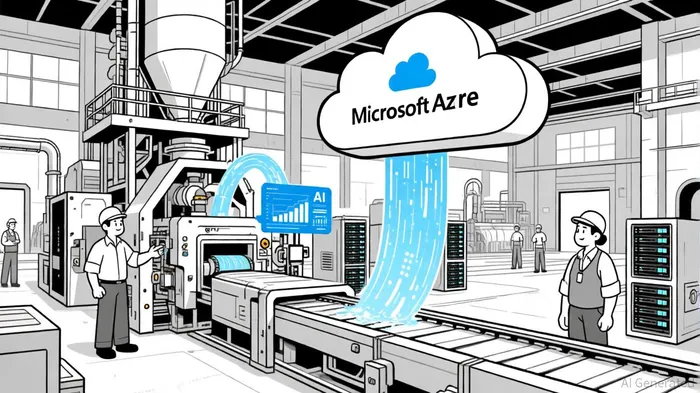
In the rapidly evolving tech landscape, strategic partnerships have emerged as critical drivers of innovation and valuation growth. Microsoft's 2025 restructuring of its AI and cloud ecosystems—particularly its redefined alliance with OpenAI—has set a precedent for how tech giants leverage collaborations to secure market dominance. While Arelac, a mid-sized cement and concrete product manufacturer, has not publicly detailed the specifics of its partnership with MicrosoftMSFT--, the broader context of Microsoft's strategic priorities and financial commitments offers a framework to assess the potential implications for Arelac's long-term valuation.
Microsoft's 2025 Strategic Shifts: A Blueprint for Partnerships
Microsoft's FY2025 financial performance underscores its dominance in cloud and AI markets. The company reported $281.7 billion in revenue, with Azure surpassing $75 billion in annual revenue and growing at a 34% year-over-year rate[1]. Central to this success is Microsoft's $80 billion capital expenditure plan for FY2025, focused on expanding cloud infrastructure, AI supercomputing, and data centers[4]. This investment not only reinforces Azure's leadership but also positions Microsoft to offer cutting-edge AI tools like Copilot, which has demonstrated productivity gains of 30-50% in enterprise workflows[3].
Microsoft's partner ecosystem has also undergone significant restructuring. By unifying Azure Marketplace and AppSource into a single transactable platform, the company simplifies global selling for partners while handling compliance and tax complexities[2]. Additionally, the introduction of Private Offers allows partners to create tailored solutions for enterprise clients, fostering deeper customer relationships[2]. These changes suggest Microsoft is prioritizing flexibility and scalability for its partners, which could be pivotal for Arelac's integration into the Azure ecosystem.
Arelac's Industry Position and Strategic Opportunities
Arelac operates in the Cement & Concrete Product Manufacturing industry (NAICS Code 3273), with annual revenues estimated at $58 million and a 3% CAGR[5]. While the company's direct collaboration with Microsoft remains opaque, its industry's reliance on operational efficiency and cost optimization aligns with Microsoft's AI-driven solutions. For instance, Azure's AI capabilities—such as predictive maintenance and energy consumption analytics—could reduce Arelac's production costs and enhance sustainability, a growing priority in manufacturing[1].
Microsoft's broader strategy of embedding AI into enterprise workflows further supports this potential. By 2025, the company has prioritized “AI-first software” and “cloud migrations,” targeting a $660 billion total addressable market[2]. If Arelac leverages Azure's AI tools to streamline its cement production processes, it could achieve marginal cost reductions and scalability, directly boosting profitability. Such improvements would likely enhance Arelac's valuation multiples, particularly in an industry where operational efficiency is a key differentiator.
Financial Implications and Valuation Considerations
While Arelac's partnership terms with Microsoft are unspecified, Microsoft's financial commitments to its partners provide insight. The company's FY2025 results include a $116.2 billion cash reserve and a $9.4 billion shareholder return in Q4 alone[4], demonstrating its capacity to fund ambitious AI and cloud initiatives. For Arelac, access to Microsoft's infrastructure and AI tools could reduce capital expenditures on in-house technology development, allowing reinvestment into core operations or R&D.
Moreover, Microsoft's partner incentives—such as co-sell programs and three-year subscription terms in its Cloud Solution Provider (CSP) program—could provide Arelac with predictable revenue streams and enhanced market reach[2]. If Arelac's integration with Azure leads to recurring revenue from AI-driven services (e.g., predictive analytics for clients), its valuation could benefit from recurring revenue models typically valued at higher multiples.
Risks and Broader Industry Trends
Despite these opportunities, Arelac's valuation growth hinges on execution. Microsoft's AI investments are competitive, with rivals like Oracle and Google Cloud now hosting OpenAI models[1], potentially fragmenting the AI-as-a-Service market. Arelac must ensure its partnership with Microsoft offers unique value, such as proprietary data integration or industry-specific AI applications. Additionally, the cement manufacturing sector's cyclical nature means Arelac's valuation could face headwinds during economic downturns, regardless of technological advancements.
Conclusion
Strategic partnerships with tech leaders like Microsoft are increasingly vital for non-tech firms seeking to unlock growth. While Arelac's collaboration with Microsoft lacks detailed public terms, the company's alignment with Microsoft's AI and cloud priorities—coupled with the latter's financial strength—suggests a pathway to enhanced operational efficiency and valuation growth. As Microsoft continues to reshape its ecosystem, Arelac's ability to leverage Azure's AI tools and global infrastructure will be critical in determining its long-term success.





Comentarios
Aún no hay comentarios