
Strategic Partnerships as Catalysts for Market Leadership in AI-Driven NMR Technology
The integration of artificial intelligence (AI) into scientific instrumentation is reshaping industries, with nuclear magnetic resonance (NMR) spectroscopy emerging as a prime example of how strategic partnerships can drive market leadership. By combining AI's computational prowess with NMR's analytical depth, companies are overcoming longstanding technical bottlenecks and unlocking new applications in drug discovery, food safety, and metabolomics. These collaborations are not merely incremental improvements but transformative shifts that redefine competitive advantage in the life sciences and materials research sectors.
AI-NMR Synergies: From Signal Processing to Drug Discovery
Recent partnerships have demonstrated AI's capacity to revolutionize NMR workflows. A standout example is the collaboration between AI|ffinity and NexMR, which achieved a 100-fold improvement in affinity for targeting the androgen receptor isoform AR-V7-a notoriously challenging protein in oncology research, as reported in a LinkedIn analysis. By merging NexMR's ultrafast NMR screening platform with AI|ffinity's machine learning algorithms, the partnership bypassed the need for prior knowledge of the protein's 3D structure, accelerating hit identification from weeks to days, the LinkedIn analysis noted. This approach exemplifies how AI can democratize access to complex molecular analysis, reducing reliance on expensive, time-consuming traditional methods.
Similarly, the development of MR-Ai-a deep learning solution for NMR signal processing-has addressed a critical limitation in spectral reconstruction. Traditional NMR techniques require complete phase-modulated data to generate high-quality spectra, but MR-Ai can recover pure absorptive line shapes from incomplete datasets, validated in a Nature Communications study. This innovation not only enhances data accuracy but also reduces experimental time, enabling researchers to focus on higher-value tasks, the study added. Such advancements are particularly valuable in fields like metabolomics, where rapid, precise analysis of biological samples is critical for disease detection, as discussed in a ScienceDirect review.
Industry Leaders Leverage AI for NMR Automation
Instrumentation giants like BrukerBRKR-- are embedding AI into their core workflows, further cementing their market dominance. Bruker's TopSpin software now incorporates deep learning algorithms for phase and baseline correction of 1D 1H NMR spectra, achieving results comparable to human-level accuracy, as outlined on Bruker's AI page. This automation reduces manual intervention, a key pain point in high-throughput environments. Meanwhile, Bruker's partnership with NVIDIA has amplified these capabilities. By leveraging NVIDIA's high-performance computing tools, Bruker has automated signal region detection and processing, enabling real-time analysis of dynamic protein behavior, a point emphasized in the ScienceDirect review. These integrations position Bruker as a leader in AI-enhanced NMR, with applications spanning pharmaceutical R&D and materials science.
Strategic Alliances as Economic Catalysts
The economic implications of these partnerships are profound. According to a report by McKinsey, agentic AI-where AI acts as an active coworker rather than a passive tool-is redefining value chains in life sciences, potentially boosting EBITDA by freeing up organizational capacity, the ScienceDirect review argues. For instance, NVIDIA's collaborations with pharma firms like Lilly and Novartis highlight how AI-driven genomics and drug discovery platforms can compress timelines and reduce costs, per a Citeline overview. Alphabet's Isomorphic, another key player, has similarly leveraged AI to accelerate multi-therapeutic area research, underscoring the scalability of these partnerships, as noted in that Citeline overview.
Moreover, the NMR solvents market is poised for growth, driven by AI and cloud technologies. A LinkedIn analysis projects a 4.5% compound annual growth rate (CAGR) from 2026 to 2033, fueled by demand for high-purity deuterated solvents in pharmaceutical and academic research. This growth is underpinned by AI's role in optimizing NMR instrumentation and data interpretation, creating a virtuous cycle of innovation and market expansion.
Conclusion: The Future of NMR is AI-Driven
Strategic partnerships are no longer optional but essential for maintaining leadership in AI-driven NMR technology. Companies that align with AI innovators-whether through governance structures, shared infrastructure, or interdisciplinary R&D-are reaping rewards in efficiency, accuracy, and market share. As AI continues to automate complex data processing and expand NMR's applications into food safety and metabolomics, early adopters will likely dominate the next decade of growth. For investors, the lesson is clear: the future of scientific instrumentation lies in the convergence of AI and domain-specific expertise, with strategic alliances serving as the catalyst.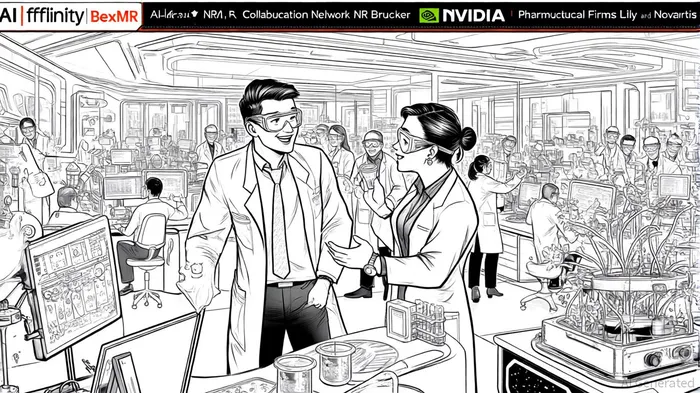





Comentarios
Aún no hay comentarios