
Strategic Partnerships as Catalysts for Growth in the Live Events Sector: Immersive Fan Experiences in the Post-Pandemic Era
The Rise of Immersive Experiences: A Post-Pandemic Imperative
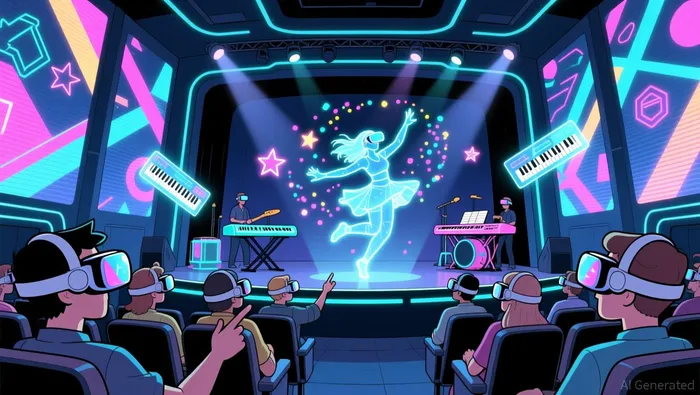
Consumer demand for authenticity and social connection has persisted post-pandemic, with 78% of attendees prefer in-person events for their "unmatched social connections and memories." To meet this demand, event producers are integrating augmented reality (AR), virtual reality (VR), and AI-driven personalization. For instance, the NBA's dual-track strategy-partnering with MetaMETA-- for broad fan engagement and AppleAAPL-- for premium broadcasts-demonstrates how immersive technologies can enhance traditional viewing experiences. These partnerships leverage extended reality to offer unique camera angles and interactive features, even as early adopters grapple with challenges like physical discomfort and disorienting transitions.
Strategic Partnerships in Sports: Measurable Outcomes and Revenue Diversification
Sports leagues are at the forefront of leveraging strategic alliances to monetize immersive experiences. The National Football League (NFL) has embraced interactive gaming through its NFL Pro Era virtual game, allowing fans to engage with the sport from a first-person perspective. Similarly, the NHL Alumni Association's partnership with BILI Social has created a social commerce platform for former players, enabling them to monetize their influence via revenue-sharing social media promotions according to a 2025 announcement. These collaborations not only diversify income streams but also deepen fan loyalty, with in-play betting initiatives (e.g., Formula One's partnership with ALT Sports Data) boosting engagement by offering real-time predictive analytics.
Music Festivals and Theaters: Hybrid Models and Data-Driven ROI
Music festivals are redefining immersionIMMR-- through hybrid formats and strategic tech integrations. The inaugural country music festival at Texas Motor Speedway, supported by a 360-degree marketing strategy, attracted over 70,000 attendees in its first year. While revenue metrics remain undisclosed, the event underscores the power of strategic planning and multi-channel promotion. Meanwhile, startups like AmazeVR and NOYS VR are pioneering VR-native concerts, offering both pre-recorded cinematic experiences and live, social events. These models cater to divergent audience preferences, mirroring traditional music industry dynamics and signaling a fragmented yet growing VR music market.
Wellness Tourism as a Blueprint for Credibility and Growth
The wellness tourism sector offers a compelling case study for the live events industry. Well Defined's partnerships with the WTA and WITT have elevated global standards by certifying hotels and promoting "wellness benchmarks." This collaboration has boosted consumer confidence in a fragmented market, with the sector projected to exceed $1 trillion by 2027. By aligning with certification bodies, live event organizers can similarly enhance credibility and attract eco-conscious audiences, a trend mirrored in sports through carbon-neutral matchdays and renewable energy investments according to market research.
Technological Innovation and ROI: Beyond Attendance Metrics
Strategic partnerships are increasingly focused on quantifying the value of immersive experiences. ROME Insights' Return on Memorable Experiences framework, for example, uses attention data and AI-powered emotional analysis to measure human engagement. This approach shifts the focus from traditional metrics like attendance to nuanced insights about event impact, enabling organizers to justify budgets and refine future strategies. Meanwhile, RFID wristbands and AI-driven personalization are generating actionable data while streamlining operations.
Challenges and Risks: Navigating a High-Cost Environment
Despite these innovations, the sector faces headwinds. Operational costs have surged, with venue rental fees up 25–30% and insurance premiums rising by 50% in high-risk regions. Labor shortages in technical roles-such as audio-visual production-further strain capacity, with some companies reporting a 40–50% gap in skilled professionals. These challenges underscore the need for partnerships that offset costs, such as B2B collaborations with volumetric capture specialists and real-time graphics providers.
Future Outlook: A $33.39 Billion Opportunity by 2030
The live events sub-segment of the immersive market is projected to grow from $8.4 billion in 2024 to $33.39 billion by 2030, driven by advancements in spatial computing and consumer demand for authenticity. Strategic partnerships will remain central to this growth, with M&A activity (e.g., Apple's acquisition of NextVR) signaling a shift toward vertical integration and infrastructure control according to industry analysis. For investors, the key opportunities lie in B2B technology providers, hybrid event platforms, and sustainability-focused ventures.
Conclusion
The post-pandemic live events sector is being reshaped by strategic partnerships that prioritize immersion, data, and sustainability. While challenges like rising costs persist, the integration of AR/VR, AI, and hybrid models is creating a resilient ecosystem. As the NBA, NFL, and wellness tourism pioneers demonstrate, the future belongs to those who can blend innovation with measurable outcomes. For investors, the imperative is clear: align with partners who can transform fleeting moments into lasting memories-and profitable returns.







Comentarios
Aún no hay comentarios