
Strategic Partnerships as Catalysts for Digital Transformation in Defense Engineering
The defense engineering sector is undergoing a seismic shift, driven by the urgent need to modernize legacy systems and respond to rapidly evolving global threats. At the heart of this transformation lies a critical enabler: strategic partnerships. By fostering collaboration between government agencies, defense contractors, and international allies, these alliances are accelerating the adoption of advanced technologies such as artificial intelligence (AI), digital twins, and data-centric engineering systems. For investors, this convergence of innovation and collaboration presents a compelling opportunity to capitalize on a sector poised for sustained growth.
The Role of Strategic Partnerships in Driving Industrial Innovation
Traditional defense procurement processes, often characterized by rigid hardware-centric models, have long struggled to keep pace with the agility required for modern warfare. However, the Department of Defense's (DoD) introduction of the Adaptive Acquisition Framework-a software-centric approach to capability development-has created a new paradigm, according to Gitnux statistics. This shift is not merely procedural; it reflects a broader cultural transformation toward digital engineering, where partnerships play a pivotal role.
For instance, the DoD's emphasis on data-centric systems-which prioritize interoperability and real-time data sharing-has necessitated close collaboration with industry partners. As stated in a 2025 War on the Rocks report, the DoD is moving away from network-centric architectures to systems that can leverage data from any source over any network. This transition is being facilitated by alliances with companies like Lockheed MartinLMT-- and BAE Systems, which are deploying Product Lifecycle Management (PLM) and Manufacturing Execution Systems (MES) to streamline production and enhance supply chain resilience, as the report notes. These tools not only reduce costs but also enable rapid iteration, a critical advantage in an era of strategic competition.
Case Studies: Digital Twins and Global Collaboration
One of the most transformative technologies in defense engineering is the digital twin-a virtual replica of physical systems that enables predictive maintenance, real-time monitoring, and optimized design. At Tinker Air Force Base, digital twins have revolutionized the maintenance and development of the F-35 fighter jet. By integrating real-time sensor data into these models, engineers can identify potential failures before they occur, reducing downtime and extending the lifespan of critical assets, according to Gitnux. This approach has also enhanced supply chain agility, a key concern in an environment marked by geopolitical volatility.
Globally, defense firms are leveraging digital twins to address rising demand. According to a 2025 LinkedIn analysis, the use of digital twins in defense manufacturing has increased by 40% over the past two years, driven by partnerships that pool expertise and resources. For example, Thales and BAE Systems have collaborated on digital twin initiatives to simulate complex weapon systems, accelerating development cycles while ensuring compliance with stringent security standards, as noted in the War on the Rocks piece.
The Strategic Imperative of Allied Collaboration
As adversaries modernize their capabilities, interoperability among allied forces has become a strategic imperative. A Gitnux report highlights that 54% of defense industry leaders view increased digital collaboration with allies as a key trend over the next five years. This is not merely a technological challenge but a geopolitical one. Standardized digital data formats, which 52% of defense organizations see as a pathway to interoperability, are being prioritized through partnerships between NATO members and U.S. defense contractors, according to the same Gitnux findings.
The DoD's shift to data-centric systems further underscores this trend. By enabling systems to "talk" across platforms and borders, these efforts ensure that joint operations can be executed with greater speed and precision, a point highlighted in the War on the Rocks analysis. For investors, this signals a growing market for technologies that facilitate cross-border data sharing and secure cloud infrastructure.
Challenges and the Path Forward
Despite the momentum, challenges remain. Legacy systems and bureaucratic inertia continue to slow adoption, and cybersecurity risks associated with interconnected systems demand robust safeguards. However, the DoD's commitment to digital engineering-evidenced by initiatives like the Digital Engineering for Defense Summit-demonstrates a clear trajectory toward overcoming these hurdles, as the War on the Rocks report explains.
For investors, the key is to identify firms and technologies that are central to this transformation. Companies specializing in PLM, AI-driven analytics, and secure data platforms are likely to benefit from the surge in strategic partnerships. Additionally, firms with strong international ties-such as those participating in NATO-led digital initiatives-position themselves to capture a larger share of the global defense engineering market.
Conclusion
Digital transformation in defense engineering is no longer a distant aspiration but an operational necessity. Strategic partnerships are the linchpin of this evolution, enabling the rapid deployment of technologies that enhance agility, interoperability, and resilience. As the sector continues to prioritize data-centric systems and global collaboration, investors who align with these trends stand to gain from a landscape where innovation and national security converge.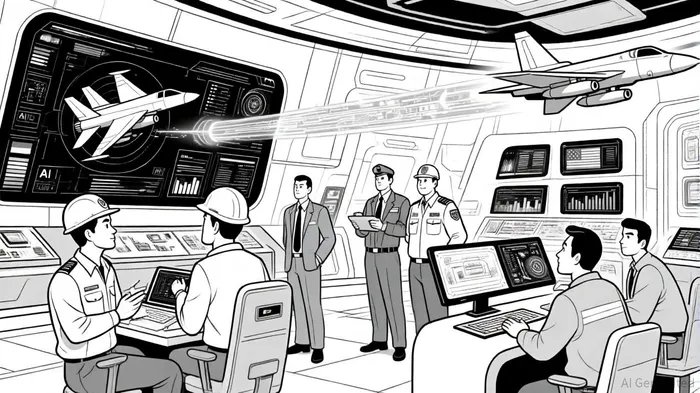







Comentarios
Aún no hay comentarios