
Strategic Partnerships as Catalysts in Autonomous Vehicle Software Innovation: The Desay SV and NTT DATA SDV Collaboration
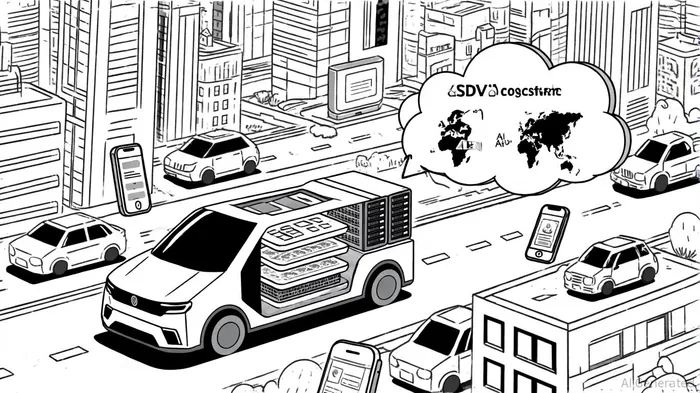
The automotive industry is undergoing a seismic shift as software-defined vehicles (SDVs) redefine mobility. At the heart of this transformation lies a critical trend: strategic partnerships between traditional automakers, technology firms, and infrastructure providers. These alliances are not merely transactional but represent co-creation of ecosystems capable of addressing the complexities of SDV development. A prime example is the recent collaboration between Desay SV, a Chinese mobility technology leader, and NTT DATA, a global IT services giant, to build a next-generation SDV platform[1]. This partnership, announced in September 2025, underscores how cross-industry collaboration is accelerating innovation while navigating regulatory and technical challenges.
The Desay SV-NTT DATA Collaboration: A Blueprint for SDV Innovation
Desay SV and NTT DATA's joint venture combines Desay's expertise in vehicle intelligence with NTT DATA's strengths in AI, cybersecurity, and global infrastructure[1]. The partnership aims to create a Europe-centric SDV platform that ensures compliance with stringent regional data regulations while enabling localized development and data processing[3]. This alignment with European priorities is a strategic move, as the region's emphasis on data sovereignty and privacy laws (e.g., GDPR) demands solutions that prioritize security and user control[1].
The collaboration's scope extends beyond technology. By integrating NTT DATA's cloud infrastructure and Desay SV's in-vehicle systems, the partnership envisions a seamless digital ecosystem spanning the vehicle, cloud, and mobile applications[1]. This interconnected framework allows automakers to monetize data-driven services, such as personalized user experiences and predictive maintenance, creating new revenue streams[2]. For instance, AI-powered analytics embedded in the SDV stack can enable real-time personalization and autonomous decision-making, enhancing both safety and user satisfaction[2].
Strategic Partnerships: A Market Imperative for SDV Development
The Desay SV-NTT DATA collaboration is emblematic of a broader industry shift. In 2025, strategic alliances have become a cornerstone for SDV development, driven by the need to share costs, accelerate time-to-market, and address interoperability challenges[3]. Traditional automakers, often lacking in-house software expertise, are increasingly partnering with tech firms to bridge this gap. For example:
- Stellantis and Amazon collaborate on in-vehicle infotainment systems[3].
- Volkswagen's CARIAD unit partners with Thundersoft for infotainment development[3].
- BMW leverages Qualcomm for ADAS and Amazon for content delivery[3].
These partnerships are not limited to automakers. Tech giants like Google and Amazon are reshaping SDV ecosystems through platforms like Android Automotive OS, adopted by 13 major automakers[3]. Similarly, startups such as Apex.AI and Sonatus are gaining traction by offering niche solutions in vehicle operating systems and data management[3].
The rise of open-source initiatives further underscores the collaborative ethos. Organizations like AUTOSAR, COVESA, and Eclipse SDV are standardizing software frameworks, reducing fragmentation, and enabling scalable innovation[1]. For instance, General Motors' Ultifi platform, backed by a $2.3 billion investment, leverages service-oriented architecture (SOA) to streamline feature deployment[3].
Market Dynamics and Investment Implications
The SDV market is expanding rapidly, with projections indicating a compound annual growth rate (CAGR) of 25.2–27.3% from 2025 to 2030[2]. By 2030, the market is expected to reach $1.6 trillion, driven by passenger cars (80% of the 2024 market share) and ADAS technologies[2]. North America remains a key growth hub, fueled by the presence of tech and automotive leaders and supportive policies for autonomous innovation[2].
For investors, strategic partnerships like Desay SV and NTT DATA's collaboration signal several opportunities:
1. Regulatory Compliance as a Competitive Edge: Partnerships that prioritize localized data processing (e.g., Europe-centric solutions) align with regulatory trends, reducing legal risks[1].
2. Revenue Diversification: SDVs enable automakers to monetize software services, shifting from one-time sales to recurring revenue models[3].
3. Cost Efficiency: Shared R&D costs and standardized frameworks (e.g., AUTOSAR) lower barriers to entry for smaller players[1].
However, challenges persist. Cybersecurity remains a critical concern, with 70% of SDV vulnerabilities linked to software supply chains[3]. Partnerships must prioritize robust security protocols, as demonstrated by NTT DATA's focus on cybersecurity in its SDV platform[1].
Conclusion: The Future of Mobility is Collaborative
The Desay SV-NTT DATA partnership exemplifies how strategic alliances are redefining SDV development. By combining domain expertise, infrastructure, and regulatory agility, such collaborations address the multifaceted challenges of building software-centric vehicles. As the SDV market matures, investors should prioritize partnerships that emphasize localization, cybersecurity, and open standards—factors that will determine long-term success in this dynamic landscape.





Comentarios
Aún no hay comentarios