
Strategic Partnerships as Catalysts for AI-Driven Cybersecurity in Manufacturing: The Jabil-Axiado Model and Emerging Investment Opportunities
The manufacturing sector is undergoing a seismic shift as AI-driven cybersecurity becomes a cornerstone of industrial resilience. Strategic partnerships are emerging as the primary catalysts for this transformation, with collaborations like JabilJBL-- and Axiado's AI-anchored server solutions exemplifying how innovation at the intersection of hardware and machine learning is redefining security paradigms. For investors, this convergence of AI and industrial security presents a compelling opportunity to capitalize on a market poised for exponential growth.
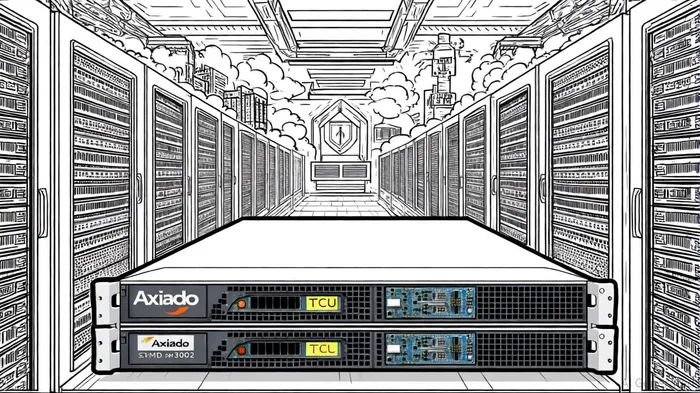
Strategic Partnerships as Catalysts: The Jabil-Axiado Collaboration
Jabil and Axiado's 2025 partnership represents a blueprint for how strategic alliances can accelerate AI-driven cybersecurity adoption in manufacturing. By integrating Axiado's Secure Control Module (SCM3002) and Trusted Control/Compute Unit (TCU) into Jabil's AMDAMD-- EPYC™ "Turin"-based 2U platform servers, the collaboration delivers zero-trust security without requiring costly co-design modifications[1]. This modular approach, showcased at the 2025 OCP Global Summit, enables rapid deployment of secure, OCP-compliant solutions for data centers and hyperscalers[4].
Axiado's hardware-anchored AI agents, embedded within the TCU, provide real-time threat detection and autonomous system management, addressing the growing sophistication of cyberattacks[5]. Jabil's expertise in server design complements Axiado's AI-driven security, creating a unified solution that balances efficiency, reliability, and scalability[3]. This partnership underscores a broader trend: manufacturers are prioritizing hardware-level security to mitigate risks in converged IT/OT environments[6].
Market Dynamics and Investment Opportunities
The AI-driven cybersecurity market is expanding at an unprecedented rate. According to a report by Grand View Research, the global AI in cybersecurity market was valued at USD 25.35 billion in 2024 and is projected to reach USD 93.75 billion by 2030, growing at a CAGR of 24.4%[2]. This surge is fueled by the dual use of AI-both as a tool for attackers (e.g., AI-enhanced phishing, deepfakes) and as a defense mechanism (e.g., behavioral analytics, automated patching)[7].
Strategic partnerships are central to this growth. Rockwell Automation's 2025 State of Smart Manufacturing Report reveals that 61% of cybersecurity professionals plan to adopt AI and machine learning (ML) within the next year[3]. Smaller manufacturers, constrained by resources, are increasingly relying on managed security service providers (MSSPs) to access AI-powered tools[8]. Meanwhile, regulatory pressures, such as the EU's NIS 2 Directive and U.S. SEC rules, are driving investments in compliant, AI-enhanced solutions[9].
Investment opportunities are concentrated in three areas:
1. AI-Powered Threat Detection: Tools leveraging machine learning for anomaly detection and real-time response are in high demand. Jabil-Axiado's SCM3002, for instance, combines trusted hardware with AI agents to detect threats at the silicon level[5].
2. Modular, OCP-Compliant Solutions: The Open Compute Project (OCP) standard is gaining traction for its flexibility and cost efficiency. Jabil's AMD EPYC-based servers, integrated with Axiado's TCU, exemplify how OCP compliance reduces deployment complexity[4].
3. Zero-Trust Architectures: As cyberattacks grow more targeted, zero-trust models-where no entity is trusted by default-are becoming table stakes. Axiado's hardware-anchored security aligns with this framework, offering granular access controls and autonomous threat mitigation[1].
Challenges and the Path Forward
Despite the promise, challenges persist. Skilled labor shortages and high integration costs remain barriers, particularly for smaller manufacturers[3]. Additionally, adversarial AI attacks and ethical concerns around algorithmic bias require ongoing research[10]. However, the market's trajectory suggests these hurdles will be addressed through collaborative innovation and regulatory frameworks.
For investors, the key lies in identifying partnerships that combine AI expertise with industrial infrastructure. Jabil-Axiado's success hinges on their ability to scale secure, AI-driven solutions without compromising performance-a model that could be replicated across sectors. As McKinsey notes, the vended cybersecurity market is expected to grow at 12.4% annually between 2024 and 2027, driven by rising compliance costs and the need for advanced defenses[9].
Conclusion
The Jabil-Axiado collaboration is more than a technical achievement; it is a harbinger of a new era in manufacturing cybersecurity. By embedding AI at the hardware level and leveraging OCP standards, the partnership demonstrates how strategic alliances can drive both security and scalability. For investors, the lesson is clear: the future of industrial security lies in partnerships that bridge AI innovation with tangible, modular solutions. As the market accelerates, those who align with this vision will find themselves at the forefront of a transformative wave.





Comentarios
Aún no hay comentarios