
Strategic Opportunities in Southeast Asia: How Singapore-Indonesia Depository Receipts Are Reshaping Cross-Border Investment Liberalization
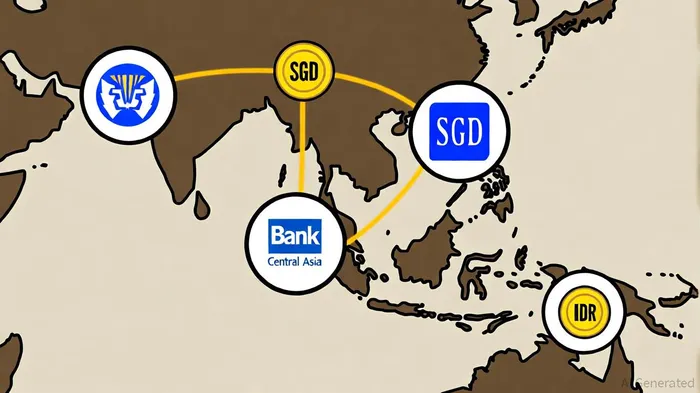
The launch of Singapore-Indonesia Depository Receipts (SIDRs) in October 2025 marks a pivotal step in Southeast Asia's evolving cross-border investment landscape. These instruments, introduced by the Singapore Exchange (SGX), offer investors a streamlined pathway to access Indonesia's blue-chip equities—such as Bank Central Asia, Telkom Indonesia, and Indofood CBP—while mitigating currency and regulatory complexities. By pricing these depository receipts in Singapore dollars (SGD) and enabling trading during SGX hours, SIDRs not only democratize access to Indonesian markets but also underscore a broader regional push for financial integration, according to The Business Times.
A Regulatory Framework Designed for Regional Synergy
The SIDR initiative is underpinned by a 2024 partnership between SGX and the Indonesia Stock Exchange (IDX), reflecting a deliberate effort to harmonize regulatory frameworks while preserving local oversight. This collaboration aligns with a growing trend among ASEAN exchanges—Bursa Malaysia, IDX, SGX, the Philippine Stock Exchange, the Stock Exchange of Thailand (SET), and the Vietnam Exchange (VNX)—to jointly pursue depository receipt offerings, as noted in an Asia Asset post. Such cooperation is critical in addressing historical barriers to cross-border investment, including divergent regulatory standards and limited market visibility.
For instance, SIDRs are structured as unsponsored depository receipts, meaning they do not require active support from the underlying Indonesian companies. This design reduces administrative burdens and costs, making it easier for smaller firms to participate in regional capital markets, The Business Times reported. Moreover, the initiative leverages SGX's existing Singapore Depository Receipt (SDR) framework, which has already expanded to include blue-chip listings from Hong Kong, Thailand, and now Indonesia. As of 2025, SGX has listed 26 SDRs across ASEAN, demonstrating the scalability of this model, according to The Business Times.
Market Impact: From Retail Investors to Regional Economic Integration
The market response to SIDRs has been robust. Trading turnover for SDRs has surged 30-fold since their introduction three years ago, with an average daily traded value of S$16 million in September 2025, The Business Times reported. Assets under management (AUM) in SDRs have also grown to S$200 million, with retail investors accounting for the majority of holdings, according to The Business Times. This growth highlights the appeal of SIDRs as a cost-effective tool for diversification, particularly for Singaporean investors seeking exposure to high-growth Southeast Asian markets without the logistical hurdles of direct foreign equity investments.
The economic implications extend beyond individual investors. By enhancing the visibility of Indonesian blue-chips in Singapore, SIDRs contribute to a more integrated regional capital market. This aligns with Southeast Asia's broader economic integration agenda, including the ASEAN Comprehensive Investment Agreement (ACIA) and the Regional Comprehensive Economic Partnership (RCEP), which aim to harmonize trade and investment rules, according to an EDB analysis. Indonesia, for its part, has signaled a commitment to liberalizing foreign investment through incentives such as 30-year tax holidays for strategic sectors like renewable energy and advanced manufacturing, as detailed in an Invest in Asia comparison. These policies, combined with SIDRs, create a virtuous cycle of capital inflows and economic growth.
Strategic Advantages and Future Prospects
The SIDR model offers several strategic advantages. First, it reduces foreign exchange risk by pricing Indonesian equities in SGD, eliminating the need for currency conversion and hedging, as noted by the EDB. Second, lower trading fees compared to direct foreign market investments make SIDRs particularly attractive for retail and institutional investors alike, an Asia Asset post argued. Third, the initiative fosters regulatory collaboration, as seen in the joint efforts of ASEAN exchanges to standardize depository receipt frameworks, The Business Times reported.
Looking ahead, SGX plans to expand SDR offerings to include Vietnamese and other regional blue-chips, further cementing Singapore's role as a regional wealth management hub, The Business Times reported. This expansion is likely to be driven by demand from investors seeking diversified portfolios in Southeast Asia's high-growth sectors, such as technology and green energy. Additionally, reciprocal arrangements with other exchanges—such as the Thailand-Singapore DR Linkage—suggest a future where cross-border investment is not just possible but seamless, as previously noted by Asia Asset.
Conclusion: A Blueprint for Regional Financial Integration
The Singapore-Indonesia Depository Receipts represent more than a financial product—they are a blueprint for cross-border investment liberalization in Southeast Asia. By addressing regulatory, operational, and liquidity challenges, SIDRs not only enhance market access but also reinforce the region's collective ambition to become a global investment destination. As ASEAN continues to align its regulatory frameworks and deepen economic ties, instruments like SIDRs will play a central role in unlocking the full potential of Southeast Asia's capital markets.







Comentarios
Aún no hay comentarios