
Strategic Opportunities in Maritime Autonomous Systems: Leveraging Digital Twin Technology for Ocean Innovation
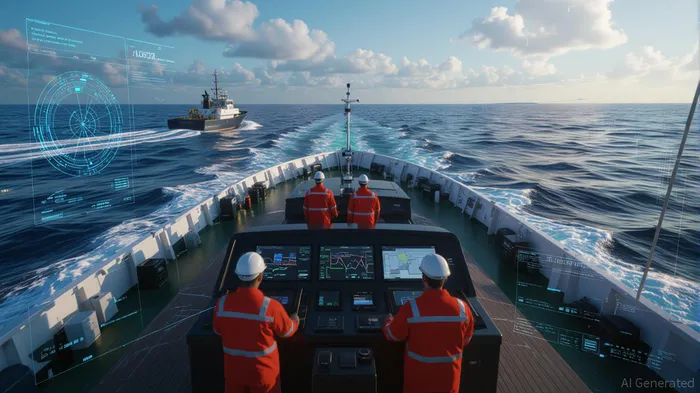
The maritime industry stands at the intersection of technological disruption and environmental urgency. As global trade volumes rise and climate regulations tighten, stakeholders are increasingly turning to digital twin technology to redefine maritime autonomous systems (MAS). This innovation, which creates virtual replicas of physical assets, is not merely a tool for operational efficiency—it is a cornerstone of sustainable infrastructure development in the 21st century.
Digital Twins: A Catalyst for Maritime Infrastructure Modernization
Digital twin technology integrates real-time data from IoT sensors, machine learning, and simulation tools to create dynamic models of ships, ports, and supply chains. According to IBMIBM--, these virtual replicas enable predictive maintenance, reducing unplanned downtime by up to 50% in industrial applications [1]. In maritime contexts, this translates to optimized vessel performance and port logistics. For example, digital twins can simulate the impact of weather patterns on shipping routes, allowing operators to adjust trajectories for fuel efficiency and safety [2].
The infrastructure implications are profound. By 2025, the global energy transition is projected to drive $2.2 trillion in clean technology investments, with maritime sectors leveraging digital twins to align with decarbonization goals [3]. Ports adopting these technologies report a 30% reduction in idle time for vessels, directly cutting emissions and operational costs [4].
Sustainability as a Competitive Advantage
Environmental sustainability is no longer a peripheral concern but a core driver of maritime innovation. Digital twins enable granular monitoring of fuel consumption and carbon outputs, facilitating compliance with international regulations like the IMO's 2030/2050 emission targets. A 2025 World Economic Forum report highlights that operators using digital twins have achieved a 15–20% improvement in energy efficiency by optimizing cargo loading and engine performance [5].
Moreover, these systems support circular economy principles. For instance, digital twins of aging vessels can simulate retrofitting scenarios with hybrid propulsion systems or hydrogen fuel cells, extending asset lifecycles while reducing waste [6]. This aligns with the broader trend of “green shipping,” where investors prioritize fleets with low-carbon credentials.
Market Growth and Investment Potential
The digital twin market in maritime autonomous systems is surging. While specific 2025 growth figures remain unpublished, industry analysts project a compound annual growth rate (CAGR) of 28% through 2030, driven by automation and sustainability mandates [7]. Key adopters include European shipping giants and Asian port authorities, who are integrating digital twins with blockchain for transparent, emissions-tracked supply chains [8].
Strategic Recommendations for Investors
- Target Early-Stage Innovators: Invest in startups developing AI-driven digital twin platforms tailored for maritime use cases, such as predictive hull fouling detection or autonomous cargo management.
- Partner with Green Port Initiatives: Allocate capital to port authorities deploying digital twins for shore power integration and zero-emission zone planning.
- Diversify into Energy Transition Synergies: Combine digital twin investments with hydrogen infrastructure or offshore wind projects, where maritime logistics play a critical role.
Conclusion
Digital twin technology is reshaping maritime autonomous systems into engines of sustainability and profitability. As infrastructure modernization and decarbonization converge, investors who prioritize this technology will not only capitalize on market growth but also contribute to a resilient, ocean-innovative future.





Comentarios
Aún no hay comentarios