
Strategic Opportunities in Global Soybean Meal Trade: A Closer Look at Guatemala's Growing Demand
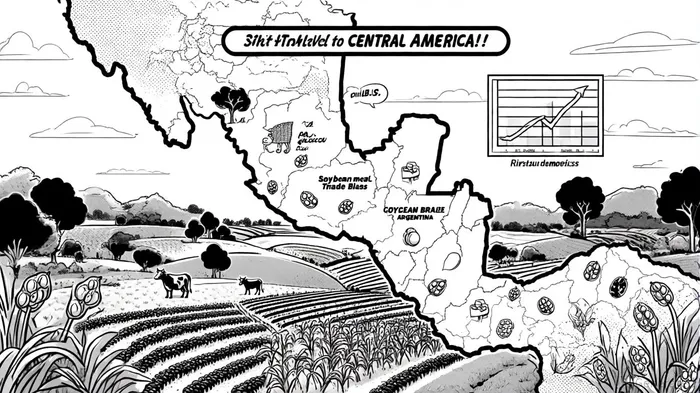
The global soybean meal market is poised for robust expansion, driven by surging demand for animal feed and plant-based protein. For investors, emerging markets like Guatemala present compelling opportunities. The country's soybean meal demand is projected to grow at an average annual rate of 8.5% from 2025 to 2029, with peak growth rates exceeding 8.9% in 2026[1]. This trajectory is fueled by a confluence of factors: livestock expansion, dietary shifts, and supportive trade policies. However, navigating this market requires a nuanced understanding of competitive dynamics, geopolitical risks, and sustainability trends.
Drivers of Demand: Livestock, Population, and ESG
Guatemala's soybean meal market is anchored by its role in animal feed. The country's livestock sector is expanding rapidly, driven by rising incomes and a growing middle class. By 2030, Guatemala's population is expected to reach 21 million, with urbanization rates climbing to 60%[2]. Urbanization typically correlates with higher meat consumption, which in turn boosts demand for high-protein feed ingredients like soybean meal.
Beyond livestock, soybean meal's appeal is expanding into non-traditional applications. Innovations in plant-based proteins and industrial uses—such as adhesives and biofuels—are diversifying demand[3]. Additionally, global sustainability trends are reshaping the market. Soybean meal is increasingly viewed as an eco-friendly alternative to animal-based proteins, aligning with ESG (Environmental, Social, and Governance) priorities. Guatemala's government, through partnerships with the World Food Programme and FAO, is promoting sustainable agricultural practices, which could further integrate the country into global green supply chains[4].
Competitive Landscape: U.S. Dominance and Regional Rivals
The U.S. has long been Guatemala's primary supplier of soybean meal, exporting $270 million worth of the product in 2023[5]. This dominance is bolstered by the CAFTA-DR trade agreement, which reduces tariffs on U.S. agricultural exports[5]. However, Brazil and Argentina are emerging as formidable competitors. Together, these two nations account for 82% of global soybean exports by volume[6], and their lower production costs could erode U.S. market share if trade tensions or supply chain disruptions arise.
Infrastructure challenges also loom large. While Guatemala has invested in highway expansions to improve logistics, onshore bottlenecks remain a risk for timely deliveries[6]. Investors must weigh these infrastructure gaps against the country's strategic location and growing demand.
Trade Policies and Mitigation Strategies
Recent U.S. tariffs on Guatemalan exports—imposed under Executive Order 14257—have introduced uncertainty. A 10% baseline tariff on Guatemalan goods, including soybean meal, has prompted diplomatic efforts to renegotiate terms[7]. While the U.S. remains a critical market, Guatemala is diversifying its trade partners. Brazil's record soybean production in 2024/25 (164 million tons) and Argentina's competitive pricing position them as potential alternatives[8].
For investors, hedging against geopolitical risks is essential. Engaging with local stakeholders to navigate regulatory shifts and building relationships with multiple suppliers can mitigate exposure to U.S. policy changes. Additionally, aligning with Guatemala's sustainability initiatives—such as organic soy production—could unlock access to premium markets and ESG-focused capital.
Investment Outlook
Guatemala's soybean meal market offers a unique intersection of growth, diversification, and strategic location. By 2027, the market is forecasted to grow at 8.86%, outpacing many Latin American peers[1]. For agribusiness investors, opportunities lie in:
1. Feed production partnerships with Guatemalan livestock firms.
2. Sustainable soybean crushing infrastructure to meet ESG-driven demand.
3. Export logistics ventures to capitalize on infrastructure upgrades.
Conclusion
Guatemala's soybean meal market is a microcosm of broader trends in emerging agribusiness: rising demand, sustainability imperatives, and geopolitical volatility. While the U.S. remains a key player, regional competitors and policy shifts are reshaping the landscape. Investors who prioritize adaptability—leveraging Guatemala's growth while mitigating risks through diversification and ESG alignment—will be well-positioned to capitalize on this dynamic market.







Comentarios
Aún no hay comentarios