
Strategic Metal Supply Chain Resilience in Chile: Mitsubishi and Anglo American's Joint Venture as a Catalyst for Critical Minerals Investment
The global energy transition hinges on secure and sustainable access to critical minerals like copper and lithium. As nations race to decarbonize, Chile—home to the world's largest copper reserves and second-largest lithium production—has emerged as a linchpin in this transformation. However, the country's mining sector faces mounting environmental, regulatory, and social challenges. Against this backdrop, the joint venture between Mitsubishi Corporation and Anglo American Sur S.A. (AAS) with Chile's state-owned Codelco represents a pivotal development. This collaboration not only underscores the strategic importance of Chile's mineral resources but also highlights innovative approaches to balancing economic growth with sustainability.
Chile's Strategic Position and Policy Framework
Chile's National Critical Minerals Strategy, launched in December 2024, aims to streamline permitting processes by 30% while enhancing environmental and social governance[1]. This initiative aligns with the country's role as a global supplier of copper and lithium, essential for electric vehicles, renewable energy systems, and green hydrogen technologies[2]. The strategy emphasizes collaboration between government agencies, industry, and communities to map geological resources and guide investments[1]. Yet, challenges persist: water scarcity in the Atacama Desert, declining ore grades, and regulatory delays threaten the sector's long-term viability[3].
Mitsubishi and Anglo American's Joint Venture: A Strategic Alignment
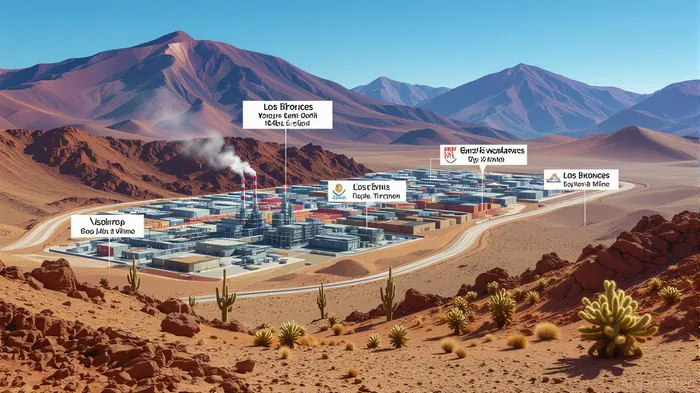
Mitsubishi's 20.4% stake in AAS has catalyzed a landmark agreement with Codelco to optimize adjacent copper operations at Los Bronces and Andina. The joint mine plan, set to begin in 2030, will boost annual copper production by 120,000 tonnes over 21 years, with a projected pre-tax value uplift of at least $5 billion[4]. This initiative leverages existing processing capacity with minimal incremental capital investment, aligning with Mitsubishi's equity-based resource production strategy[4]. Crucially, the partnership will be managed by a new operating company jointly controlled by AAS and Codelco, ensuring equal sharing of production and economic benefits[5].
The venture's strategic significance extends beyond economics. Copper, a cornerstone of decarbonization, is expected to see sustained demand as global electrification accelerates[5]. By securing a stable supply chain, Mitsubishi and Anglo American are positioning themselves to meet this demand while adhering to Chile's sustainability goals. For instance, the joint plan's emphasis on optimizing existing infrastructure reduces environmental footprints, a critical factor in a region where water-intensive mining practices have strained ecosystems and indigenous communities[6].
Navigating Challenges: Innovation and Collaboration
Chile's mining sector must address pressing challenges to maintain its competitive edge. The Atacama Desert's lithium extraction, for example, has reduced groundwater levels by 30%, threatening biodiversity and Indigenous livelihoods[6]. While the National Lithium Strategy seeks to balance economic and environmental priorities through public-private partnerships, critics argue that financial compensation for communities often replaces meaningful consultation[6].
The Mitsubishi-AAS-Codelco collaboration offers a potential model for addressing these issues. By prioritizing operational efficiency and shared benefits, the joint venture reduces the need for new, resource-intensive projects. Additionally, investments in technologies like desalination and water recycling—already adopted by Chilean mining giants—could mitigate environmental impacts[3]. Such innovations are essential for maintaining Chile's leadership in critical minerals while adhering to global sustainability standards.
Implications for Investors
For investors, the joint venture exemplifies the growing convergence of resource security and ESG (Environmental, Social, and Governance) criteria. The projected $5 billion value uplift[4] underscores the financial viability of strategic partnerships in high-risk, high-reward sectors. Moreover, Chile's policy reforms, including a 2023 mining royalty law to redistribute economic benefits[7], signal a regulatory environment increasingly favorable to responsible investment.
However, risks remain. Global lithium prices have declined since 2023[7], and geopolitical shifts could disrupt supply chains. Diversification—both in mineral sources and production methods—will be key. Chile's focus on sustainable practices, coupled with ventures like the Los Bronces-Andina plan, positions it as a resilient player in this evolving landscape.
Conclusion
Mitsubishi and Anglo American's joint venture in Chile is more than a commercial endeavor—it is a blueprint for resilient, sustainable critical mineral supply chains. By aligning with Chile's national strategies and addressing environmental and social challenges through innovation, the partnership sets a precedent for future investments. As the energy transition accelerates, such collaborations will be vital in ensuring that resource-rich nations like Chile remain central to the global green economy.







Comentarios
Aún no hay comentarios