
Strategic Metal Equity Investments in the New Resource Era
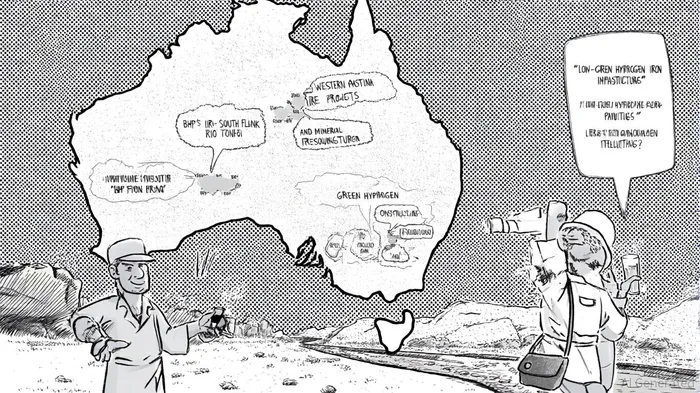
The global transition to decarbonization is reshaping the metals and mining sector, creating both challenges and opportunities for investors. Australia's iron ore industry, long a cornerstone of global steel production, is at a pivotal juncture. With major projects advancing, green hydrogen initiatives gaining momentum, and equity valuations evolving, the sector offers a compelling case for strategic equity investments. This analysis explores how investors can leverage Australia's iron ore developments for long-term capital gains while aligning with the low-carbon transition.
Major Iron Ore Projects: A Foundation for Growth
Australia's iron ore sector is undergoing a production boom, driven by large-scale projects that aim to solidify the country's dominance in global supply chains. BHP's South Flank and Mining Area C projects are set to form the world's largest iron ore hub, with production capacity expected to surge significantly, according to Australian Resources and Investment. Meanwhile, Rio Tinto's Gudai‑Darri mine is leveraging automation and digital technologies to achieve 43 million tonnes per annum (Mtpa) output, the same report notes. These projects are not just about scale-they are about operational efficiency, which is critical in an era of softening demand and price volatility.
Mineral Resources' Onslow Iron project further underscores the sector's momentum: Mineral Resources' FY25 results show it reached commercial production at 35 Mtpa by late 2025. Such projects are cash-flow positive and position companies to weather short-term market fluctuations, such as China's temporary ban on BHPBHP-- imports in 2025, according to Reuters. While geopolitical tensions and pricing disputes create near-term uncertainty, the long-term demand for iron ore remains robust, particularly as higher‑grade DR‑grade ore becomes essential for direct reduced iron (DRI) processes in low‑carbon steelmaking, as reported in Mineral Resources' FY25 results.
Equity Investment Opportunities: BHP vs. Rio Tinto vs. Mineral Resources
The financial performance and strategic direction of key players like BHP, Rio TintoRIO--, and Mineral Resources offer distinct investment profiles. BHP has demonstrated operational stability, with a diversified portfolio spanning iron ore, copper, coal, and potash, as noted in Mineral Resources' FY25 results. Its share price of $38.30 (as of September 2025) reflects a 5.7% dividend yield and a price‑to‑earnings ratio of 13.2x. However, challenges loom in its Chilean copper operations, where declining ore grades at Escondida could reduce production by 20% by 2028, the company reported.
Rio Tinto, on the other hand, is positioned for aggressive growth. Goldman Sachs projects its EBITDA will outpace BHP's by $4 billion by 2030, driven by projects like the Simandou iron ore development in Guinea and the Oyu Tolgoi copper mine in Mongolia, according to Mineral Resources' commentary. Rio Tinto's higher dividend yield (6.3%) and a projected 60% payout ratio based on NPAT make it an attractive option for income‑focused investors. However, strategic uncertainty during its leadership transition and a lower valuation (10.5x P/E) reflect execution risks.
Mineral Resources has shown resilience despite a 15% revenue decline in FY25 due to weaker iron ore prices. Its Onslow Iron project is cash‑flow positive and on track to reduce debt, while underlying EBITDA grew to $901 million in FY25. For investors seeking growth with manageable risk, Mineral Resources' focus on iron ore and lithium positions it as a mid‑cap play in a sector poised for consolidation.
Green Hydrogen and Low‑Carbon Technologies: The Next Frontier
The transition to green steel is reshaping the iron ore value chain, with Australia's producers investing heavily in low‑carbon technologies. A landmark collaboration between BHP, Rio Tinto, and BlueScope is developing a low‑carbon electric smelting furnace (ESF) pilot plant in Western Australia, the industry has reported. This project, expected to produce 30,000–40,000 tonnes of molten iron annually, could reduce emissions by 80% if powered by green hydrogen, according to industry coverage. While initial operations will use natural gas, the long‑term goal is a fully renewable‑powered facility, aligning with global decarbonization targets.
The Australian government's $500 million Green Iron Investment Fund further accelerates this transition, aiming to position the country as a global leader in green iron production; Fortescue's trial green iron plant, slated for 2026, and the Mid West Green Iron Project-a joint venture between Athena Resources, Warradarge Energy, and Fenix-highlight the sector's alignment with renewable energy and hydrogen infrastructure, as reported by PV Magazine Australia.
However, challenges remain. BHP has flagged the high costs of green iron production, estimating it would be double that of traditional methods in the Middle East and China, an assessment covered by Reuters. Success will depend on hydrogen infrastructure development, carbon pricing mechanisms, and regulatory support in key markets like China and India.
Investment Thesis: Balancing Risk and Reward
For investors, the key lies in balancing near‑term volatility with long‑term structural trends. BHP offers stability and diversification, making it a safer bet in a cyclical sector. Rio Tinto's growth‑oriented strategy and exposure to high‑grade iron ore and copper projects provide upside potential, albeit with execution risks. Mineral Resources offers a compelling mid‑cap opportunity, particularly as its Onslow Iron project scales.
The green hydrogen transition adds another layer of complexity. While projects like the ESF pilot plant are still in feasibility stages, they represent a critical pathway for Australia to maintain its competitive edge in a decarbonizing world. Investors who align with this transition-through equity stakes in miners or hydrogen infrastructure players-stand to benefit from both capital appreciation and income generation.
Conclusion
Australia's iron ore sector is at a crossroads, with major projects, green hydrogen initiatives, and evolving market dynamics shaping its future. For equity investors, the path to long‑term capital gains lies in selecting companies that balance operational excellence with innovation. BHP's stability, Rio Tinto's growth, and Mineral Resources' execution, combined with the sector's pivot to low‑carbon technologies, present a robust investment case. As the global demand for clean steel accelerates, Australia's miners are well‑positioned to lead the charge-provided they navigate the challenges of cost, infrastructure, and geopolitical risk with agility.







Comentarios
Aún no hay comentarios