
The Strategic Value of Kodiak Robotics' SPAC Deal in the Evolving Automation Landscape
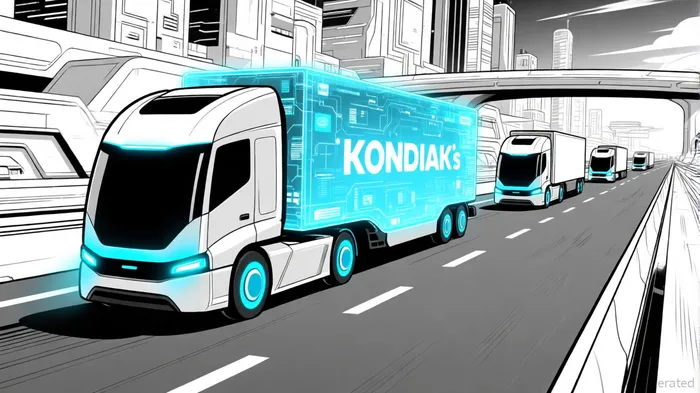
The industrial robotics sector is undergoing a transformative phase, driven by surging demand for automation in logistics, manufacturing, and defense. Against this backdrop, Kodiak Robotics' $2.5 billion SPAC merger with Ares Acquisition CorporationAACT-- II (AACT) represents a pivotal moment for capital efficiency and sector-specific growth. By leveraging the SPAC structure, Kodiak AI—a rebranded entity set to list on Nasdaq as “KDK”—has secured $661 million in combined capital, positioning itself to accelerate its mission in autonomous highway trucking while aligning with broader industry trends.
Capital Efficiency: A Strategic Leverage
Kodiak's SPAC deal exemplifies capital efficiency by minimizing the time and regulatory complexity of a traditional IPO. The transaction provides $551 million in cash from AACT's trust account and an additional $110 million in committed financing from institutional investors like Soros Fund Management and ARK Investments [1]. This capital infusion is critical for scaling its “Kodiak Driver” technology, which has already logged 2.6 million autonomous miles in commercial operations. The funds will also support expansion into public sector applications, such as the $30 million U.S. Department of Defense contract to adapt its technology for Army vehicles [2].
The SPAC route's speed and flexibility are particularly advantageous in a sector where rapid deployment of AI-driven solutions is key. Unlike traditional IPOs, which require extensive regulatory scrutiny and market timing, SPACs allow companies to access public markets more predictably. For Kodiak, this means faster execution of its growth strategy, including scaling its 100-truck order with Atlas Energy Solutions and developing partnerships to address driver shortages in the $800 billion U.S. trucking industry [3].
Sector-Specific Growth: Aligning with Industrial Robotics Trends
The industrial robotics market is projected to grow at a compound annual growth rate (CAGR) of 11.4% from 2025 to 2034, driven by automation demands in automotive, logistics, and healthcare [4]. Kodiak's focus on highway-based autonomous trucking—a high-impact segment—positions it to capitalize on this growth. The company's technology addresses a critical pain point: the need for 24/7 freight operations in a sector facing chronic driver shortages.
Moreover, the sector is witnessing a shift toward AI-native platforms and specialized vertical solutions. In Q1 2025 alone, global robotics funding surged to $2.26 billion, with 70% directed toward startups targeting niche applications like warehouse automation and robotic picking [5]. Kodiak's AI-driven approach, which integrates real-time decision-making and predictive maintenance, aligns with this trend. Its ability to secure contracts with both commercial and defense clients underscores its versatility in solving complex logistics challenges.
Valuation and Investor Sentiment
Kodiak's $2.5 billion valuation reflects investor confidence in its technical leadership and commercial strategy. The company's partnerships with major energy and defense players, coupled with its proven real-world performance, justify its premium. However, as with any high-growth SPAC, the public listing will require balancing innovation with consistent financial performance. The involvement of institutional investors like ARK Investments—a firm known for backing disruptive tech—signals alignment with long-term growth expectations [6].
The broader market's appetite for AI-enhanced robotics further supports Kodiak's valuation. Early-stage AI-native robotics companies raised median revenue multiples of 39.0x in 2025, reflecting a willingness to pay premiums for scalable, data-driven solutions [7]. Kodiak's proprietary datasets and hardware-software integration position it to compete with established players like ABB and Fanuc while appealing to investors seeking exposure to the next phase of automation.
Conclusion: A Catalyst for Sector Advancement
Kodiak Robotics' SPAC deal is more than a capital-raising event; it is a strategic lever to accelerate the adoption of autonomous freight solutions in a sector primed for disruption. By securing substantial funding through a streamlined public market entry, the company can scale its operations, diversify into new verticals, and contribute to the industrial robotics sector's evolution. As AI and AI-native platforms redefine automation, Kodiak's ability to deliver tangible value—both in commercial trucking and defense applications—will be critical to justifying its valuation and sustaining investor momentum.





Comentarios
Aún no hay comentarios