
The Strategic Value of JPMorgan's Bitcoin ETF Stake Amid Evolving Tech and Telecom Market Dynamics
Telecom Infrastructure: A Catalyst for Digital Transformation
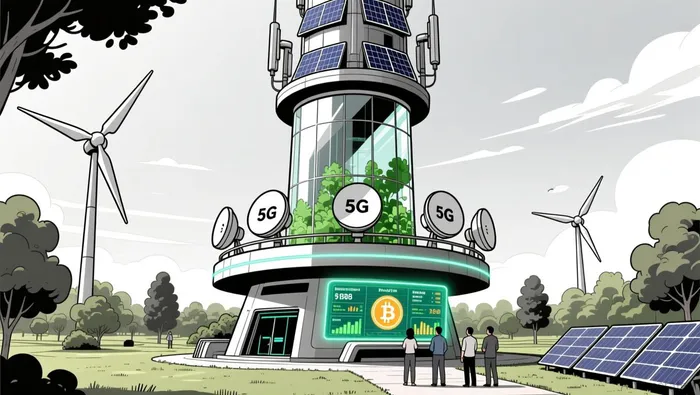
The global telecom infrastructure market, valued at $237.17 billion in 2023, is projected to reach $409.21 billion by 2033, driven by 5G expansion and sustainability-focused investments, according to a Datam Intelligence report. North America dominates this growth, fueled by federal programs like the Infrastructure Investment and Jobs Act (IIJA), while Europe's emphasis on digital sovereignty and green energy further accelerates adoption. Spectrum consolidation, a critical component of 5G deployment, has intensified competition among telecom providers, with companies like Accenture leveraging acquisitions to streamline operations, as noted in the same Datam Intelligence report. Meanwhile, green financing initiatives-such as Telefónica's €2.85 billion in green bonds-highlight the sector's pivot toward ESG-aligned infrastructure, reducing carbon footprints and enhancing operational efficiency, according to a Telefónica blog.
Bitcoin as a Hedge Against Sector-Specific Risks
Bitcoin's asymmetric diversification properties have made it an attractive hedge during periods of high economic policy uncertainty (EPU). Studies show that Bitcoin enhances risk-adjusted returns when EPU is elevated, such as during regulatory shifts or geopolitical tensions, according to a ScienceDirect study. For the telecom sector, which faces volatile capital expenditures and evolving regulatory frameworks, Bitcoin offers a non-correlated asset to mitigate downside risks. For instance, the U.S. passage of the GENIUS and CLARITY Acts in 2025 provided clarity for institutional crypto participation, yet lingering uncertainties-such as potential regulatory rollbacks-necessitate a diversified approach to capital preservation, as reported in the State of Crypto 2025 report. JPMorgan's growing exposure to the BlackRock ETF, which has attracted $28.1 billion in inflows year-to-date, aligns with this logic, positioning Bitcoin as a counterbalance to the sector's capital intensity and regulatory exposure, according to a ValueThemarkets article.
Green Financing and the Role of Bitcoin in Sustainable Portfolios
While Bitcoin's environmental footprint remains a point of contention, its integration into asset allocation strategies alongside green tech investments is gaining traction. Green bonds, which demonstrated resilience during the 2020 pandemic, have outperformed conventional assets in volatile markets, as noted in a AIMS Press study. However, Bitcoin's uncorrelated nature during normal economic conditions and its potential to co-move with sustainable assets during crises make it a complementary tool for diversification, according to a Telefónica blog. For example, AI-driven platforms like Credit Blockchain are now optimizing portfolios by combining Bitcoin with green tech investments, using machine learning to balance risk and yield, as reported in a GlobeNewswire release. This hybrid approach allows telecom firms to hedge against capital-intensive projects while aligning with ESG goals.
Strategic Implications for JPMorganJPM-- and the Tech Sector
JPMorgan's 64% gain in the BlackRock ETF underscores a broader institutional shift toward regulated crypto vehicles. By leveraging Bitcoin's hedging properties, the firm is not only capitalizing on the ETF's $28.1 billion inflows, as noted in the ValueThemarkets article, but also aligning with the telecom sector's need for risk mitigation. As telecom companies invest heavily in 5G and green infrastructure, Bitcoin's role as a non-correlated asset becomes increasingly valuable. Furthermore, the integration of AI-driven portfolio optimization-such as reinforcement learning models for ESG risk management-suggests that Bitcoin will continue to play a strategic role in balancing capital allocation across volatile and capital-intensive industries, according to a ResearchGate paper.
Conclusion
The convergence of telecom innovation, green financing, and Bitcoin's hedging properties is reshaping asset allocation in the digital transformation era. JPMorgan's strategic investment in the BlackRock Bitcoin ETF reflects both a recognition of Bitcoin's institutional legitimacy and its utility as a hedge against sector-specific risks. As telecom infrastructure evolves to meet the demands of 5G and sustainability, the integration of Bitcoin into diversified portfolios will likely remain a cornerstone of forward-looking investment strategies.





Comentarios
Aún no hay comentarios