
Strategic Investment Opportunities in the Russia-China Energy Partnership: Navigating Geopolitical Shifts and Gas Supply Dynamics
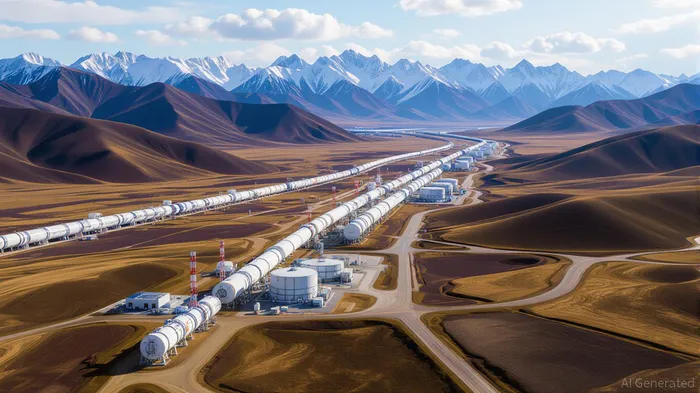
The Russia-China energy partnership has emerged as a cornerstone of global energy infrastructure, offering investors a unique lens through which to analyze the interplay of geopolitical shifts and economic resilience. By 2025, the Power of Siberia 1 pipeline is projected to reach its full capacity of 38 billion cubic meters (bcm) annually, while the proposed Power of Siberia 2—targeting 50 bcm per year—signals a long-term commitment to deepening Sino-Russian energy ties [2]. These projects are not merely infrastructural but represent a recalibration of global energy flows, as China pivots to secure stable, discounted gas supplies from Russia amid declining European demand and U.S. naval dominance over traditional energy corridors [2].
The strategic implications of this partnership extend beyond economics. By settling energy transactions in yuan and ruble, both nations are actively eroding the U.S. dollar’s hegemony in global trade, fostering a multipolar financial system [2]. For investors, this shift underscores the importance of aligning with infrastructure projects that facilitate non-dollar trade, particularly in sectors where geopolitical alignment can mitigate exposure to Western sanctions or market volatility.
However, the path to full realization is not without hurdles. The Soyuz Vostok pipeline, a critical Mongolian segment of Power of Siberia 2, faces regulatory delays and environmental assessments, potentially pushing the project’s completion beyond 2030 [2]. Additionally, pricing disputes—Russia’s demand for $257 per 1,000 cubic meters versus China’s preference for $60—highlight the need for strategic patience and risk management in long-term investments [2]. Yet, these challenges also present opportunities for stakeholders who can navigate regulatory landscapes or mediate pricing gaps through innovative financing models.
In Central Asia, the Belt and Road Initiative (BRI) further amplifies China’s influence, with energy projects connecting regional producers to Chinese markets. This dynamic not only enhances Beijing’s economic leverage but also reduces the autonomy of Central Asian states to diversify their foreign relations [3]. For investors, this trend highlights the strategic value of infrastructure projects that align with BRI corridors, particularly in gas-rich regions like Turkmenistan or Kazakhstan, where Chinese financing and technology can unlock untapped reserves.
The Russia-China energy partnership is thus a microcosm of broader geopolitical realignments. As both nations leverage their economic interdependence—evidenced by China importing 42% of Russia’s fossil fuel exports in July 2025—investors must consider how such alliances reshape global supply chains and financial systems [2]. The key lies in identifying infrastructure projects that not only serve immediate energy needs but also reinforce a multipolar world order, where non-traditional alliances drive growth.
**Source:[1] The Geopolitical and Economic Case for Investing in Russian Gas Infrastructure and Chinese Markets [https://www.ainvest.com/news/geopolitical-economic-case-investing-russian-gas-infrastructure-chinese-markets-2509/][2] Russia-China Gas Ties: A Strategic Energy Play for Long-Term Stability and Growth [https://www.ainvest.com/news/russia-china-gas-ties-strategic-energy-play-long-term-stability-growth-2509/][3] Central Asian Gas Sector and Broader Economic Implications [https://www.specialeurasia.com/2025/07/28/central-asian-gas-sector/]







Comentarios
Aún no hay comentarios