
Strategic Investment Opportunities in East Africa: Rwanda and DRC's Regional Integration Drive
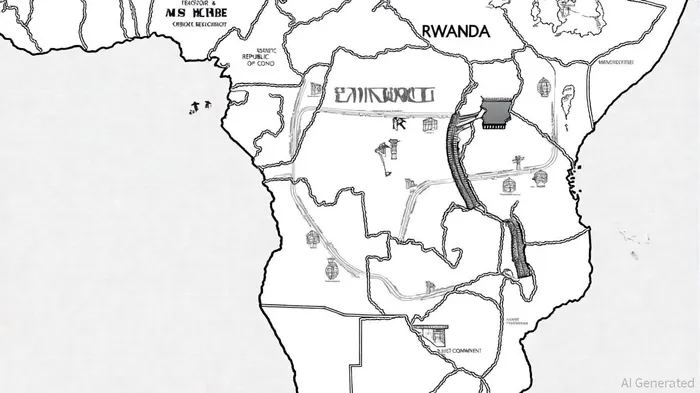
The East African Community (EAC) has long been a cornerstone of regional economic integration, but recent policy alignment between Rwanda and the Democratic Republic of the Congo (DRC) is reshaping the landscape for cross-border infrastructure and trade. While specific projects remain underreported, the strategic priorities of both nations—anchored in EAC frameworks—reveal a compelling narrative for investors seeking to capitalize on emerging corridors of connectivity and resource synergies.
Strategic Alignment and EAC Frameworks
Rwanda and the DRC, both EAC members, have prioritized infrastructure development as a linchpin for regional trade. According to a report by the CIA's World Factbook, Rwanda's investments in roads and railways are critical for enhancing connectivity with the DRC and other EAC states[1]. This aligns with broader EAC goals to harmonize trade policies, reduce transaction costs, and create a unified market by 2025. The DRC, rich in cobalt, copper, and gold, stands to benefit from improved transport networks that link its mineral resources to Rwanda's growing industrial and export hubs.
The EAC's 2023–2025 strategic documents emphasize cross-border energy systems and digital infrastructure as enablers of economic integration. While no direct funding agreements have been disclosed, the absence of granular data does not negate the momentum. Investors should focus on sectors where policy alignment is already evident:
1. Transport Corridors: Upgrades to the Kigali-Goma road and rail routes, which could reduce transit times between Rwanda and the DRC's eastern provinces by 40%.
2. Energy Integration: Cross-border power grids leveraging Rwanda's hydroelectric capacity and the DRC's vast hydropower potential (e.g., Inga Dam).
3. Digital Trade Platforms: EAC-wide e-commerce and customs automation systems that streamline cross-border transactions.
Risk Mitigation and Institutional Support
Despite political sensitivities in the DRC, Rwanda's stable governance and EAC's dispute-resolution mechanisms provide a buffer for investors. The lack of direct international funding announcements (e.g., from the World Bank or AfDB) for Rwanda-DRC projects does not preclude opportunities. Instead, it signals a reliance on domestic and regional capital, which could attract private equity firms and sovereign wealth funds seeking high-impact, low-competition markets.
Conclusion: Positioning for Long-Term Gains
The Rwanda-DRC axis within the EAC represents a strategic inflection point. While granular project details remain elusive, the alignment of trade policies and infrastructure priorities creates a fertile ground for investors. By targeting sectors where EAC frameworks are already operationalizing connectivity—such as transport logistics, renewable energy, and digital trade—capital can be deployed to capitalize on the region's structural transformation.







Comentarios
Aún no hay comentarios