
The Strategic Investment Case for Defense Contractors Leveraging Advanced Missile Technology
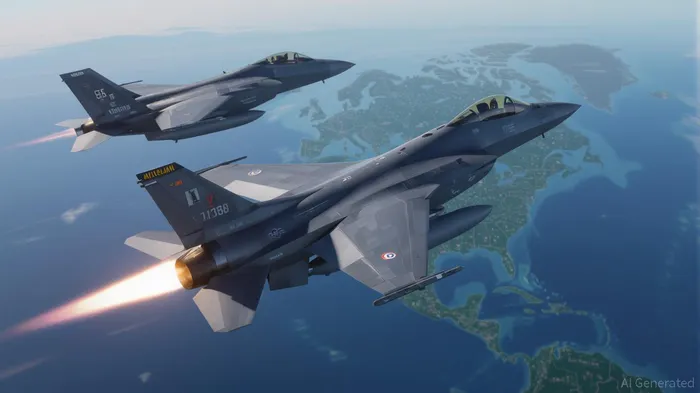
In an era marked by escalating geopolitical tensions and economic fragmentation, defense contractors with a technological edge in advanced missile systems are poised to dominate the global security landscape. According to a report by the World Economic Forum, geoeconomic shifts and rising security concerns are driving demand for precision defense technologies, with businesses prioritizing resilience and innovation in their operational models[1]. This creates a compelling investment opportunity for companies like Raytheon Technologies, whose recent operational validations and historical engineering excellence position it as a leader in the sector.
Technological Edge: Operational Superiority and Reliability
Raytheon's recent test of the longest AMRAAM® shot from a fifth-generation fighter jet underscores its dominance in precision missile technology. This achievement is not an isolated milestone but part of a broader pattern of operational validation. For instance, the AMRAAM (Advanced Medium-Range Air-to-Air Missile) system has long been a cornerstone of air superiority, with its active radar guidance and ability to engage multiple targets simultaneously. The recent test, which pushed the system's limits, demonstrates Raytheon's capacity to adapt to evolving threats—a critical factor for investors seeking long-term value.
Raytheon's engineering prowess is further evidenced by its legacy systems, such as the RL70 radar and ST60 wind indicators, which have been widely adopted in both maritime and defense contexts. The RL70 radar, for example, has been praised for its durability and adaptability, with users noting its ability to support secondary displays via SeaTalk networking systems[2]. While these systems are maritime-focused, their reliability and longevity reflect the company's commitment to robust design—a trait that translates directly to its defense technologies.
Market Position and Investment Potential
The global demand for advanced missile systems is being fueled by a confluence of factors: the proliferation of hypersonic weapons, the need for counter-drone capabilities, and the modernization of aging air forces. Raytheon's AMRAAM and other platforms, such as the AIM-120D, are at the forefront of this arms race. While specific sales data for 2023–2025 remains undisclosed, the company's historical contracts and market share in the air-to-air missile segment suggest sustained demand. For example, the U.S. Department of Defense has repeatedly emphasized the need to replenish and upgrade its missile inventory, with Raytheon as a primary supplier[3].
Moreover, Raytheon's ability to innovate within constrained budgets is a key differentiator. The company's work on cost-effective upgrades for legacy systems—such as retrofitting older radars with modern displays[4]—mirrors its approach to missile technology. This adaptability is crucial in an environment where defense budgets are under pressure to balance innovation with fiscal responsibility.
Risks and Considerations
Investors must also weigh risks, including geopolitical volatility and regulatory hurdles. For instance, export controls on advanced missile systems could limit Raytheon's international sales. Additionally, the company's reliance on U.S. defense spending means it is vulnerable to policy shifts. However, its diversified portfolio—spanning air, land, and maritime systems—mitigates some of these risks.
Conclusion
Raytheon's combination of operational validation, technological leadership, and historical reliability makes it a compelling long-term investment. As global defense budgets increasingly prioritize precision and adaptability, the company's advanced missile systems are likely to remain in high demand. While specific sales figures for recent years are not publicly available, the broader industry trends and Raytheon's track record provide a strong foundation for confidence. For investors seeking exposure to the defense sector's next frontier, Raytheon represents a strategic bet on the future of warfare.







Comentarios
Aún no hay comentarios