
The Strategic Value of Intermodal Rail Expansion: A Growth Opportunity for CN and CSX
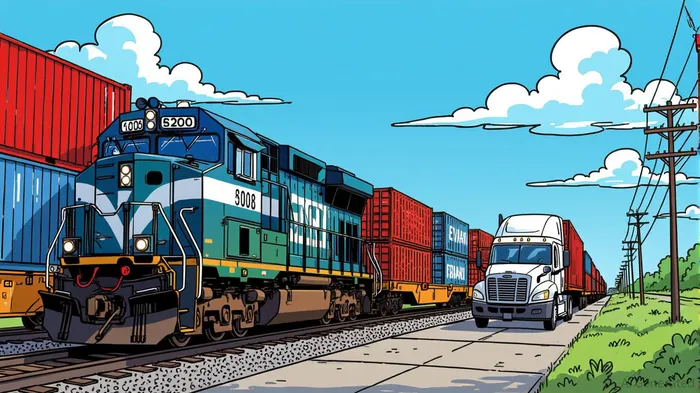
The global shift toward sustainable supply chains and cost-efficient freight solutions has positioned intermodal rail expansion as a critical growth lever for North American railroads. Canadian National RailwayCNI-- (CN) and CSX CorporationCSX--, two of the continent's leading Class I railroads, are capitalizing on this trend through strategic infrastructure investments, technological innovation, and sustainability-driven initiatives. These efforts not only address immediate supply chain bottlenecks but also align with long-term decarbonization goals, offering investors a compelling case for growth in an evolving transportation landscape.
Strategic Infrastructure Investments: Enhancing Connectivity and Capacity
CN and CSXCSX-- have prioritized intermodal rail projects that directly address supply chain inefficiencies. CSX's modernization of the Howard Street Tunnel in Baltimore, for instance, is set to enable double-stack intermodal service along the I-95 Rail Corridor, a critical artery for East Coast freight[1]. This upgrade is expected to boost capacity and reduce transit times, addressing a key competitive disadvantage railroads have historically faced against trucking's door-to-door flexibility[2]. Similarly, CN's acquisition of the MeridianMRBK-- & Bigbee Railroad in 2024 has expanded its East-West and Mexico-bound traffic routes, creating a more resilient network for cross-border trade[1].
These projects are not merely incremental improvements but foundational shifts in how railroads serve as backbone infrastructure for global commerce. By 2025, the rail logistics market—driven by intermodal adoption—is projected to grow from $439.3 billion to $743.3 billion by 2035, with a compound annual growth rate (CAGR) of 5.4%[3]. This expansion is fueled by the need for reliable, low-cost alternatives to trucking, particularly for long-haul freight, and underscores the strategic value of CN and CSX's capital allocations.
Sustainability as a Competitive Advantage
The environmental benefits of intermodal rail are increasingly quantifiable and marketable. According to a 2025 industry analysis, intermodal rail systems reduce greenhouse gas (GHG) emissions by up to 46% compared to all-road trucking systems[4]. CN has leveraged this advantage by achieving a 4% reduction in total Scope 1, 2, and 3 emissions in 2024, bringing it closer to its 2030 science-based target of a 27% reduction[5]. The company's adoption of renewable fuels—accounting for 10% of its locomotive fuel in 2024—has further solidified its position as a leader in sustainable freight[5].
CSX, meanwhile, has integrated sustainability into its customer value proposition. Its collaboration with CN to launch an all-rail intermodal service into Nashville, Tennessee, replaced a trucking leg of the supply chain, reducing highway congestion and carbon footprints[6]. Such initiatives align with corporate clients' growing demand for ESG-compliant logistics solutions, creating a flywheel effect where sustainability drives customer retention and regulatory compliance.
Navigating Challenges and Quantifying Returns
While both railroads face headwinds—including labor disputes, extreme weather disruptions, and geopolitical trade uncertainties—their intermodal strategies are designed to mitigate these risks. For example, CN's double-tracking projects on key corridors aim to buffer against capacity constraints caused by port labor stoppages or severe weather[7]. However, quantifying the financial returns on these investments remains challenging due to the lack of granular ROI or cost-saving data in public filings.
Despite this, third-party validation of intermodal rail's efficiency provides indirect confidence. A 2024 study by Grand View Research notes that rail logistics reduces operational costs by 30–50% compared to road freight, primarily due to lower fuel consumption and infrastructure wear[3]. For CN and CSX, this translates to long-term margin protection as fuel prices and carbon pricing mechanisms evolve.
Conclusion: A Dual-Track Strategy for Growth
CN and CSX's intermodal rail expansions represent more than a response to market pressures—they are proactive investments in a future where sustainability and supply chain resilience are non-negotiable. By modernizing infrastructure, adopting cleaner technologies, and aligning with customer ESG priorities, both railroads are positioning themselves to capture a larger share of the growing intermodal market. For investors, the strategic value lies in their ability to balance environmental stewardship with operational efficiency, creating a durable competitive edge in an industry at a crossroads.





Comentarios
Aún no hay comentarios