
Strategic Industrial Partnerships in Defense Engineering: Assessing Long-Term Value Creation and Competitive Advantage
In an era where defense engineering is increasingly defined by technological complexity and geopolitical volatility, strategic industrial partnerships have emerged as a cornerstone for long-term value creation and competitive advantage. The collaboration between Rolls-Royce Submarines and Siemens in digital submarine development exemplifies this trend, offering a blueprint for how cross-industry alliances can drive innovation, reduce costs, and secure market leadership.
Digital Transformation as a Strategic Imperative
Rolls-Royce Submarines and Siemens formalized a memorandum of understanding (MOU) in September 2025, according to a Rolls‑Royce press release, to leverage Siemens' Xcelerator platform, a digital ecosystem designed to optimize engineering, manufacturing, and reactor operations. This partnership aims to create a "digital backbone" for the full lifecycle of nuclear naval reactors, enabling real-time monitoring, predictive maintenance, and agile design iterations, as described in a Newsylist article. By integrating Siemens' AI-driven tools and cloud-based analytics, Rolls-Royce can reduce time-to-production for new submarine technologies by up to 30% while minimizing operational risks, a point highlighted by Controls Drives Automation.
The financial implications are significant. According to a McKinsey report, defense contractors that adopt digital twins and AI-driven workflows can achieve cost savings of 15–25% in engineering and manufacturing. Rolls-Royce's collaboration with Siemens aligns with this potential, as demonstrated by a 2025 pilot project where AI-powered design optimization reduced programming time for CNC machining by 80% and component weight by 25%, reported in a Siemens blog post. These efficiencies not only lower production costs but also enhance the UK's sovereign defense capabilities, a critical factor in an era of rising defense budgets and energy security demands, as highlighted in Manufacturing Digital.
Expanding the Partnership: Small Modular Reactors and Energy Transition
Beyond submarines, Rolls-Royce and Siemens Energy have partnered to supply steam turbines and generators for Rolls-Royce's Small Modular Reactors (SMRs); this arrangement is detailed in a Siemens Energy press release. The collaboration positions Siemens as the sole supplier for these components, leveraging its decades of nuclear power expertise to accelerate SMR deployment. SMRs are projected to become a $100 billion market by 2040, driven by their scalability, safety, and alignment with decarbonization goals, according to an Energy Digital analysis. By securing a first-mover advantage in this sector, Rolls-Royce strengthens its market positioning in both defense and civilian energy markets, while Siemens gains access to cutting-edge nuclear technology.
Financially, the SMR partnership is poised to deliver substantial returns. Rolls-Royce's 2024 financial report highlights a record £2.5 billion in underlying operating profit, with AI-driven savings exceeding £500 million in 2025 (as noted in Manufacturing Digital). The SMR program, expected to generate £3 billion in revenue by 2030, further diversifies Rolls-Royce's income streams and reduces reliance on traditional aerospace markets, according to a Rolls‑Royce SMR release.
Broader Industry Trends and Competitive Dynamics
A 2025 industry compilation reports that 78% of defense contractors increased digital investments in the past two years, with 82% planning to adopt digital solutions within three years, and that cybersecurity and data integration now rank highly among priorities, according to a Gitnux compilation. Cybersecurity and data integration are also critical, with 62% of organizations prioritizing advanced cyber defense technologies. Siemens' Xcelerator platform, with its focus on secure, interoperable systems, addresses these challenges while enabling cross-border collaboration with allies-a key trend expected to grow in the next five years.
Strategic partnerships also mitigate geopolitical risks. For instance, the UK's renewed focus on nuclear energy for decarbonization and energy security has spurred public-private investments in SMRs (see Energy Digital). Rolls-Royce's collaboration with Siemens aligns with this national strategy, ensuring access to critical technologies and supply chains while avoiding bottlenecks caused by global semiconductor shortages or geopolitical tensions (as discussed in Manufacturing Digital).
Conclusion: A Blueprint for Future-Proofing Defense Engineering
The Rolls-Royce and Siemens collaboration underscores the transformative power of strategic industrial partnerships in defense engineering. By combining Rolls-Royce's expertise in nuclear propulsion with Siemens' digital innovation, the partnership achieves cost savings, accelerates R&D, and secures a leadership position in emerging markets like SMRs. For investors, this model highlights the importance of cross-industry alliances in navigating the dual challenges of technological disruption and geopolitical uncertainty. As defense budgets rise and digital transformation accelerates, companies that prioritize such partnerships will likely outperform peers in both financial returns and strategic resilience. 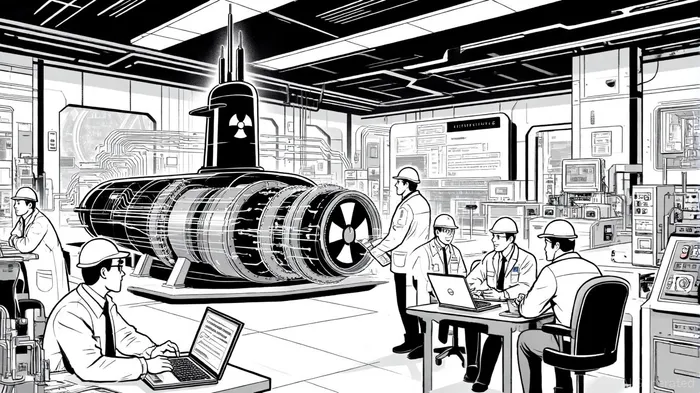







Comentarios
Aún no hay comentarios