
The Strategic Implications of Standard Lithium's $130M Equity Raise
Strategic Benefits: Positioning for Lithium Demand
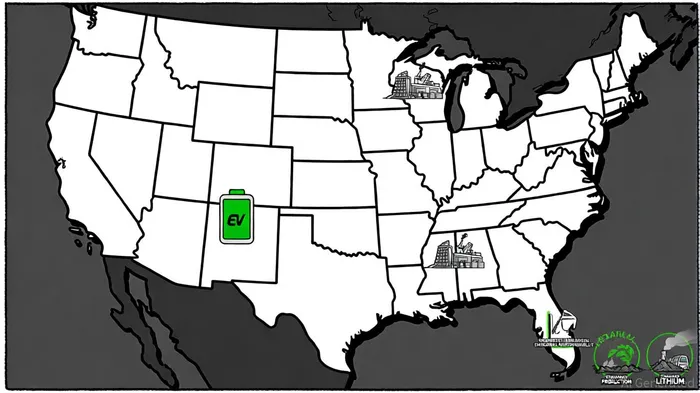
The Arkansas and Texas projects represent a cornerstone of Standard Lithium's growth strategy. The South West Arkansas Project, a joint venture with Equinor, targets the lithium-rich Smackover Formation, while the East Texas initiative aims to leverage direct lithium extraction (DLE) technology to streamline production, according to a CityBuzz report. These projects align with the surging global demand for lithium, driven by electric vehicle (EV) battery production and energy storage systems. By advancing these assets, Standard LithiumSLI-- seeks to secure a foothold in a market projected to grow at a 12% compound annual rate through 2030, according to an NWA Online article.
The partnership with Equinor, a global energy leader, adds credibility to the venture. Equinor's expertise in subsurface resource management complements Standard Lithium's DLE capabilities, potentially reducing operational costs and environmental impact, the CityBuzz report notes. Analysts argue that successful execution could position the company as a low-cost, sustainable lithium producer in the U.S., a critical advantage as supply chains shift toward domestic sourcing, the NWA Online article adds.
Dilution Risks: A Market in Retreat
Despite these strategic benefits, the equity raise has triggered significant investor skepticism. The announcement led to a 26% plunge in SLI's stock price during early trading on October 17, 2025, with shares closing at $4.36 by October 18-a 19.11% weekly decline, according to a GuruFocus report. This reaction underscores concerns over dilution, as the 29.9 million new shares represent a 23% increase in the company's float. If underwriters exercise their purchase option for an additional $19.5 million, dilution could rise further, potentially eroding shareholder value.
Financial metrics exacerbate these concerns. Standard Lithium reported a net income loss of -$4.98 million in Q2 2025, alongside a negative EBITDA of -$5.28 million and abysmal return metrics (ROA of 0.97%, ROE of 1.08%), the Stockstotrade report shows. Analysts warn that without material improvements in operational efficiency, the capital raise may fail to translate into profitability, leaving investors with a "growth at all costs" narrative that lacks near-term rewards, according to a Timothy Sykes article.
Market Reaction and Technical Analysis
The market's bearish response is not merely emotional. Technical indicators suggest a continuation of downward momentum. SLI's stock has breached key support levels, with stop-loss strategies advised for positions above $5.45, the Stockstotrade report notes. A price-to-free-cash-flow ratio of 48,715.4-a figure that dwarfs industry peers-further highlights the stock's vulnerability, the Timothy Sykes article highlights. While the company's management emphasizes long-term value creation, the immediate reality is a stock under pressure from both fundamental and technical headwinds.
A Critical Crossroads for Investors
Standard Lithium's equity raise encapsulates a classic dilemma for investors: the tension between aggressive growth and capital preservation. The Arkansas and Texas projects offer a compelling vision for the future of U.S. lithium production, but their success hinges on execution. If the company can demonstrate cost discipline, accelerate production timelines, and achieve commercial-scale output by 2026, the dilution risks may be justified. However, given the current financial trajectory-marked by negative EBITDA and weak returns-investors must question whether the capital is being allocated effectively.
For now, the market appears to favor caution. The 26% stock plunge reflects a loss of confidence in the company's ability to balance growth with shareholder interests. While the lithium market's long-term potential remains intact, Standard Lithium's near-term prospects are clouded by execution risks and dilution concerns. Investors at this crossroads must weigh their tolerance for volatility against the company's ability to deliver on its ambitious vision.





Comentarios
Aún no hay comentarios