
Strategic Implications of LTC's Sale of Skilled Nursing Centers
The recent divestiture of two skilled nursing centers by LTC PropertiesLTC--, Inc. (LTC) for $42 million-projected to yield a $26 million gain-marks a pivotal shift in the company's capital reallocation strategy. This transaction, part of a broader plan to sell seven such facilities and generate $120 million in proceeds by late 2025, underscores LTC's pivot toward seniors housing and health care properties (SHOP). By shedding older, non-core assets, LTCLTC-- is aligning itself with a sector-wide reallocation of capital that prioritizes independent and assisted living over traditional skilled nursing facilities (SNFs).
Sector Rotation: A Market-Driven Shift
The senior care industry is undergoing a structural transformation driven by demographic and economic forces. According to CBRE's U.S. Senior Housing & Care Investor Survey H1 2025, 72% of investors are actively increasing exposure to seniors housing, particularly in independent and assisted living segments. This trend is fueled by aging baby boomers, who now represent 22% of the U.S. population and are projected to double in size by 2030, according to Senior Housing Market Trends 2025 https://www.mmcginvest.com/post/senior-housing-market-trends-2025-demographics-driving-assisted-living-demand.
Capitalization rates (cap rates) further validate this shift. Active-Adult and Independent Living communities have seen cap rates decline by 20 and 18 basis points, respectively, in 2025, while Memory Care remains the only segment with a slight increase. These dynamics reflect investor confidence in seniors housing's resilience amid rising occupancy rates (87.4% in Q1 2025) and a growing perception of senior living as a vibrant, community-driven lifestyle rather than a clinical necessity, according to Senior Housing Industry Experts https://www.srseniorliving.com/2025/08/09/senior-housing-industry-experts-insights-and-trends-for-2025/.
LTC's Strategic Alignment with Market Trends
LTC's divestiture strategy mirrors these broader trends. By reallocating capital to SHOP, the company aims to position 62% of its gross real estate investments in seniors housing by year-end 2025, with SHOP accounting for 19%, according to an LTC press release https://ir.ltcreit.com/news-events/news/detail/444/ltc-sells-two-skilled-nursing-centers. This reallocation is not merely a defensive move but a proactive response to supply-demand imbalances. The National Investment Center (NIC) estimates that 560,000 new senior housing units will be needed by 2030, yet only 21,750 units are currently under construction. LTC's focus on stabilized properties allows it to capitalize on this gap without overextending in a constrained construction market.
Moreover, LTC's approach aligns with evolving resident preferences. High-performing communities now integrate wellness amenities, digital health tools, and intergenerational programming-features that LTC's acquired properties are likely to adopt. For instance, the company's recent purchases include facilities with on-site fitness centers and telehealth capabilities, addressing the dual demand for health management and social engagement. (These trends were highlighted by Senior Housing Industry Experts earlier in this piece.)
Challenges and Opportunities
While LTC's strategy is well-positioned, it must navigate sector-specific risks. Regulatory changes, particularly in assisted living and skilled nursing, could complicate operations. For example, 2025 saw 12 states revise staffing requirements for memory care, increasing labor costs by 8–12%, a point noted in LTC's announcement. Additionally, workforce shortages persist, with 43% of senior living operators reporting unfilled roles in Q2 2025, as LTC's release also observed. LTC's ability to retain talent through competitive wages and mentorship programs will be critical.
However, the company's focus on capital efficiency offers a buffer. By leveraging proceeds from SNF sales to acquire stabilized assets, LTC avoids the high upfront costs of new construction. This approach also mitigates exposure to interest rate volatility, as 78% of its SHOP acquisitions in 2025 were financed with fixed-rate debt, according to industry analysis.
Conclusion: A Model for Sector Adaptation
LTC's strategic reallocation exemplifies how REITs can adapt to sector rotation by prioritizing demand-driven assets and operational innovation. As the senior care industry shifts toward wellness-focused, technology-enabled communities, LTC's portfolio diversification positions it to outperform peers reliant on traditional SNFs. Investors should monitor the company's progress in converting proceeds into high-yield SHOP acquisitions, as well as its ability to integrate digital tools that enhance resident retention and operational efficiency.
In a market where occupancy rates and rent growth are accelerating, LTC's pivot is not just a tactical adjustment-it is a strategic repositioning for long-term value creation.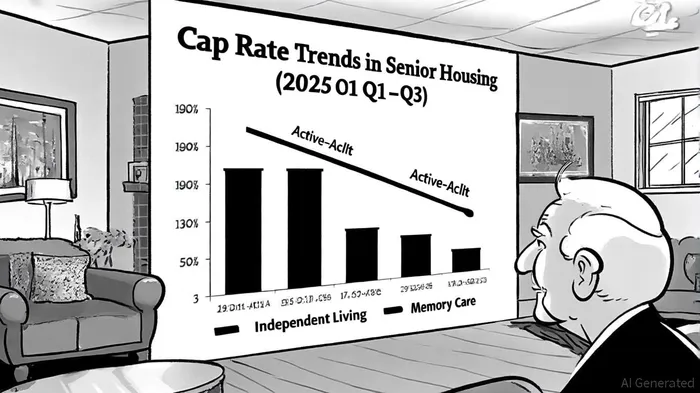





Comentarios
Aún no hay comentarios