
The Strategic Implications of KN026's NDA Acceptance for BeiGene's Oncology Pipeline
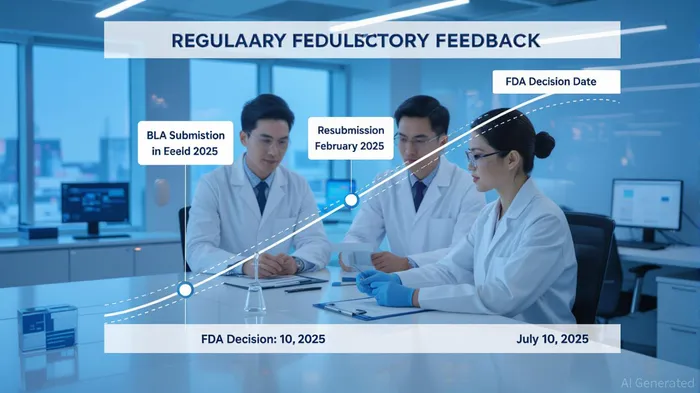
The recent resubmission of BeiGene's Biologics License Application (BLA) for KN026, a monoclonal antibody targeting PD-1, marks a pivotal moment for the company's oncology pipeline. With the U.S. Food and Drug Administration (FDA) decision expected by July 10, 2025[1], the outcome of this regulatory review could redefine BeiGene's market position and long-term value creation potential. This analysis evaluates the strategic implications of KN026's regulatory trajectory, focusing on its market catalyst potential and broader impact on BeiGene's oncology ambitions.
Regulatory Progress and Market Catalyst Potential
BeiGene's KN026, a PD-1 inhibitor, has navigated a complex regulatory landscape. As of February 2025, the FDA has accepted the resubmission of its BLA, following prior feedback that included concerns over product quality and vial compatibility[4]. While specific details of the resubmission's content remain undisclosed, the fact that the FDA has set a decision date of July 10, 2025[2], signals that the agency views the application as sufficiently complete for review. This timeline aligns with broader industry trends, where resubmissions after addressing regulatory concerns often culminate in approvals, as seen with Provention Bio's successful resubmission for teplizumab-mzwv[3].
The July 2025 decision date itself represents a significant market catalyst. For investors, this event introduces a binary outcome that could drive volatility in BeiGene's stock price. A positive decision would not only validate KN026's safety and efficacy profile but also accelerate BeiGene's entry into the U.S. oncology market, a critical growth lever for the company. Conversely, a delay or rejection could necessitate further data submissions, prolonging commercialization timelines.
Long-Term Value Creation and Strategic Positioning
If approved, KN026 would bolster BeiGene's oncology portfolio, which already includes the BTK inhibitor zanubrutinib and the CD19/CD3 bispecific antibody zevatolimab. The PD-1 space, though crowded, remains lucrative, with global sales of PD-1/PD-L1 inhibitors projected to exceed $30 billion by 2027[5]. KN026's differentiation lies in its potential cost-effectiveness and broader applicability across tumor types, particularly in Asia, where BeiGeneONC-- has established a strong commercial footprint.
Moreover, KN026's approval could catalyze cross-selling opportunities within BeiGene's existing oncology assets. For instance, combination therapies involving KN026 and zanubrutinib in lymphoma or zevatolimab in hematologic malignancies could enhance therapeutic outcomes and expand market share. This synergy aligns with BeiGene's strategy to build a “one-stop shop” for oncology care, a model that has proven successful for competitors like MerckMRK-- & Co. with Keytruda[6].
Risk Mitigation and Investor Sentiment
While the BLA resubmission addresses prior regulatory concerns, investors must remain cognizantCTSH-- of residual risks. The FDA's feedback on the resubmission—though not publicly detailed—could highlight unmet requirements, such as additional clinical data or manufacturing validations. Historical precedents, such as Lilly's resubmission for lebrikizumab[1], underscore the importance of aligning with agency expectations to avoid further delays.
However, BeiGene's track record in navigating regulatory hurdles—evidenced by its NMPA approval for tislelizumab in China[8]—suggests a capacity to adapt to feedback. This resilience, combined with the July 2025 decision deadline, positions KN026 as a high-impact asset with the potential to drive shareholder value. Analysts estimate that KN026's U.S. approval could add $5–$7 billion in annual revenue by 2030, assuming a 10–15% market share in PD-1 therapies[9].
Conclusion
The regulatory journey of KN026 exemplifies the delicate balance between innovation and compliance in biopharma. Its pending FDA decision in July 2025 represents not just a regulatory milestone but a strategic inflection pointIPCX-- for BeiGene. A successful outcome would solidify the company's position in the global oncology landscape, while also unlocking new avenues for combination therapies and market expansion. For investors, the July 2025 decision date is a critical catalyst—one that could redefine BeiGene's trajectory in the years to come.





Comentarios
Aún no hay comentarios