
Strategic Implications of GTC's Potential Sale of German Real Estate Holdings
The recent announcement by Global Trust Capital (GTC) to sell 45% of its German residential real estate portfolio has sparked significant interest among investors and analysts. This move, part of a broader deleveraging strategy, reflects the evolving dynamics of European real estate liquidity and risk rebalancing in 2025. By examining GTC's actions through the lens of market trends, we uncover critical opportunities and challenges for stakeholders navigating this complex landscape.
Strategic Rationale for GTC's Sale
GTC's decision to divest a portion of its German portfolio aligns with its need to address rising financing costs and stabilize its balance sheet. The company has already identified assets for sale and begun marketing efforts, with transactions expected in 2025. Proceeds from the sale will directly repay €190 million in debt from Baupost Group and Diameter Capital Partners, according to Bloomberg, a move that underscores the urgency of reducing leverage in a tightening credit environment. This strategy mirrors broader industry trends, where firms are prioritizing liquidity over speculative growth, Trimont notes.
The German residential market, however, remains a compelling asset class. Despite macroeconomic uncertainties-such as global trade tensions and political transitions-the chronic housing shortage in urban areas continues to drive rent growth, Trimont notes. This resilience positions GTC's portfolio as an attractive target for investors seeking stable cash flows in a sector insulated from broader economic volatility.
European Liquidity Trends and Sectoral Shifts
The European real estate market in 2025 is characterized by a nuanced interplay of liquidity and risk management. Traditional banks are re-entering the market with selective lending, favoring well-capitalized sponsors and stabilized assets, as Trimont observes. This shift has led to increased deal activity in sectors like logistics, multifamily, and core office, which offer income durability and alignment with sustainability goals, according to Trimont.
GTC's focus on residential assets in Germany aligns with this trend. The logistics sector, for instance, has seen heightened demand due to supply chain shifts and AI-driven data center growth, according to Bloomberg. However, the residential market's structural demand-driven by demographic pressures and urbanization-provides a unique edge. As noted by CBRE, Germany's residential sector is expected to outperform other asset classes in 2025, despite a subdued macroeconomic outlook, Trimont reports.
Risk Rebalancing and ESG Integration
Risk rebalancing strategies are becoming central to European real estate investment. Lenders are tightening covenants, emphasizing sponsor alignment, and embedding ESG performance into pricing decisions, Trimont finds. For example, 88% of logistics occupiers now rate ESG compliance as critical, driving demand for modern, energy-efficient assets, Bloomberg reports. GTC's portfolio, acquired in 2024, likely includes properties that meet these evolving standards, enhancing their appeal to ESG-focused investors.
Southern European markets, such as Spain and Portugal, are also gaining traction due to nearshoring opportunities and recovering growth, Trimont notes. While GTC's current focus remains on Germany, its broader strategy to refocus on Central and Eastern Europe suggests a long-term commitment to regions offering both liquidity and risk-adjusted returns, according to CEE Real Estate Matters.
Implications for Investors
The sale of GTC's German portfolio presents opportunities for both domestic and international investors. With refinancing becoming a dominant theme in 2025, buyers with strong governance frameworks and sustainable business plans are likely to dominate the market, Trimont cautions. The logistics sector's development pipeline, though constrained in core markets, highlights the importance of modern, ESG-compliant assets in attracting capital, Bloomberg reports.
For investors, the key takeaway is the need to balance immediate income generation with long-term adaptability. GTC's approach-selling non-core assets to fund debt and refocus on strategic markets-exemplifies this duality. As Trimont notes, the return of mezzanine lending and co-lending structures is enabling debt funds to remain active, albeit with increased complexity.
Conclusion
GTC's potential sale of its German real estate holdings is not merely a tactical move but a strategic response to the evolving European real estate landscape. By leveraging liquidity from its residential portfolio, the firm is positioning itself to navigate rising financing costs while capitalizing on sectors with durable demand. For investors, this transaction underscores the importance of aligning with market trends-such as ESG integration, sectoral shifts, and risk rebalancing-to unlock value in an increasingly fragmented market.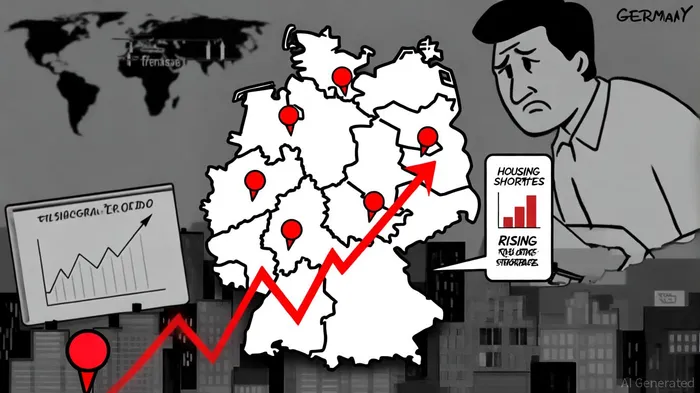







Comentarios
Aún no hay comentarios