
The Strategic Implications of Frax's (FRAX) Rebranding and Binance's Institutional Support
The cryptocurrency landscape in 2025 is witnessing a pivotal convergence of rebranding strategies and institutional-grade infrastructure, with FraxFRAX-- Finance's transition from FXS to FRAX and Binance's expanding role in institutional crypto innovation standing out as defining narratives. This analysis explores how these developments are reshaping token utility and market readiness, offering critical insights for investors navigating the evolving DeFi ecosystem.
Token Utility Evolution: From FXS to FRAX and frxUSD
Frax Finance's rebranding in 2025 marks a strategic pivot toward enhancing token utility and cross-chain interoperability. By rebranding its governance token from FXS to FRAX, the protocol aims to streamline its identity and align with a broader vision of becoming the "decentralized central bank of crypto" according to Binance. This rebranding has already triggered a 20% price surge in FRAX, driven by a reduction in circulating supply and technical upgrades to its stability mechanisms as reported by CoinMarketCap.
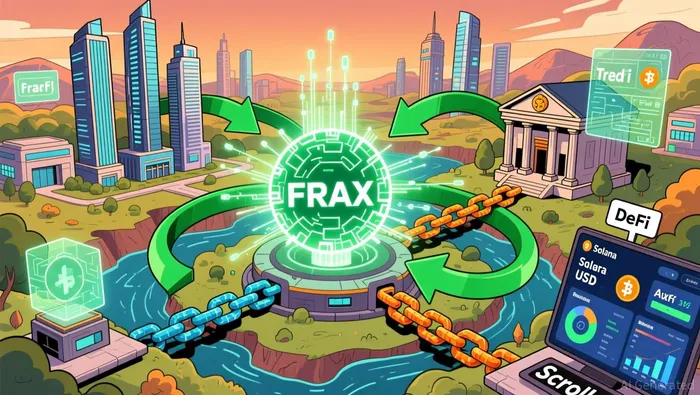 A key innovation underpinning this evolution is the launch of frxUSD, a stablecoin backed by BlackRock's USD Institutional Digital Liquidity Fund (BUIDL), tokenized by Securitize according to PR Newswire. This collaboration provides frxUSD with direct fiat redemption capabilities and on-chain audibility, bridging traditional finance (TradFi) and DeFi. By leveraging institutional-grade custodians like Securitize and WisdomTreeWT--, frxUSD offers diversified liquidity pathways, enhancing its resilience and appeal to institutional investors as detailed in a ChaosLabs analysis.
Frax's cross-chain expansion further amplifies its utility. The protocol is deploying its infrastructure across SolanaSOL--, Aurora, and Scroll, ensuring broader liquidity and user access according to CoinMarketCap. This multichain strategy is supported by LayerZero's OFT (Omni-Chain Token) mechanism, enabling trust-minimized minting and redemption across networks as analyzed in a ChaosLabs post. Such innovations position FRAX as a versatile asset for both retail and institutional participants.
Binance's Institutional Support: Liquidity, Custody, and Strategic Partnerships
Binance's institutional-grade services are playing a critical role in bolstering FRAX's market readiness. The exchange has announced support for Frax's rebranding, including the FXS mainnet swap and FRAX listing as announced on Binance, while its MirrorRSV product allows institutional clients to access Binance's liquidity without transferring assets to the exchange as detailed in a Ceffu blog. This innovation reduces counterparty risk and enhances capital efficiency, addressing key concerns for institutional investors.
Binance's broader institutional strategy in 2025 also aligns with Frax's vision. The exchange has partnered with Franklin Templeton to develop digital asset initiatives and tokenized products, with new offerings slated for later in the year as reported on Binance. While no direct mention of FRAX is found in these partnerships, Binance's focus on DeFi, AI, and emerging blockchain ecosystems according to CryptoSlate suggests a favorable environment for projects like Frax to thrive.
Additionally, Binance's liquidity programs and execution services are tailored to support large-volume traders. For instance, its OTC aggregation services minimize slippage and improve execution times for sophisticated investors as reported by PR Newswire. These tools, combined with third-party custody solutions like Ceffu's Qualified Wallets as detailed in a Ceffu blog, create a secure and compliant infrastructure that could indirectly benefit FRAX's adoption.
Market Readiness: Strategic Synergies and Challenges
The interplay between Frax's rebranding and Binance's institutional support underscores a broader trend: the maturation of DeFi infrastructure to meet institutional demands. Frax's frxUSD, with its TradFi-backed stability and multichain capabilities, is well-positioned to attract institutional capital. Meanwhile, Binance's liquidity and custody innovations provide the scaffolding for such assets to gain traction.
However, challenges remain. Binance's 2025 listing strategy emphasizes quality over quantity, with a focus on projects aligned with narratives like BitcoinBTC-- ETFs and AI as reported by CoinLaunch. While frxUSD's institutional backing is a strong differentiator, its absence from Binance's confirmed listing calendar highlights the competitive nature of the ecosystem according to Binance. Similarly, the lack of explicit staking programs for FRAX on Binance means investors must look to platforms like Uphold for yield opportunities as recommended by Webopedia.
Conclusion: A New Paradigm for DeFi
Frax's rebranding and Binance's institutional initiatives collectively signal a shift toward a more robust, interoperable, and institutionalized DeFi ecosystem. By enhancing token utility through frxUSD and cross-chain expansion, Frax is addressing liquidity and transparency gaps that have historically hindered DeFi adoption. Binance's role in providing secure custody, liquidity access, and strategic partnerships further strengthens this foundation.
For investors, the strategic implications are clear: projects that bridge TradFi and DeFi while leveraging institutional-grade infrastructure are poised to lead the next phase of crypto adoption. As Frax and Binance continue to refine their offerings, the market's readiness for these innovations will likely determine their long-term success.





Comentarios
Aún no hay comentarios