
The Strategic Implications of the EU's €140 Billion Interest-Free Ukraine Loan for European Defense and Energy Sectors
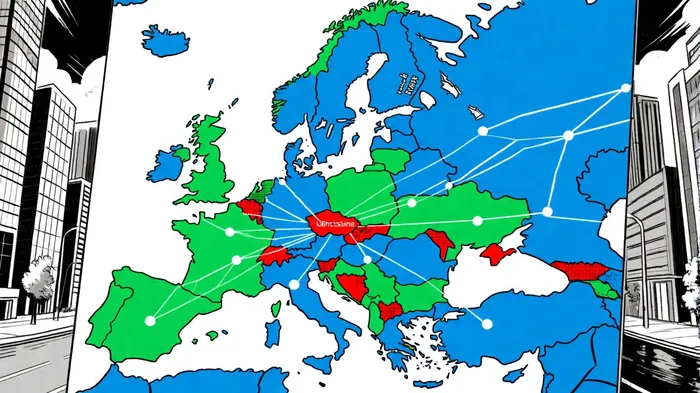
The European Union's €130 billion “reparations loan” for Ukraine—financed through frozen Russian assets—represents a seismic shift in how geopolitical crises are monetized and how strategic sectors are reindustrialized. This loan, contingent on Russia's future reparations and structured to avoid direct asset confiscation, is not merely a lifeline for Ukraine but a catalyst for reshaping European defense and energy infrastructure. For investors, the implications are clear: the EU's sovereignty-driven investments in Ukraine are unlocking high-yield opportunities in reindustrialization, innovation, and infrastructure resilience.
Defense: A New Industrial Ecosystem
The EU's integration of Ukraine into its defense framework is accelerating the continent's shift from fragmented national programs to coordinated, technology-driven systems. The BraveTech EU initiative, launched in collaboration with Ukraine's Brave1 defense tech platform, is a prime example. By linking Ukrainian firms to EU programs like the European Defence Fund (EDF) and the EU Defence Innovation Scheme (EUDIS), the initiative fosters joint development of battlefield-tested technologies, from AI-driven drones to next-gen stealth materials [1].
Private capital is flowing into this ecosystem. The European Investment Bank (EIB) has allocated €40 million to a defense fund managed by Keen Venture Partners, targeting 20–25 startups in areas like autonomous systems and cyberwarfare [2]. Meanwhile, Ukraine's procurement of FPV attack drones and missile systems has attracted investments from European and U.S. venture funds, including NUNC Capital and Verne Capital, which see Ukraine as a “global hub for defense innovation” [3].
Financial metrics underscore the sector's potential. The European defense market is projected to grow from $10.45 billion in 2024 to $12.8 billion by 2029, driven by rising budgets and advanced technology adoption [4]. Ukraine's participation in the EU's Strategic Autonomy Fund for Europe (SAFE)—a €150 billion mechanism for joint procurement—further solidifies its role in securing long-term contracts for its defense industry [5].
Energy: Decentralized Resilience and Green Transition
The EU's energy investments in Ukraine are equally transformative. Nearly €600 million in 2025 financing has prioritized hydropower rehabilitation, district heating upgrades, and renewable projects like the Tyligulska Wind Farm's €450 million expansion [6]. These projects are not just about recovery; they are about building a decentralized, green energy grid that aligns with the EU's climate goals and enhances Ukraine's energy sovereignty.
Private sector participation is critical. The Ukraine Investment Framework, part of the EU's broader Ukraine Facility, mobilized €19.6 billion in 2024 alone, with €290 million in EU guarantees supporting SMEs and foreign investors [7]. The EIB's €500 million guarantee agreement with the EBRD to replenish Ukraine's gas reserves highlights the sector's strategic importance [8].
Growth projections are robust. Ukraine's energy sector is expected to see a 2.5% GDP contribution in 2025, despite a revised EBRD forecast of 2.5% overall growth [9]. For investors, the combination of EU guarantees, high demand for energy security, and Ukraine's push for decentralized power generation creates a compelling risk-reward profile.
Macroeconomic and Strategic Rationale
The EU's reparations loan is more than a financial tool—it is a geopolitical lever. By channeling frozen Russian assets into Ukraine's war effort and reconstruction, the EU avoids legal pitfalls while pressuring Russia to engage in peace talks. For investors, this stability is invaluable.
The Defence Readiness Omnibus, a €800 billion EU initiative over four years, further underscores the region's commitment to defense modernization. Streamlined regulations, fast-track permitting, and alignment with sustainability standards are making defense investments more attractive to asset managers, particularly under the EU's Sustainable Finance Disclosure Regulation (SFDR) [10].
Conclusion: Sovereignty as a Profit Center
The EU's €130 billion loan is redefining sovereignty as a profit center. By embedding Ukraine into its defense and energy networks, the EU is not only securing its own strategic autonomy but also creating a blueprint for post-conflict reindustrialization. For investors, the message is clear: sectors aligned with sovereignty—defense tech, green energy, and critical infrastructure—are where Europe's next wave of growth will emerge.
The risks, of course, remain. Geopolitical volatility and Ukraine's fiscal challenges could disrupt timelines. Yet, the EU's legal safeguards, such as the SPV mechanism, and its commitment to long-term partnerships with Ukraine suggest a durable framework. As one Ukrainian official noted, “This is not aid—it's an investment in Europe's future.”







Comentarios
Aún no hay comentarios