
The Strategic Implications of Enhanced 3D Environment Tools for Virtual Content Creation in the Post-China Australia Landscape
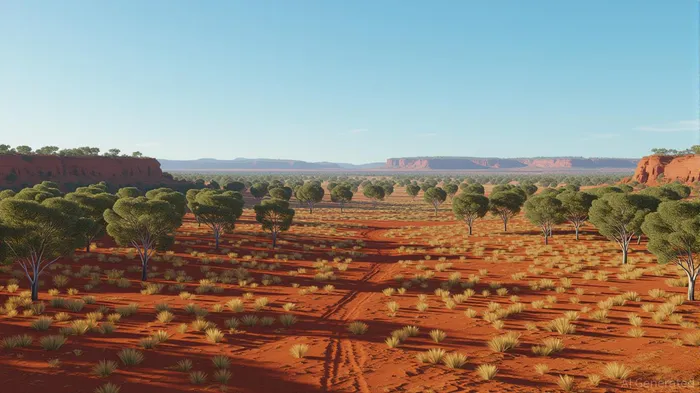
The Australian 3D design and rendering software market is undergoing a transformative phase, driven by technological advancements and a subtle but significant pivot in economic strategy post-China trade dynamics. While direct policy shifts remain unarticulated in recent data, the surge in demand for tools like UltraScenery2—Australia, a product of Daz 3D—signals a strategic realignment toward high-value digital industries. This evolution presents compelling opportunities for investors, particularly in niche markets focused on hyper-realistic virtual environments.
Market Trends and Technological Catalysts
The release of UltraScenery2 - Australia in 2025 exemplifies the industry's shift toward advanced, customizable 3D environment creation. This tool introduces nine detailed ecologies, enabling artists to replicate the complexity of Australian bush landscapes with unprecedented realism[1]. Features such as resizable terrains (up to 256 x 256m), layered biome systems, and real-time rendering adjustments have expanded the scope of virtual content creation, particularly for industries like film, gaming, and architectural visualization[2].
Complementing these software innovations, hardware advancements are accelerating adoption. The launch of NVIDIA's RTX 5090 and 5080 GPUs in early 2025 has provided the computational power needed to render large-scale, high-resolution 3D environments efficiently[3]. This synergy between software and hardware is critical for Australia's creative sector, which is increasingly prioritizing digital tools to offset traditional trade dependencies.
Strategic Implications for Investors
While the Australian government has not explicitly tied 3D design investments to post-China trade strategies, the market's trajectory suggests a de facto pivot toward technology-driven economic diversification. The demand for tools like UltraScenery2 aligns with broader trends in Australia's creative industries, where digital exports—such as virtual tourism experiences, educational simulations, and immersive storytelling—are gaining traction[4].
For investors, this represents a dual opportunity:
1. Niche Software Development: Companies specializing in region-specific 3D tools (e.g., UltraScenery2 - Australia) are capturing a unique market segment. These tools cater to global demand for culturally authentic virtual content, a niche that is less susceptible to geopolitical trade fluctuations.
2. Hardware-Software Ecosystems: The integration of advanced GPUs with rendering software creates a sticky ecosystem. As NVIDIA's RTX 50 series becomes mainstream, demand for compatible 3D design tools will likely grow, reinforcing the value of early investments in this space[5].
Challenges and Considerations
Despite these opportunities, challenges persist. The lack of explicit government policy support for 3D design software means the sector relies heavily on private investment and organic market growth. Additionally, the complexity of tools like UltraScenery2 may limit adoption among smaller studios or independent creators, though comprehensive tutorials (e.g., UltraScenery 2: A Comprehensive Guide) are mitigating this barrier[6].
Conclusion
The post-China trade landscape has not directly reshaped Australia's 3D design industry, but the market's organic evolution toward advanced virtual content creation tools suggests a strategic, if implicit, pivot. Enhanced 3D environment systems like UltraScenery2 are not only redefining creative possibilities but also positioning Australia as a hub for high-value digital exports. For investors, the intersection of software innovation, hardware capabilities, and a growing appetite for immersive virtual experiences offers a compelling case for long-term investment.





Comentarios
Aún no hay comentarios