
Strategic Implications of Deutsche Bank's Data Center Divestiture
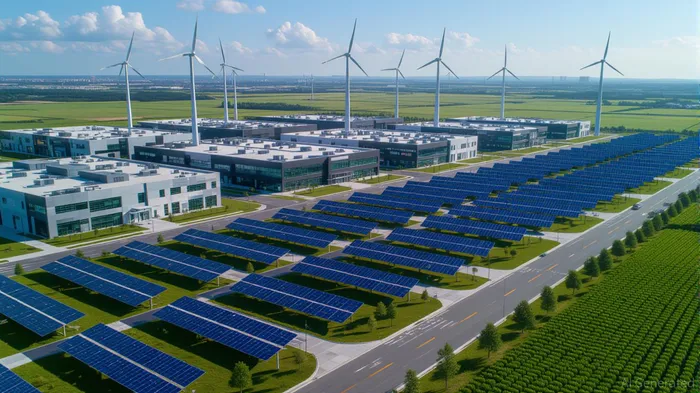
Deutsche Bank's decision to divest its data center business, NorthC, through its asset manager DWS, marks a pivotal moment in the evolving landscape of global digital infrastructure. This move, announced in early 2025, aligns with broader institutional restructuring trends as financial institutionsFISI-- recalibrate their exposure to capital-intensive sectors like data centers. While the bank's exit from direct ownership of physical assets may seem counterintuitive in an era of surging demand for AI-driven infrastructure, it reflects a calculated strategy to reallocate capital toward higher-margin opportunities and core banking operations.
A Strategic Shift: From Ownership to Financing
Deutsche Bank's Global Hausbank strategy emphasizes operational efficiency and capital returns to shareholders, with a focus on streamlining non-core businesses[1]. The divestiture of NorthC, a data center platform with assets in Europe and North America, is part of this broader agenda. By offloading ownership of physical infrastructure, the bank is pivoting to a role as a financier and strategic partner in the data center ecosystem. For instance, Deutsche BankDB-- recently secured $610 million in financing for a 50-megawatt data center in Virginia, supporting AI and cloud services[2]. Similarly, it co-led an $835 million investment in 5C Group, a next-generation AI infrastructure provider, alongside Brookfield Asset Management[3]. These moves underscore a shift from asset-heavy models to value-added roles in capital allocation and innovation.
Market Dynamics: Growth, Valuation Risks, and Capital Intensity
The global data infrastructure sector is poised for robust growth, driven by AI and hyperscale computing. According to a report by Grand View Research, the data center support infrastructure market is projected to grow at a 8.2% CAGR from 2025 to 2030, reaching $92.2 billion by 2030[4]. Power distribution and cooling systems, critical for managing high-density server workloads, will account for significant portions of this growth. However, the sector faces structural challenges. Deutsche Bank analysts have highlighted concerns about the economics of hyperscale data centers, noting that Praetorian Capital estimates $400 billion in 2025 investments, with annual depreciation costs alone reaching $40 billion—far outpacing current revenue streams[5]. This imbalance raises questions about the sustainability of high valuations, with some assets trading at 30x EV/EBITDA[6].
Institutional Restructuring and Investment Opportunities
The divestiture of NorthC aligns with a wave of institutional restructuring in the data infrastructure sector. As traditional asset managers seek to optimize portfolios, Tier I/II markets are emerging as attractive destinations for core/core+ investments, offering stabilized assets with predictable cash flows[7]. Deutsche Bank's exit also reflects a broader trend of institutional investors prioritizing circular economy models, which address resource scarcity and environmental concerns through sustainable infrastructure[8]. For example, the bank's financing of EcoDataCenter's 600 million euro expansion in Sweden highlights its focus on energy-efficient, AI-ready facilities[9].
Strategic Implications for Investors
For institutional investors, Deutsche Bank's divestiture signals both caution and opportunity. On one hand, the bank's exit underscores the risks of overleveraged data center assets and the need for rigorous due diligence in a high-valuation environment. On the other, it highlights the sector's long-term potential, particularly in AI-driven infrastructure and sustainable technologies. Investors should prioritize platforms with strong ESG credentials, flexible power solutions, and proximity to renewable energy sources. Additionally, partnerships with financial institutions like Deutsche Bank—now focused on financing rather than ownership—could provide access to innovation without the burden of capital intensity[10].
Conclusion
Deutsche Bank's data center divestiture is a microcosm of the sector's transformation. While the bank exits direct ownership, its continued involvement in financing and strategic investments underscores the sector's enduring importance. For investors, the challenge lies in balancing the sector's growth potential with its capital-intensive realities. As AI reshapes global infrastructure demand, those who navigate these dynamics with agility and foresight will be best positioned to capitalize on the opportunities ahead.





Comentarios
Aún no hay comentarios