
Strategic Governance Shifts and Synergy Potential in the Mediobanca-MPS-Generali Triad
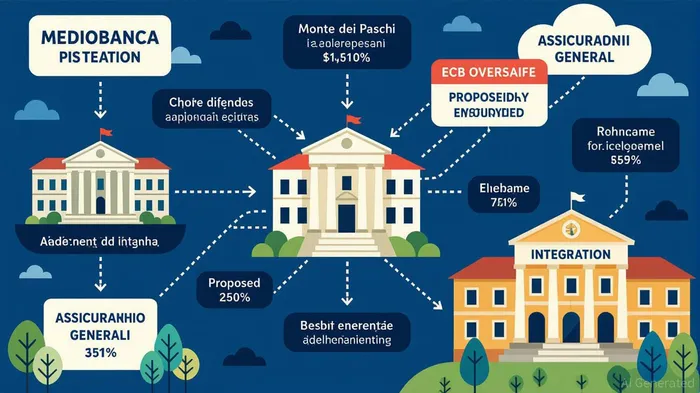
The Italian financial sector is undergoing a seismic transformation, driven by the interplay of governance restructuring, cross-institutional synergiesTAOX--, and regulatory scrutiny among Mediobanca, Monte dei Paschi di Siena (MPS), and Assicurazioni Generali. These developments present both risks and opportunities for investors, as the triad navigates a complex web of strategic realignments and political-economic dynamics.
Mediobanca's Governance Reshuffle: A Defensive Gambit
Mediobanca's 2025 board reshuffle, including the appointment of Vittorio Pignatti Morano as Chair of the Related Parties Committee, underscores its efforts to reinforce governance independence amid a hostile takeover bid by MPS[1]. The bank's proposed €6.3 billion acquisition of Banca Generali—intended to strengthen its wealth management division and reduce reliance on its 13.2% stake in Generali—was rejected by shareholders in August 2025, with only 35% of required votes secured[2]. This setback has left Mediobanca vulnerable to MPS's advancing bid, which now holds 38.5% of its shares[3]. The ECB has mandated that MPS submit a six-month integration plan detailing capital, digitalization, and risk management strategies, signaling a regulatory focus on preserving systemic stability[4].
MPS's Aggressive Acquisition Strategy and Governance Reconfiguration
MPS's sweetened bid for Mediobanca, now valued at €16.1 billion, reflects its ambition to create a €200 billion banking entity and challenge Intesa Sanpaolo and UniCredit as Italy's third-largest financial group[5]. The ECB's conditional approval requires MPS to demonstrate how it will exercise control with less than 50% ownership, a challenge that could reshape Mediobanca's board structure and leadership[6]. CEO Luigi Lovaglio has signaled intent to replace Mediobanca's current CEO, Alberto Nagel, should the acquisition proceed, highlighting potential governance clashes[5]. This shift could centralize decision-making under MPS-aligned stakeholders, including the Del Vecchio family and Francesco Gaetano Caltagirone, who have historically opposed Nagel's independence-focused strategy[7].
Generali's Strategic Adjustments and Stake Dynamics
Assicurazioni Generali's strategic initiatives, including its 2025-2027 “Next Level” plan, emphasize technical excellence, digital capabilities, and sustainability[8]. While Generali's governance changes have not directly impacted stake dynamics with Mediobanca and MPS, its proposed joint venture with BPCE to create a €1.9 trillion asset management entity could be disrupted if MPS gains control of Mediobanca[9]. The latter's 13.2% stake in Generali—previously a key revenue driver—may also face dilution or restructuring under MPS's integration plan, altering cross-institutional synergies[10].
Cross-Institutional Synergies and ECB Oversight
The ECB's integration requirements for MPS—focusing on capital optimization, digitalization, and risk alignment—underscore the regulator's role in balancing consolidation with systemic resilience[11]. If successful, the MPS-Mediobanca merger could generate €700 million in pre-tax synergies, leveraging Mediobanca's investment banking expertise and MPS's retail banking network[12]. However, Generali's board must navigate the return of Mediobanca's shares, which could complicate its partnership with BPCE and dilute its strategic autonomy[13].
Investment Implications: Timing and Governance Catalysts
For investors, the key catalysts lie in regulatory approvals, governance transitions, and the resolution of stakeholder conflicts. The ECB's integration plan deadline (six months post-acquisition) and the outcome of MPS's bid for Mediobanca's remaining shares will determine the pace of value creation. A successful merger could unlock synergies in wealth management and asset allocation, while a failed bid might force Mediobanca to seek alternative partnerships. Additionally, Generali's joint venture with BPCE remains contingent on the stability of its stake dynamics, making it a high-conviction opportunity for those betting on cross-border consolidation.
In conclusion, the Mediobanca-MPS-Generali triad exemplifies the interplay of governance-driven transformation and regulatory oversight in European finance. Investors must monitor ECB mandates, shareholder voting patterns, and leadership changes to capitalize on this volatile yet potentially rewarding landscape.







Comentarios
Aún no hay comentarios