
Strategic M&A in the Gold Sector: Assessing Perseus Mining's Revised Bid for Predictive Discovery in Light of Robex's Counter
The gold sector has long been a battleground for strategic mergers and acquisitions, driven by the relentless pursuit of scale, resource control, and operational efficiency. The recent contest between Perseus Mining and Robex Resources for Predictive Discovery exemplifies the high-stakes dynamics of such deals. This analysis evaluates the competitive positioning, valuation logic, and strategic implications of the revised bids, offering insights into how contested takeovers reshape industry landscapes.
The Bidding War: Perseus's Aggressive Move and Robex's Counter
Perseus Mining initially disrupted the status quo by submitting a binding takeover proposal for Predictive Discovery in late 2025, offering 0.1360 Perseus shares per Predictive share-a 24.5% premium over Predictive's closing price at the time. This bid, valued at A$0.778 per share, was framed as a "superior proposal" by Predictive's board, which had previously agreed to a merger with Robex Resources. Perseus's rationale centered on gaining full control of Predictive's Bankan Gold Project in Guinea, a strategic asset that would expand its African footprint and diversify production across a fifth jurisdiction.
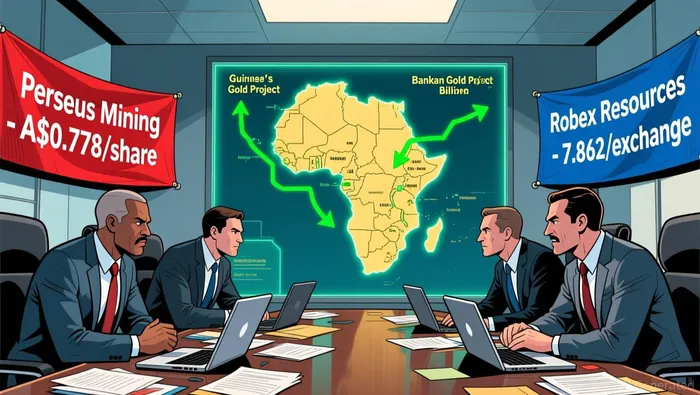 However, Robex swiftly activated its matching rights under the original arrangement agreement, revising its offer to a 7.862 Predictive shares per Robex share exchange ratio. This revised structure would grant Predictive shareholders 53.5% ownership in the combined entity, compared to Perseus's all-share offer. Crucially, key Robex shareholders-representing 23.8% of issued shares-committed to supporting the deal, adding a layer of execution certainty that Perseus's bid lacked. By December 2025, Predictive's board concluded that Robex's terms provided "greater medium to long-term value," leading Perseus to terminate its bid.
Valuation Implications: Premiums, Synergies, and Shareholder Value
The valuation gap between the two bids highlights divergent strategic priorities. Perseus's A$0.778-per-share offer implied an equity value of approximately A$375 million for Predictive (based on its 480 million share float). In contrast, Robex's revised terms, with an exchange ratio of 7.862 shares, suggest a higher implied value. Assuming Robex's share price of A$1.20 at the time of the amendment, the offer equates to a per-share value of A$9.43 for Predictive-a staggering 10.5x premium over Perseus's bid.
This disparity reflects differing synergistic goals. Perseus sought to consolidate Predictive's Bankan project into its existing African operations, while Robex's revised deal aims to create a combined entity with projected annual production exceeding 400,000 ounces by 2029. The latter's emphasis on equity retention (53.5% for Predictive shareholders) also aligns with a growth-oriented strategy, potentially unlocking greater upside if the merged entity meets production targets.
Perseus further sweetened its bid with a A$37 million unsecured loan facility to cover termination fees and operational costs, but this financial flexibility could not offset Robex's structural advantages. The revised Robex offer's shareholder backing and alignment with Predictive's board signaled stronger confidence in execution, a critical factor in volatile commodity markets.
Strategic Rationale and Industry Context
The contest underscores a broader trend in the gold sector: the premium placed on low-cost, high-grade assets in politically stable jurisdictions. Predictive's Bankan project, with its advanced development stage and proximity to existing infrastructure, is a coveted prize. Perseus's initial bid aimed to accelerate its African growth narrative, but Robex's revised terms better addressed Predictive's governance and long-term value concerns.
For investors, the outcome highlights the importance of execution risk in M&A. Robex's ability to secure shareholder commitments and revise terms swiftly demonstrated operational agility-a trait increasingly valued in an industry where regulatory and geopolitical hurdles often derail deals. Meanwhile, Perseus's exit, while disappointing, may redirect its capital to other opportunities without significant reputational damage.
Conclusion: Lessons for Contested Takeovers
The Perseus-Robex-Predictive saga offers a masterclass in competitive M&A dynamics. Key takeaways include:
1. Valuation is not just about price: Structural terms (e.g., equity retention, shareholder alignment) often outweigh nominal premiums in determining deal success.
2. Execution certainty matters: Robex's shareholder support and revised terms reduced perceived risks, tipping the board's decision.
3. Strategic fit must align with governance priorities: Predictive's board prioritized long-term value over short-term gains, a reflection of evolving ESG and stakeholder expectations.
As the gold sector continues to consolidate, similar contests will likely intensify. Investors must scrutinize not only bid terms but also the underlying strategic and governance narratives that drive boardroom decisions. In this case, Robex's revised offer emerged as the more compelling proposition-a testament to the power of adaptability in high-stakes M&A.







Comentarios
Aún no hay comentarios