
E&R's Strategic Expansion into the U.S. Semiconductor Market: Assessing Investment Potential Amid Geopolitical Tailwinds and Reshoring Trends
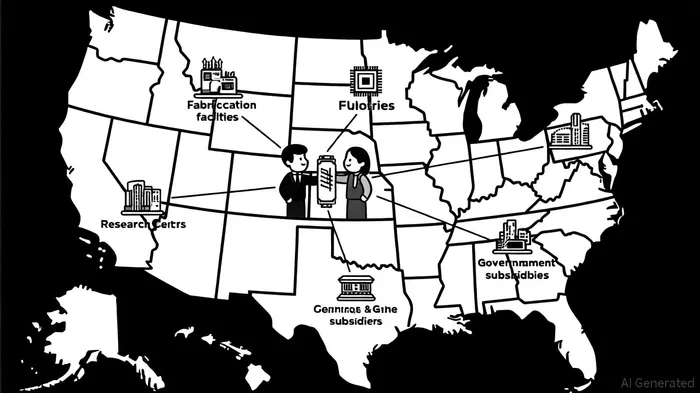
The U.S. semiconductor industry is undergoing a seismic shift driven by geopolitical tensions, supply chain vulnerabilities, and a surge in government-led reshoring initiatives. For E&R, a company seeking to enter this market, the timing appears favorable—but the path is fraught with both opportunities and risks. The CHIPS and Science Act of 2022, now fully operational in 2025, has injected over $50 billion into domestic semiconductor production, aiming to reduce reliance on foreign manufacturing, particularly in Taiwan, and to secure critical technologies for national security[1]. This policy environment has created a fertile ground for firms that can align with U.S. strategic priorities, but it also raises the bar for capital intensity and technological sophistication.
Geopolitical Tailwinds and the Reshoring Imperative
The semiconductor industry's strategic importance has never been higher. Modern chips power everything from artificial intelligence (AI) systems to electric vehicles (EVs) and renewable energy infrastructure. However, the global supply chain remains heavily concentrated in a handful of foundries, most notably in Taiwan. According to a report by the U.S. Department of Commerce, this concentration has prompted urgent action to diversify production[2]. The CHIPS Act's subsidies are not merely financial incentives; they are a geopolitical hedge against potential disruptions in the Indo-Pacific region. For E&R, this means that any investment must not only demonstrate technical viability but also align with U.S. national security goals.
Beneficiaries of the CHIPS Act: A Benchmark for E&R
Several semiconductor firms have already capitalized on the CHIPS Act's incentives, offering a blueprint for E&R's potential entry. For instance, GlobalFoundries (GF) received $1.587 billion in direct funding to expand its 300mm fabrication facilities in New York and Vermont, part of a $14 billion capital expenditure plan over a decade[3]. This project underscores the scale of investment required to compete in the U.S. market. Similarly, IntelINTC-- and TSMC have announced multi-billion-dollar expansions in Arizona and Texas, leveraging subsidies to build advanced nodes capable of producing AI and IoT chips[4]. These firms benefit from not only financial support but also strategic partnerships with research institutions, such as the National Semiconductor Technology Center (NSTC), which accelerates R&D timelines[5].
For E&R, the challenge lies in replicating this model. While the CHIPS Act provides access to subsidies, it also demands partnerships with U.S. academic and industrial ecosystems. E&R's ability to secure such collaborations—or acquire existing capabilities—will determine its success.
Risks and Barriers to Entry
Despite the tailwinds, the U.S. semiconductor market is not without its hurdles. The capital costs of building a state-of-the-art foundry exceed $10 billion, a threshold that only the largest firms or those with substantial government backing can meet[6]. For E&R, this implies a need for either strategic alliances with established players or a focus on niche segments, such as analog chips or advanced packaging, where capital requirements are lower. Additionally, the U.S. workforce lacks the specialized skills required for semiconductor manufacturing, a gap the CHIPS Act aims to address through workforce training grants[7]. E&R must factor in the time and resources needed to develop this talent pool.
Strategic Recommendations for E&R
To navigate this landscape, E&R should prioritize three strategies:
1. Leverage CHIPS Act Incentives: Target subsidies for R&D and workforce development to offset high capital costs.
2. Form Strategic Alliances: Partner with U.S. research institutions or existing semiconductor firms to access expertise and infrastructure.
3. Focus on Niche Markets: Enter segments with less competition, such as automotive or industrial semiconductors, where demand is growing but supply is fragmented.
Conclusion
The U.S. semiconductor market is a high-stakes arena where geopolitical imperatives and technological innovation collide. For E&R, the CHIPS Act represents both an opportunity and a test. While the subsidies and reshoring trends create a favorable environment, the barriers to entry are formidable. Success will depend on E&R's ability to align with U.S. strategic priorities, secure partnerships, and navigate the capital-intensive nature of the industry. As the global semiconductor landscape continues to evolve, E&R's entry could either position it as a key player in the U.S. supply chain or serve as a cautionary tale of overambition in a hyper-competitive sector.





Comentarios
Aún no hay comentarios