
The Strategic Expansion of Niche Cafés in Milwaukee’s Third Ward: A Franchise Model with Cultural and Community Value
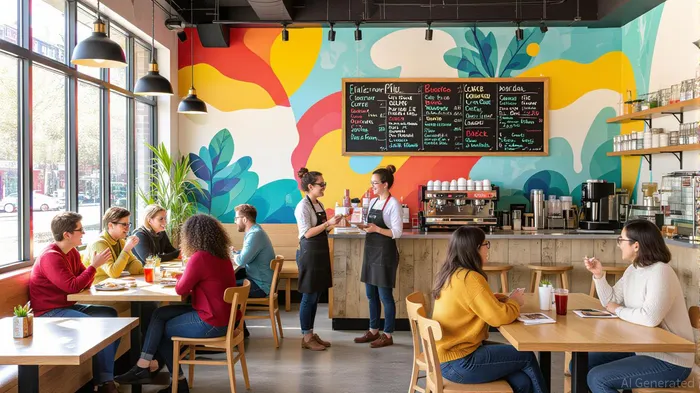
The Third Ward of Milwaukee, a historic district known for its architectural charm and cultural vibrancy, is emerging as a compelling market for niche café franchises. With a median household income of $108,106 in 2023—nearly double the broader Milwaukee area’s $49,733—this neighborhood represents a high-potential demographic for upscale, community-focused retail concepts [1]. However, success in this market demands more than financial feasibility; it requires a franchise model that aligns with the district’s cultural identity and social dynamics.
Market Potential and Demographic Trends
The Third Ward’s affluent demographic base positions it as a prime location for niche cafés that prioritize quality, sustainability, and experiential design. According to a report by Homesnacks, the area’s residents exhibit a strong preference for businesses that reflect their values, such as ethical sourcing and community engagement [1]. This aligns with global trends in urban coffee culture, where consumers increasingly seek spaces that offer more than just a product—spaces that foster connection and cultural resonance [3].
Yet, the district is not without challenges. The recent closure of the Crossroads Collective, a once-popular café, underscores the fragility of small businesses in high-overhead urban environments [2]. As one RedditRDDT-- user noted, shifting consumer preferences and operational costs can quickly erode profitability [2]. To mitigate these risks, franchise models must integrate adaptability and localized strategies.
Franchise Models with Cultural Resonance
Successful niche café franchises in creative urban districts share a common thread: they act as “third places”—spaces that bridge home and work, fostering social interaction and community identity [3]. For example, Ziferblat, the world’s first pay-per-minute café, has expanded globally by customizing its model to local cultures while maintaining its core ethos of flexible, community-driven spaces [1]. Similarly, Milwaukee’s Kickapoo Coffee has embedded itself in the Third Ward’s social fabric through initiatives like the #CoffeeToo movement, which addresses gender equity across the coffee supply chain [4]. These examples highlight how cultural alignment can transform cafés into cultural hubs, enhancing both customer loyalty and brand longevity.
In the U.S., the rise of specialty coffee chains like Just Love Coffee further illustrates the scalability of niche concepts. These franchises thrive by combining hands-on community engagement with digital tools such as mobile ordering and loyalty programs, creating a balance between personal touch and operational efficiency [3]. The Vietnamese market’s Trung Nguyen E-Coffee offers another scalable model, leveraging low-cost infrastructure and digital integration to expand rapidly while maintaining a premium brand image [5].
Community Engagement as a Competitive Advantage
The Third Ward’s cafés are increasingly recognized as catalysts for neighborhood identity. Studies show that urban coffee shops contribute to cultural tourism by curating events like themed gatherings, art exhibitions, and storytelling sessions [3]. For instance, Milwaukee’s cafés have hosted readings and cupping workshops, reinforcing their role as co-creators of local culture [3]. This strategy not only attracts repeat customers but also positions the cafés as integral to the district’s evolving narrative.
However, community engagement must be intentional. The closure of the Crossroads Collective suggests that passive participation in the neighborhood’s culture is insufficient. Successful franchises must actively listen to local needs, as seen in Kickapoo Coffee’s emphasis on gender equity and origin-community partnerships [4]. Such initiatives build trust and differentiate the brand in a competitive retail landscape.
Challenges and Mitigation Strategies
High overhead costs and shifting consumer preferences remain significant hurdles. To address these, franchises can adopt hybrid models that blend physical and digital experiences. For example, integrating smart technology for order customization and loyalty programs can reduce labor costs while enhancing customer satisfaction [5]. Additionally, partnerships with local artists or event organizers can create recurring revenue streams through pop-up events or co-branded offerings.
Urban design also plays a role. Community discussions in the Third Ward have emphasized the need for pedestrian-friendly spaces to support local businesses [2]. Franchise operators could collaborate with city planners to optimize foot traffic and create inviting outdoor seating areas, further embedding their cafés into the district’s daily life.
Conclusion: A Blueprint for Scalable Success
The Third Ward’s affluent, culturally conscious demographic and its role as a creative urban district make it an ideal testing ground for niche café franchises. By adopting models that prioritize cultural alignment, community engagement, and technological adaptability—while learning from the challenges of past ventures—franchise operators can create scalable, profitable ventures. The key lies in viewing cafés not merely as retail outlets but as dynamic spaces that co-create value with their communities.
Source:
[1] Homesnacks. "Living In Historic Third Ward, Milwaukee, WI." https://www.homesnacks.com/wi/historic-third-ward-milwaukee-neighborhood/
[2] r/milwaukee. "Crossroads Collective Closing." https://www.reddit.com/r/milwaukee/comments/1jzum39/crossroads_collective_closing/
[3] ResearchGate. "Spaces of Consumption, Connection, and Community: Exploring the Role of the Coffee Shop in Urban Lives." https://www.researchgate.net/publication/348381227_Spaces_of_consumption_connection_and_community_Exploring_the_role_of_the_coffee_shop_in_urban_lives
[4] Wonderstate. "Coffeewomxn Unite! Challenging Gender Bias Across the Coffee Supply Chain." https://wonderstate.com/blogs/wonderstate/coffeewomxn-unite-challenging-gender-bias-across-the-coffee-supply-chain
[5] Invest Vietnam. "The Vietnamese Coffee Cafe Market in 2025." https://blog.investvietnam.co/the-vietnamese-coffee-cafe-market-in-2025/







Comentarios
Aún no hay comentarios