
Strategic Expansion in the Baltic Automotive Sector: TKM Grupp's Acquisition as a Model for Cross-Border Growth
The European automotive sector is undergoing a transformative phase, driven by regulatory innovation and industrial repositioning. At the heart of this evolution lies the European Commission's 2025 Automotive Package, a suite of measures designed to harmonize decarbonization goals with industrial competitiveness. For companies like TKM Grupp AS, a key player in the Baltic automotive market, these reforms present both challenges and opportunities. By dissecting TKM Grupp's recent restructuring efforts and aligning them with EU policy frameworks, we uncover a blueprint for cross-border growth that leverages regulatory flexibility to enhance market penetration and brand diversification.
EU Restructuring Rules: A Catalyst for Competitive Resilience
The EU's 2025 Automotive Package introduces two cornerstone initiatives: the Automotive Omnibus and the Battery Booster. The Omnibus streamlines regulatory frameworks, reducing administrative burdens for manufacturers by an estimated €706 million annually. This cost efficiency is critical for companies like TKM Grupp, which operates in a fragmented market where operational agility determines success. Simultaneously, the Battery Booster allocates €1.8 billion to strengthen the EU's battery value chain, including €1.5 billion in interest-free loans for cell producers. These measures collectively aim to decarbonize the sector while preserving its global competitiveness-a dual objective that aligns with TKM Grupp's strategic priorities.
TKM Grupp's Restructuring: Operational Precision and Brand Segmentation
TKM Grupp's intra-group restructuring in Lithuania, completed in May 2025, exemplifies how EU rules can be operationalized for market expansion. 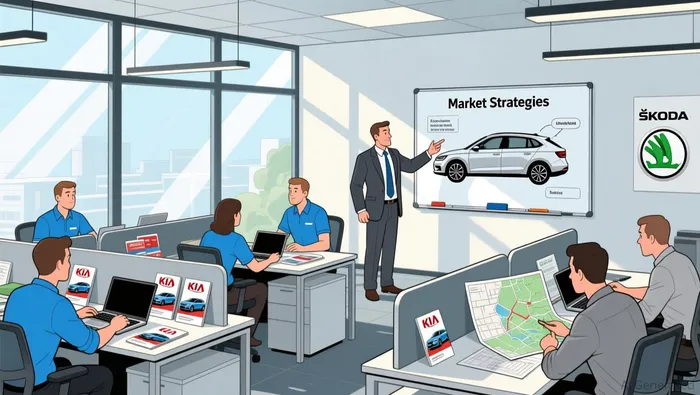 By separating its KIA and Škoda business lines into distinct entities-UAB KIA Auto and Motus auto UAB-the company has created a framework for targeted brand management. This move, while not directly tied to EU funding programs, aligns with the Omnibus's emphasis on reducing bureaucratic complexity. By isolating business lines, TKM Grupp can tailor marketing, service, and supply chain strategies to each brand's unique customer base, a tactic that enhances brand equity in the competitive Baltic market.
The restructuring also positions TKM Grupp to capitalize on the EU's push for "small affordable cars", a new vehicle category introduced under the Automotive Omnibus. This category, designed to incentivize electric vehicle adoption, could allow TKM Grupp to expand its portfolio with models like the KIA EV4, which is slated for a 2025 launch. Such alignment with EU policy not only reduces compliance risks but also opens access to subsidies and consumer incentives, further amplifying market penetration.
Navigating Challenges: Sales Volatility and Regulatory Uncertainty
Despite its strategic foresight, TKM Grupp faces headwinds. In Q1 2025, the company reported a 16.8% decline in car trade segment revenue, attributed to a newly introduced car tax that dampened new vehicle sales. This underscores the vulnerability of even well-structured strategies to macroeconomic shifts. However, the company's focus on electric vehicles and multi-brand dealerships-such as its planned KIA-Škoda dealership in Vilnius- signals a pivot toward sustainable growth. These initiatives align with the Battery Booster's emphasis on low-emission technologies, suggesting that TKM Grupp is positioning itself to benefit from future EU funding opportunities, even if direct applications for Battery Booster loans remain unannounced.
Strategic Implications for Cross-Border Growth
TKM Grupp's approach offers a replicable model for cross-border expansion in the EU automotive sector. By leveraging the Automotive Omnibus's administrative simplifications, companies can redirect resources toward innovation and market-specific strategies. Similarly, the Battery Booster's focus on supply chain resilience provides a framework for integrating green technologies into brand portfolios. For investors, the key takeaway is clear: firms that align their restructuring efforts with EU policy objectives-whether through operational efficiency or product diversification-are better positioned to navigate regulatory and market volatility.
Conclusion
The interplay between EU restructuring rules and corporate strategy is reshaping the automotive landscape. TKM Grupp's Baltic expansion, while modest in scale, demonstrates how regulatory frameworks can be leveraged to achieve operational precision and brand differentiation. As the EU continues to refine its industrial policies, companies that mirror this alignment will not only survive but thrive in an increasingly competitive and decarbonized market.







Comentarios
Aún no hay comentarios