
Strategic ETF Allocation in a High-Tech Recovery: Evaluating SKYY's Exposure to Cloud Computing Growth
The high-tech sector's recovery in 2025 has been inextricably linked to the rise of cloud computing, a domain now central to digital transformation, AI scalability, and enterprise resilience. As global cloud computing revenues surge-projected to grow at a 30.3% CAGR through 2033, according to Flexera's 2024 cloud report-investors are increasingly turning to thematic ETFs like the First Trust Cloud Computing ETF (SKYY) to capitalize on this momentum. This article evaluates SKYY's strategic value in a high-tech recovery portfolio, analyzing its exposure to cloud growth, alignment with market trends, and risk-return profile.
SKYY's Investment Strategy and Cloud Computing Exposure
SKYY, with $3.31 billion in assets under management, is a smart beta ETF designed to track the ISE Cloud Computing Index, according to a CIO analysis. Its portfolio of 66 holdings includes a mix of large-cap and smaller pure-play cloud firms, with OracleORCL-- (4.54%), IBMIBM--, Alphabet, and Arista NetworksANET-- among its top allocations, as noted in Flexera's report. The ETF's 83.2% weighting in the Information Technology sector, per a Zacks note, positions it squarely within the cloud computing ecosystem, which now dominates 21% of global IT spending according to a Mordor Intelligence report.
The ETF's smart beta methodology emphasizes companies with strong revenue growth and market leadership in cloud infrastructure, software, and services. For instance, SKYY's inclusion of Pure StoragePSTG-- and MongoDBMDB-- reflects its focus on data management and storage solutions, critical components of hybrid cloud architectures, per Flexera's analysis. This diversification across subsectors mitigates single-company risk while capturing the broader industry's expansion.
Market Trends Driving Cloud Computing's Resilience
Cloud computing's role in the high-tech recovery is underscored by three key trends:
1. AI and Generative AI (GenAI) Integration: Cloud providers are investing heavily in AI-optimized infrastructure, such as high-performance GPUs, to meet surging demand for AI workloads, a point highlighted by Mordor Intelligence. This has accelerated cloud spending, with the market expected to double in size by 2028, as described in the CIO analysis.
2. Hybrid and Multi-Cloud Adoption: Enterprises are prioritizing flexibility and risk mitigation through hybrid and multi-cloud strategies. Flexera's report finds that 89% of organizations now use multiple cloud providers, a trend SKYY's diversified holdings align with.
3. Industry-Specific Cloud Solutions: Sectors like healthcare and finance are adopting tailored cloud environments to meet compliance and operational needs. Oracle's Clinical Digital Assistant, for example, integrates HIPAA compliance into cloud-based healthcare applications-a niche noted by Mordor Intelligence-that SKYY's portfolio addresses through its mix of enterprise software and infrastructure providers.
SKYY's Performance and Risk Profile
SKYY has demonstrated strong returns in recent years, reporting a 33.60% gain over one year and 24.42% over three years per an ETFdb profile. However, its beta of 1.24 and standard deviation of 27.31% (noted in the same ETFdb profile) highlight its volatility, a reflection of the cloud sector's rapid innovation cycles and regulatory scrutiny. While this volatility may deter conservative investors, it aligns with the high-growth trajectory of the cloud market.
Comparatively, SKYY's 0.60% expense ratio (ETFdb) is competitive but higher than alternatives like the WisdomTree Cloud Computing Fund (WCLD, 0.45% expense ratio), as discussed in the Zacks note. Its concentration in top holdings (43.74% of assets in Oracle, Pure Storage, and Arista Networks, per ETFdb) also introduces sector-specific risk, though its 66-holding portfolio offers broader diversification than more niche ETFs like Global X's CLOU (38 holdings), which the Zacks note highlights.
Strategic Allocation Considerations
For investors seeking to allocate SKYYSKYY-- within a high-tech recovery portfolio, a balanced approach is recommended:
- Core-Satellite Strategy: Pair SKYY with broad tech ETFs like the Vanguard Information Technology ETF (VGT) to balance growth and stability. VGT's low 0.10% expense ratio (noted in the Zacks analysis) and exposure to large-cap tech giants like Apple and Microsoft provide a counterweight to SKYY's volatility.
- Thematic Diversification: Complement SKYY with AI-focused ETFs like ARKQ or BOTZ to capture cross-sector synergies. For instance, AI-driven cloud infrastructure spending is projected to grow by 20% annually, a trend the CIO analysis describes and that these ETFs target directly.
- Risk Management: Given SKYY's beta of 1.24, investors should allocate it as a satellite holding (10–15% of a tech-heavy portfolio) rather than a core asset. This mitigates downside risk while retaining exposure to cloud growth.
Conclusion
SKYY's strategic positioning in the cloud computing sector makes it a compelling addition to a high-tech recovery portfolio, particularly for investors prioritizing innovation and scalability. Its smart beta approach, combined with the cloud market's projected expansion, offers a compelling risk-return trade-off. However, its volatility and moderate expense ratio necessitate a balanced allocation strategy. As cloud computing continues to underpin digital transformation and AI adoption, SKYY remains a key vehicle for capturing this transformative wave.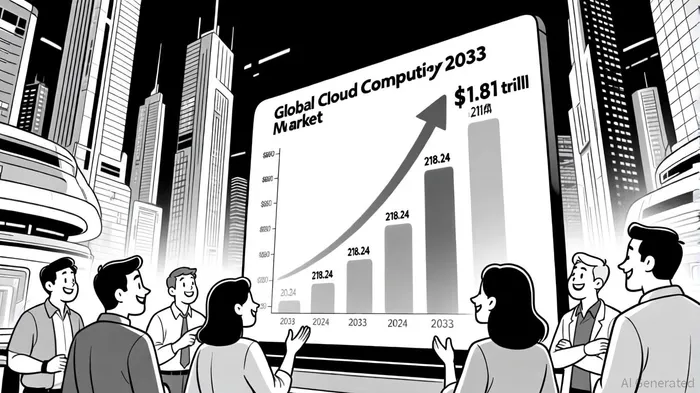





Comentarios
Aún no hay comentarios