
The Strategic Value of ESG-Aligned Investments in Post-Disaster Recovery: Building Resilient Communities and Economies
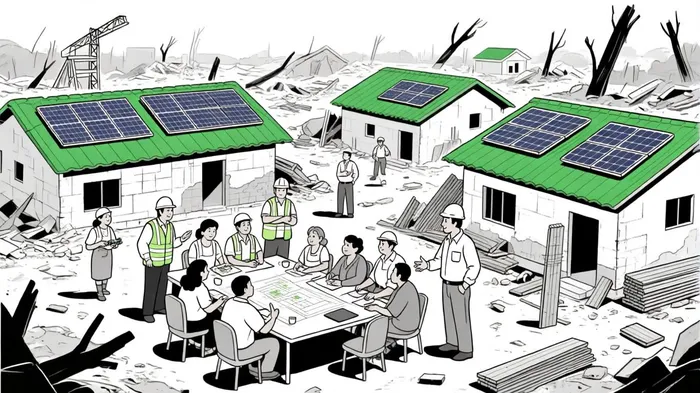
In an era of escalating climate-related disasters, the strategic value of ESG-aligned investments in post-disaster recovery has emerged as a critical lever for regional economic stabilization. From hurricanes in the Caribbean to wildfires in California, communities are increasingly turning to sustainability-driven financing models to rebuild infrastructure, restore livelihoods, and future-proof economies. According to a 2025 case study by the Principles for Responsible Investment (PRI), ESG-focused portfolios delivered a cumulative 15.1% outperformance against the S&P 500 over five years, with resilience particularly pronounced during crises like the global pandemic [5]. This trend underscores a paradigm shift: ESG investing is no longer a niche ethical pursuit but a proven strategy for mitigating risk and unlocking value in volatile environments.
ESG Financing Instruments: Catalysts for Resilience
The tools enabling this transformation are as innovative as they are impactful. Climate Resilience Bonds, a subset of green bonds, have become pivotal in funding projects that "climate-proof" vulnerable regions. For instance, the U.S. Chamber of Commerce and AllstateALL-- report highlights that every $1 invested in disaster preparation saves $13 in economic costs, with resilience bonds directly contributing to this ROI by financing infrastructure like flood barriers and wildfire-resistant housing [2]. Similarly, blended finance—which combines public, philanthropic, and private capital—has unlocked over $109 billion in disaster recovery funds since 2024, as documented by HUD. By de-risking high-impact projects, blended finance has enabled SMEs and local governments to adopt green building practices and renewable energy systems, driving both environmental and economic recovery [1].
Case Studies: From Theory to Impact
Real-world examples illustrate the tangible benefits of ESG-aligned recovery. In New Orleans post-Hurricane Katrina, ESG principles guided the integration of wetland restoration and solar microgrids, reducing long-term flood risks while creating 12,000 jobs in renewable energy sectors [5]. Japan's post-2011 earthquake recovery similarly prioritized ESG metrics, with firms in disaster-affected regions improving their social and governance scores by 23% over a decade through community engagement and transparent risk management [6]. These initiatives align with academic findings that earthquakes catalyze ESG improvements, particularly in governance and social dimensions, as companies adopt adaptive strategies to counter long-term vulnerabilities [6].
Economic Stabilization: Quantifying the ROI
The economic case for ESG investments is further solidified by measurable outcomes. A 2025 Global Assessment Report by UNDRR notes that annual disaster costs now exceed $2.3 trillion when indirect impacts are included, yet ESG-driven risk mitigation can break this cycle. For example, the Global Commission on Adaptation estimates that $1.8 trillion in climate resilience investments between 2020–2030 could yield $7.1 trillion in net benefits, including job preservation and GDP stabilization [3]. In the U.S., the Economic Development Administration's (EDA) place-based strategies—funded by ESG-aligned grants—have revitalized disaster-impacted regions like Puerto Rico, where renewable energy projects reduced energy costs by 40% and restored power to 85% of households within six months of Hurricane Maria [2].
Challenges and the Path Forward
Despite these successes, challenges persist. Greenwashing and inconsistent regulatory standards remain barriers, as noted by Moody's 2025 ESG finance outlook [2]. Additionally, technology adoption for disaster recovery—such as AI-driven grant processing and GIS mapping—remains uneven, particularly in low-income regions. However, the growing emphasis on dynamic risk assessments and proactive grant allocation (as seen in KPMG's 2025 disaster recovery frameworks) signals a maturing ecosystem [4]. Investors must prioritize transparency, leveraging tools like cost-benefit analysis (CBA) to quantify ESG impacts and ensure alignment with community needs [1].
Conclusion
The strategic value of ESG-aligned investments in post-disaster recovery lies in their dual capacity to stabilize economies and future-proof communities. By channeling capital into resilience bonds, blended finance models, and sustainable infrastructure, investors not only mitigate disaster risks but also catalyze long-term growth. As climate-related disruptions intensify, the imperative to align financial strategies with ESG principles has never been clearer—or more economically compelling.







Comentarios
Aún no hay comentarios