
Strategic Equity Financing in SPAC-Driven Business Combinations: Assessing Growth Potential and Market Readiness in Pre-Merger Firms like Terra Innovatum
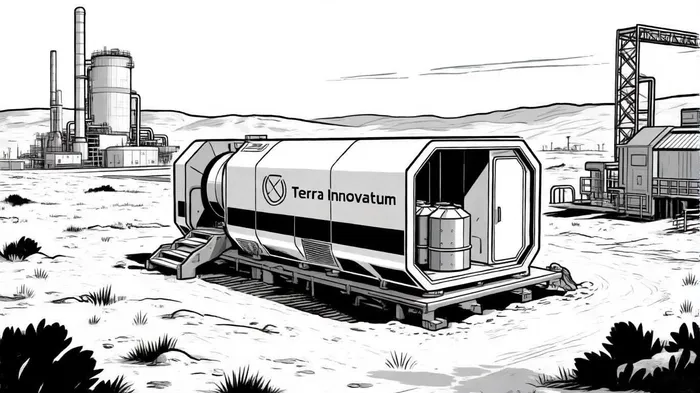
The rise of SPAC-driven business combinations has reshaped the landscape for pre-merger firms seeking public market access, particularly in capital-intensive sectors like energy. For investors, the key question remains: How do strategic equity financing decisions in these pre-merger stages influence a firm's growth potential and market readiness? TerraLUNA-- Innovatum, a developer of micro-modular nuclear reactors, offers a compelling case study. By examining its recent $37.5 million equity financing and its broader commercialization strategy, we can dissect the interplay between capital allocation, regulatory progress, and market positioning in SPAC-driven exits.
Strategic Equity Financing: Fueling Commercialization and Regulatory Milestones
Terra Innovatum's partnership with GSR IIIGSRT-- Acquisition Corp. to go public via a SPAC merger is underpinned by a $37.5 million equity financing round, including a $32 million PIPE led by Segra Capital Management and a $5.5 million bridge facility[1]. This capital infusion is critical for advancing the licensing and construction of its first SOLO™ reactor, a micro-modular unit designed for rapid deployment and ultra-low radiation[2]. Such strategic financing aligns with a broader trend: SPACs increasingly relying on pre-merger equity raises to de-risk commercialization timelines and meet regulatory hurdles.
For Terra, the funding addresses two key challenges: technical validation and regulatory approval. The SOLO™ reactor's factory-assembled design and use of low-enriched uranium (LEU) reduce costs and safety concerns, but these innovations must be certified by the U.S. Nuclear Regulatory Commission (NRC). The company's submission of a regulatory engagement plan marks a pivotal step toward its 2028 commercialization goal[2]. By securing committed capital upfront, Terra mitigates the risk of funding gaps during the lengthy NRC review process—a common bottleneck for nuclear startups.
Growth Potential: Scalability and Market Demand
Terra's business model hinges on the scalability of its SOLO™ reactor, which targets industrial, remote, and high-demand sectors. These markets are underserved by traditional grid infrastructure and face acute energy shortages, particularly in regions with decarbonization mandates[1]. The reactor's modular design allows for incremental deployment, reducing capital intensity for end-users—a critical advantage in sectors like mining, manufacturing, and data centers.
Valuation metrics further underscore growth potential. Terra's pre-money equity valuation of $475 million, combined with $230 million in gross proceeds from the SPAC merger, positions it to scale rapidly[2]. However, success depends on execution: The company must demonstrate not only technical feasibility but also cost competitiveness against renewable alternatives. For instance, the SOLO™ reactor's projected levelized cost of electricity (LCOE) must undercut that of solar-plus-storage systems in off-grid scenarios. While Terra has not disclosed specific figures, its focus on standardized components and factory assembly suggests a path to economies of scale[2].
Market Readiness: Partnerships and Leadership Credibility
Market readiness in SPAC-driven exits often hinges on a firm's ability to secure partnerships and validate its technology through real-world deployment. Terra's memorandum of understanding with Rock City Admiral Parkway Development for its first deployment site[3] is a tangible indicator of market traction. Such partnerships signal to investors that the company can transition from R&D to commercial operations—a critical test for SPACs, which frequently face scrutiny over unproven business models.
Equally important is leadership credibility. Terra's executive team brings over 180 years of combined expertise in nuclear engineering and reactor design[2], a rare asset in a sector where technical complexity and regulatory scrutiny are paramount. This depth of experience reduces the risk of operational missteps, a concern that has derailed other SPAC-backed energy ventures.
Risks and Considerations
While Terra's strategy appears robust, investors must weigh several risks. First, the NRC's approval timeline remains uncertain. Delays in licensing could push back commercialization, eroding investor confidence. Second, public sentiment toward nuclear energy remains polarized, particularly in regions with strong renewable energy mandates. Third, the SPAC market itself is volatile; Terra's post-merger performance will depend on broader market conditions and the company's ability to meet earnings expectations.
Conclusion
Terra Innovatum's SPAC-driven path to public markets exemplifies the strategic use of equity financing to accelerate commercialization and de-risk regulatory challenges. By securing committed capital and leveraging its leadership's technical expertise, the company addresses two of the most significant barriers to market readiness. However, its long-term success will depend on executing against aggressive timelines and demonstrating cost advantages in a competitive energy landscape. For investors, Terra's case underscores a broader principle: In SPAC-driven exits, the quality of pre-merger financing and the alignment of capital with tangible milestones are as critical as the innovation itself.





Comentarios
Aún no hay comentarios