
Strategic Entry Points for First-Time Homebuyers in Canada's 2025 Buyer-Favorable Market
Canada's real estate market in 2025 is undergoing a pivotal transformation, offering a rare window of opportunity for first-time homebuyers. With declining interest rates, softening prices, and expanded government programs, the landscape is increasingly tilted in favor of buyers. However, navigating this market requires a strategic approach, balancing timing, regional insights, and financial planning.
Market Conditions: A Buyer's Market Emerges
The Bank of Canada's key interest rate reduction to 2.5% has catalyzed a shift in mortgage affordability, with variable rates dropping to historically competitive levels[1]. Fixed rates, though still influenced by bond market yields, are projected to stabilize around 4.2–4.5% for 5-year terms in 2025[2]. This decline, coupled with a softening in home prices—particularly in major urban centers like Toronto and Vancouver—has created a more balanced market[3].
Despite these favorable conditions, first-time buyers remain cautious. According to a Royal LePage survey, only 13% of Canadian adults are actively pursuing homeownership within the next two years[1]. This hesitancy stems from lingering economic uncertainties, including trade tensions with the U.S. and reduced immigration targets, which could dampen long-term demand[4].
Financial Strategies and Government Support
For first-time buyers, leveraging government programs is critical. The First-Time Home Buyer Incentive (FTHBI) offers an interest-free loan covering 5–10% of a home's purchase price, effectively reducing monthly mortgage payments[5]. Complementing this, the Tax-Free First Home Savings Account (FHSA) allows tax-free contributions of up to $10,000 annually, with a lifetime limit of $50,000[6]. These tools, combined with the Home Buyers' Plan (HBP)—which permits RRSP withdrawals of up to $60,000 for down payments—create a robust financial toolkit[7].
Provincial initiatives further ease the burden. Ontario's land transfer tax rebate, Nova Scotia's Down Payment Assistance Program, and Quebec's Programme d'aide à l'accession à la propriété (PAAP) provide localized support[8]. Additionally, a new Federal Down Payment Match Program offers a 5% government match (up to $25,000) for eligible buyers[6].
Regional Insights: Beyond Urban Centers
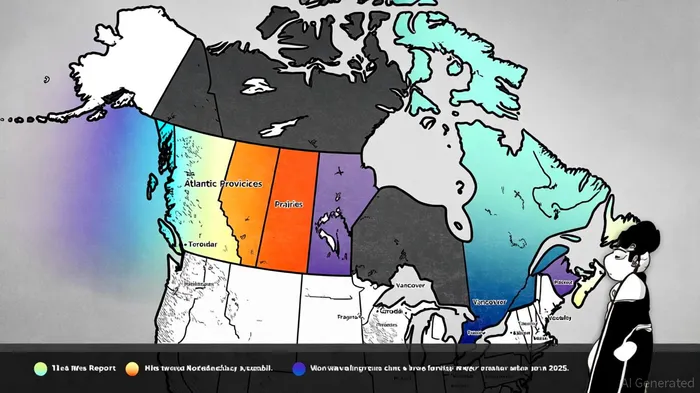
While major cities like Toronto and Vancouver remain competitive, regional markets are emerging as prime entry points. In Atlantic Canada, home prices have risen steadily due to interprovincial migration and affordability. Newfoundland and Labrador, for instance, saw a 11% year-over-year price increase in June 2025, with a benchmark price of $325,000[9]. Similarly, Saskatchewan's benchmark price hit $370,700—a 8% annual increase—driven by job growth and economic diversification[10].
The Prairies and Atlantic Provinces are also outpacing urban centers in growth. Projections suggest these regions will see 6–7% price appreciation in 2025, compared to 5% in the Greater Toronto Area[11]. Buyers seeking affordability are increasingly prioritizing suburban and rural areas, where inventory levels are higher and bidding wars less frequent[12].
Timing the Market: Expert Predictions
Experts recommend entering the market between late 2025 and early 2026, as interest rates are expected to trend downward further. The Bank of Canada's anticipated 25-basis-point rate cuts could reduce fixed mortgage rates, enhancing borrowing capacity[13]. Additionally, 30-year amortizations for insured mortgages and higher purchase limits ($1.5 million) provide flexibility for first-time buyers[14].
However, timing must align with personal financial readiness. Over 53% of first-time buyers plan to save at least 20% for a down payment to avoid mortgage insurance costs[1]. Those requiring less than 20% should factor in insurance premiums and explore programs like the FTHBI to offset expenses[5].
Key Considerations for Buyers
- Mortgage Type: Fixed-rate mortgages offer stability against potential rate hikes, while variable rates may provide short-term savings if rates continue to decline[15].
- Inventory Levels: Urban centers face tight inventory, while suburban and rural areas offer more options[12].
- Policy Changes: Monitor provincial rebates and federal incentives, which may evolve in response to market conditions[8].
Conclusion
Canada's 2025 real estate market presents a strategic inflection point for first-time buyers. By combining favorable interest rates, regional affordability, and government support, buyers can mitigate risks and capitalize on a more balanced market. However, success hinges on meticulous planning, regional research, and a clear understanding of financial tools. As the market evolves, those who act decisively—while remaining mindful of economic uncertainties—stand to benefit most from this buyer-favorable era.







Comentarios
Aún no hay comentarios