
Strategic Entry Points for Retail Investors in the 2025 Bullish Crypto Reset: A Deep Dive into Airdrops and Community-Driven Tokens
The 2025 Bullish Reset: A Confluence of Macro and Retail Forces
The cryptocurrency market in September 2025 is poised for a bullish reset driven by a unique interplay of macroeconomic shifts and retail investor sentiment. According to a report by Blockscholes, the Federal Reserve's dovish pivot—signaled by Chair Jerome Powell at Jackson Hole—has created a liquidity tailwind for risk-on assets like crypto. With GDP growth slowing and employment data softening, the Fed's anticipated rate cuts in September and October 2025 are expected to weaken the U.S. dollar and redirect capital into higher-yield assets[1]. This environment is particularly favorable for community-driven tokens and airdrops, which thrive on decentralized engagement and speculative momentum[4].
Community-Driven Tokens: The New Frontier of Value Creation
Community-driven tokens have emerged as a dominant force in 2025, leveraging gamification, meme culture, and decentralized governance to drive adoption. Projects like BullZilla ($BZIL) and Based Eggman ($GGs) exemplify this trend. BullZilla's cinematic meme theme and 70% APY staking rewards have attracted early adopters, with 50% of its supply allocated to a presale offering a 30% referral bonus[2]. Similarly, Based Eggman's hybrid model—combining gaming, meme creation, and DeFi interoperability—has sold 9 million units in its presale, reflecting strong retail demand[3].
Skill-based platforms like Tapzi ($TAPZI) further diversify this space by integrating real-time PvP mechanics and anti-cheat systems, creating a merit-based economy where performance directly translates to rewards[4]. These projects highlight a shift from speculative hype to utility-driven value, with tokenomics designed to incentivize long-term participation and liquidity provision.
Airdrops as High-Reward Entry Points
Airdrops in 2025 have evolved beyond free tokens to strategic tools for decentralizing ownership and rewarding user engagement. Projects like Mitosis (MITO) and Nexus (NEX) are leading this charge. Mitosis rewards users for liquidity provision and platform interaction, while Nexus's testnet quests and cross-chain bridging activities offer early access to airdrop allocations[2]. Ambient Finance and Warden Protocol (WARD) further diversify the airdrop landscape by rewarding swaps, staking, and community-driven tasks[4].
For retail investors, these airdrops represent low-cost entry points to high-growth tokens. Soneium's EthereumETH-- Layer 2 points program, for instance, rewards real-world engagement through staking and NFT participation, aligning user incentives with project success[4]. However, due diligence is critical: airdrop aggregators like Airdrops.io curate verified opportunities, but users must avoid phishing scams and fake claim portals[1].
Strategic Entry Points: Aligning with Macro and Retail Cycles
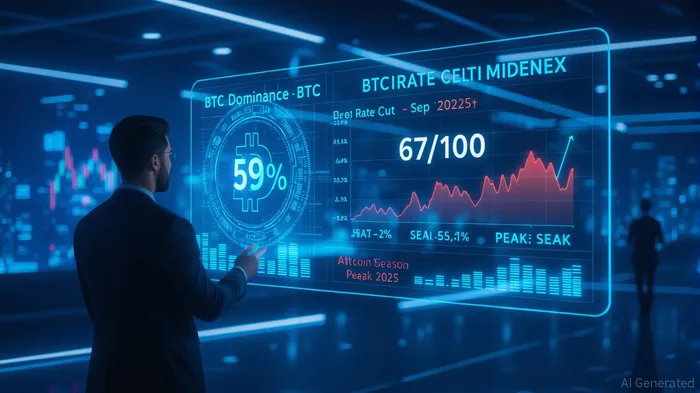
Historical bull markets (2017, 2021) followed a three-stage pattern: BitcoinBTC-- absorption of liquidity, Ethereum's rise, and a mid/small-cap altcoin frenzy[1]. In 2025, institutional capital has accelerated this dynamic, with Ethereum now leading the second half of the bull cycle[4]. Bitcoin Dominance (BTC.D) has dipped to 59%, signaling capital reallocation to altcoins[1]. This trend is amplified by the Altcoin Season Index, which hit 67/100 in September 2025, reflecting heightened retail and institutional interest in speculative assets[4].
Retail investors can strategically time entries by monitoring macroeconomic triggers:
1. Fed Rate Cuts (Sep–Oct 2025): Anticipated liquidity injections will boost risk-on assets, particularly altcoins with strong utility (e.g., Ethereum-based tokens like Ambient Finance)[1].
2. ETF Approvals (Oct 2025): Regulatory clarity on altcoin ETFs could catalyze institutional inflows, further tightening supply and driving prices higher[4].
3. Community Engagement Metrics: Projects with active testnets, social media traction, and decentralized governance (e.g., Warden Protocol) are more likely to sustain growth[2].
Risk Management and the Path Forward
While the 2025 bullish reset presents opportunities, volatility and liquidity risks persist. Retail investors should diversify across airdrops and community-driven tokens, prioritizing projects with clear utility and transparent tokenomics. For example, BullZilla's 30% presale bonus and Tapzi's anti-cheat mechanisms reduce speculative risk compared to pure meme coins[2][4]. Additionally, aligning with macroeconomic trends—such as the Fed's rate cuts—can help mitigate downside exposure during short-term corrections[1].
As the crypto market matures, the democratization of financial tools (e.g., Spot Bitcoin ETFs) and regulatory progress will further empower retail investors[5]. However, success hinges on a balance between optimism and caution, leveraging airdrops and community-driven tokens as strategic, not speculative, assets.






Comentarios
Aún no hay comentarios