
Strategic Entry Points for Long-Term Investors Post the $19B Crypto Correction
The cryptocurrency market's October 2025 correction-wiping out $19 billion in leveraged positions within 24 hours-was a seismic event. According to Forbes, the crash was triggered by a coordinated exploitation of Binance's internal pricing system, which lacked independent oracles for certain assets. A massive dump of the stablecoin USDeUSDe-- on Binance caused its price to collapse to $0.65 on the exchange, triggering cascading liquidations and a BitcoinBTC-- price swing of over $20,000 in a single day. While geopolitical tensions, including former President Trump's 100% tariff announcement on Chinese imports, amplified the panic, data from Blockonomi indicates the sell-off began hours before the tariff news, underscoring the Binance flaw as the primary catalyst.
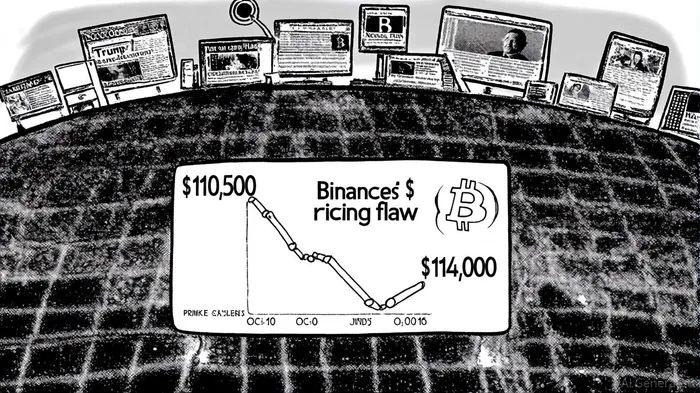
Despite the chaos, the market's rapid rebound-Bitcoin stabilizing at $114,000 and funding rates normalizing-suggests this was a short-term correction rather than a systemic collapse, as reported by FinanceFeeds. For long-term investors, this volatility presents a unique opportunity to reassess risk, diversify portfolios, and capitalize on undervalued assets. Below, we break down strategic entry points and actionable insights for those positioning for the next bull cycle.
1. Valuation Metrics: Bitcoin and Ethereum as Foundational Anchors
Bitcoin and EthereumETH-- remain the bedrock of any long-term crypto portfolio. Post-crash, Bitcoin's price dipped to $101,500, while Ethereum fell to $2,100-a level many analysts view as a recalibration rather than a bearish signal. CryptoFrontline highlights that institutional demand for Bitcoin surged post-crash, with U.S. spot ETFs holding 1.3 million BTC (6.6% of total supply) and on-chain metrics like exchange outflows improving, signaling reduced selling pressure.
Ethereum's recovery is equally compelling. The full transition to Proof-of-Stake (PoS) in 2025, coupled with Layer 2 innovations like ArbitrumARB-- and OptimismOP--, has enhanced scalability and energy efficiency. Staking participation hit record highs, and DeFi and NFT activity surged, reinforcing Ethereum's role as a foundational blockchain, as Forbes reported. For investors, dollar-cost averaging (DCA) into Bitcoin and Ethereum through automated weekly purchases offers a disciplined approach, according to Cryptopolitan.
2. Diversification: Balancing Stability with Innovation
While Bitcoin and Ethereum provide stability, diversification into mid-cap and emerging projects is critical for capturing growth. Cryptopolitan recommends allocating to projects with real-world applications, such as SolanaSOL-- (SOL), PolkadotDOT-- (DOT), and ChainlinkLINK-- (LINK), which offer scalability and cross-chain interoperability.
Emerging projects like MAGACOIN FINANCE, with its capped supply and strong fundamentals, also present high-upside potential. For risk-tolerant investors, altcoins like XRPXRP-- and DOGE-despite their 50%+ post-crash losses-could rebound if macroeconomic conditions stabilize. CryptoWisser notes that projects with tangible use cases, such as Remittix (RTX) for cross-border payments, are particularly attractive as they align with real-world adoption trends.
3. Risk Management: Lessons from the October 2025 Crash
The October crash exposed vulnerabilities in leveraged positions and centralized pricing systems. Gate.io emphasizes that 6.7:1 liquidation ratios for long positions versus shorts highlight the dangers of excessive leverage; Forbes also provided detailed coverage of the liquidation dynamics. For long-term investors, risk mitigation strategies include:
- Stop-loss orders to limit downside exposure.
- Hardware wallets to secure assets during volatile periods.
- Avoiding overleveraging and focusing on cash-flow-positive strategies.
Additionally, Layer 2 solutions like Polygon and Optimism are addressing scalability issues, making them attractive for investors seeking infrastructure growth, as Blockonomi observed.
4. Regulatory Clarity and Institutional Adoption
Regulatory developments in 2025, including the EU's MiCAR and the U.S. GENIUS Act, are fostering a more mature market. Phemex reports that institutional inflows into Bitcoin ETFs surged post-crash, with South Korea and the U.S. approving new ETFs. This institutional participation, combined with a maturing market structure, suggests the October correction may act as a "cleansing" event, purging speculative excess and setting the stage for a more stable bull run.
5. Historical Context and Seasonal Trends
Historical data reveals that Q3 dips often precede Q4 strength, driven by year-end investment activities and institutional rebalancing, a pattern highlighted in long-term investing analyses. The October 2025 crash aligns with this pattern, with Bitcoin and Ethereum already showing signs of stabilization. Investors should monitor key support levels and on-chain metrics like active addresses and exchange outflows to time entries effectively.
Conclusion: Positioning for the Next Bull Cycle
The $19B correction was a wake-up call for the crypto market, exposing systemic risks while also creating entry opportunities for disciplined investors. By focusing on foundational assets like Bitcoin and Ethereum, diversifying into innovative projects, and adopting robust risk management strategies, long-term investors can position themselves to capitalize on the next bull run. As regulatory clarity and institutional adoption continue to evolve, the market's resilience-evidenced by its rapid rebound-suggests that volatility is a feature, not a bug, in this nascent asset class.






Comentarios
Aún no hay comentarios