
The Strategic and Economic Implications of U.S. Geopolitical Moves in Venezuela and Greenland
In 2025, the United States has pursued a dual-track geopolitical strategy in Venezuela and Greenland, aiming to secure resource-rich territories and assert dominance in critical global regions. These moves, however, reveal a complex interplay of strategic ambitions, economic uncertainties, and geopolitical tensions that investors in oil, defense, and Arctic resource markets must carefully evaluate.
Venezuela's Oil Sector: A High-Risk Bet
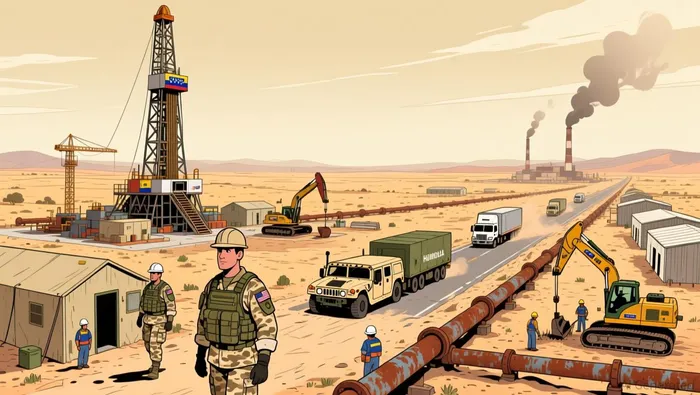
The U.S. military intervention in Venezuela, culminating in the capture of President Nicolás Maduro, has positioned Washington to potentially control the country's vast oil reserves. According to a report by Responsible Statecraft, the Trump administration claims that U.S. oil companies will invest billions to restore Venezuela's oil infrastructure, which has deteriored under years of economic mismanagement and sanctions. However, the economic viability of this venture remains dubious. Global oil markets are oversupplied, with demand growth slowing due to the transition to renewable energy and geopolitical uncertainties. Major U.S. oil firms, wary of the high costs and political instability, have shown reluctance to commit capital. For investors, this highlights a critical risk: even with military-backed access to resources, market fundamentals and corporate hesitancy could undermine long-term profitability.
Greenland's Strategic and Resource Value: A New Arctic Flashpoint
The U.S. has intensified its focus on Greenland, shifting from diplomatic overtures to overt threats of military force to secure the island's strategic assets. As stated by , President Trump has emphasized Greenland's role in Arctic security, particularly its control over the GIUK Gap-a vital NATO corridor for monitoring Russian naval movements. Greenland's rare earth mineral deposits, essential for advanced defense technologies, further elevate its strategic value. However, China's dominance in processing these minerals complicates U.S. efforts to establish a self-sufficient supply chain, underscoring a dependency risk for defense and tech sectors.
Despite Trump's aggressive stance, including the appointment of a special envoy, Danish and Greenlandic leaders have firmly rejected U.S. pressure, asserting Greenland's right to self-determination. This resistance, coupled with Russia's expanding Arctic military presence, has heightened regional tensions and raised questions about NATO cohesion. For investors in Arctic resource markets, Greenland's potential independence and the geopolitical friction it entails could disrupt supply chains and inflate operational costs.
Geopolitical Risks and Market Reactions
The U.S. strategies in both regions underscore a broader trend: the confluence of military power and resource competition in shaping global markets. Yet, these interventions also expose vulnerabilities. In Venezuela, the disconnect between strategic control and economic reality- exemplified by oil companies' reluctance-signals that military dominance does not guarantee market success. Similarly, Greenland's political sovereignty and the Arctic's geopolitical volatility challenge the U.S. vision of a stable, resource-dominated sphere of influence.
Defense markets, meanwhile, face a dual challenge. The U.S. push to secure Arctic infrastructure and rare earth minerals could spur short-term investments in military technology and logistics. However, prolonged diplomatic tensions with Denmark and NATO allies may lead to fragmented alliances, complicating long-term defense contracts and joint operations.
Conclusion: Balancing Ambition and Uncertainty
For investors, the U.S. geopolitical moves in Venezuela and Greenland present a paradox: high strategic stakes paired with significant economic and political risks. In oil markets, the Venezuela venture remains a speculative bet, hinging on corporate willingness to navigate instability. In the Arctic, Greenland's rare earth and energy resources offer long-term potential but are shadowed by sovereignty disputes and geopolitical rivalries. Defense sectors may benefit from near-term spending on Arctic security, yet alliance fractures could undermine project viability.
As 2025 draws to a close, the lesson is clear: while resource-rich territories hold promise, their economic and strategic value is inextricably tied to the stability of the geopolitical landscape. Investors must weigh these factors carefully, recognizing that today's geopolitical gambits may yield tomorrow's market turbulence.







Comentarios
Aún no hay comentarios