
Strategic Value of the Dunamu-Naver Merger in the Evolving Crypto-Finance Ecosystem
Strategic Integration: Bridging Payments and Crypto
The merger's core objective is to embed Upbit's trading infrastructure into Naver Pay, enabling services like retail investing, crypto-linked payments, and cross-border money transfers. This integration is critical for mainstream adoption, as it reduces friction between traditional finance and blockchain-based systems. A key innovation is the development of a won-backed stablecoin, which could accelerate settlement speeds for merchants, payment providers, and fintech platforms. Such a stablecoin would align with global trends, where 70% of central banks are exploring digital currencies, and could position South Korea as a regional hub for stablecoin-driven commerce.
Naver's dominance in South Korea's digital ecosystem-its portal services reach over 80% of the population-provides a unique advantage. By leveraging this user base, the merged entity could rapidly scale crypto services, mirroring the success of platforms like Grab in Southeast Asia, which integrated digital payments with ride-hailing and e-commerce. Dunamu's recent financial performance further strengthens this case: its Q3 2024 net income surged 300% year-on-year, driven by renewed investor confidence and regulatory clarity in the crypto space.
Institutional Adoption and Market Leadership
Asia's M&A landscape in 2023–2025 has been shaped by macroeconomic shifts and sector-specific opportunities, particularly in fintech and energy. The Dunamu-Naver merger aligns with broader trends of institutional adoption, as traditional financial players seek to capitalize on crypto's growing legitimacy. For instance, AsiaStrategy's recent $1 billion BitcoinBTC-- treasury initiative, supported by Anchorage Digital, highlights the region's appetite for institutional-grade crypto solutions. Similarly, the merger's focus on regulated infrastructure-such as anti-money laundering (AML) compliance and Virtual Asset Service Provider (VASP) rules-addresses institutional concerns about risk and governance.
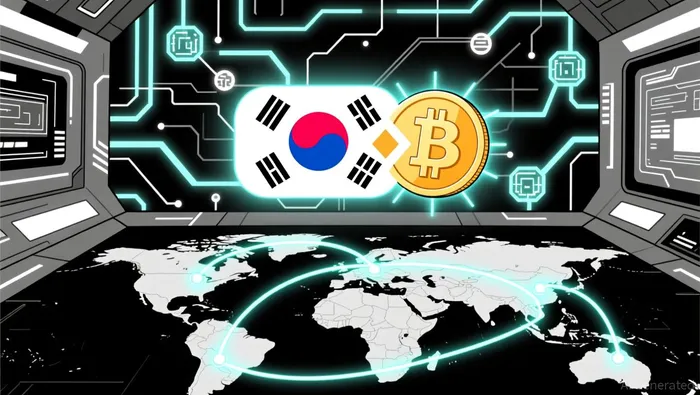
The merged entity's potential to launch a won-backed stablecoin could also disrupt cross-border payments. South Korea's KRW is already a major currency in Asia, and a stablecoin backed by it could reduce reliance on the U.S. dollar in regional trade. This mirrors the success of Facebook's Diem (now Novi) in Southeast Asia, where stablecoins have been used to facilitate remittances and e-commerce. By creating a regulated, fiat-backed digital asset, Naver and Dunamu could attract institutional investors seeking low-volatility exposure to crypto while complying with Korea's stringent financial regulations.
Regulatory Hurdles and Competitive Dynamics
Despite its strategic promise, the merger faces significant regulatory scrutiny. The Korea Fair Trade Commission, Financial Services Commission (FSC), and Korea Financial Intelligence Unit (KoFIU) will evaluate concerns around market dominance, financial stability, and compliance with 2024 crypto regulations. These challenges are not unique to South Korea; globally, 60% of crypto mergers in 2024 faced regulatory delays, reflecting heightened scrutiny of digital asset firms. However, Naver's commitment to maintaining over 50% voting control suggests a strategic focus on navigating these hurdles while preserving governance clarity.
Competitively, the merger could reshape South Korea's fintech landscape. Naver's integration of Upbit's services would directly challenge Kakao Pay, which has been expanding its own crypto offerings. This consolidation aligns with a broader trend in Asia, where 40% of fintech M&A deals in 2024 involved cross-border or sector-specific integrations. If successful, the merger could trigger a wave of industry consolidation, as smaller players struggle to compete with the scale and resources of Naver-Dunamu.
Conclusion: A Catalyst for Asia's Crypto Future
The Dunamu-Naver merger is more than a corporate transaction-it is a strategic response to the evolving demands of Asia's crypto-finance ecosystem. By combining Naver's digital infrastructure with Upbit's crypto expertise, the merged entity could drive institutional adoption through regulated, scalable solutions. The development of a won-backed stablecoin, in particular, has the potential to redefine cross-border payments and attract global investors.
However, success hinges on regulatory approval and the ability to address shareholder concerns, particularly around valuation disparities. If these challenges are overcome, the merger could set a new benchmark for fintech innovation in Asia, positioning South Korea as a leader in the next phase of digital finance. For investors, the deal represents a high-conviction bet on the convergence of crypto and mainstream finance-a convergence that is accelerating faster than many anticipate.







Comentarios
Aún no hay comentarios