
Strategic Divestments and Sector Rotation Signals in Global Equities: Analyzing ABP's Caterpillar Divestment and Oppenheimer's Outperform Call
The industrial sector in 2025 is at a crossroads, shaped by a dual force: ethical divestments driven by ESG (Environmental, Social, and Governance) considerations and a resurgence in sector momentum fueled by macroeconomic tailwinds. The recent divestment of Caterpillar Inc.CAT-- (CAT) by the Netherlands' largest pension fund, ABP, and Oppenheimer's bold outperform call for the same company, illustrate the tension between ethical scrutiny and financial optimism. This analysis unpacks how these conflicting signals reflect broader shifts in global equity markets and what they mean for investors navigating industrial stocks.
ABP's CaterpillarCAT-- Divestment: Ethics Over Earnings?
ABP, which manages over €500 billion in assets, sold its €387 million ($454 million) stake in Caterpillar in October 2025, citing ethical concerns over the company's equipment being used in Israel's military operations in Gaza, according to a Bloomberg report. This decision aligns with ABP's broader ESG strategy, which prioritizes adherence to international human rights standards and socially responsible investing, as Reuters reported. The move mirrors similar actions by Norway's sovereign wealth fund, underscoring a growing European trend of divesting from companies with controversial ties to conflict zones, as noted by U.S. News.
While ABP's rationale is rooted in ethics, the financial implications for Caterpillar appear muted. Despite the divestment, Caterpillar's stock hit record highs in 2025, driven by strong demand for industrial turbines and optimism about the energy transition, as reported by GuruFocus. This resilience highlights a key paradox: even as ESG-driven divestments gain traction, industrial stocks remain attractive due to structural demand drivers like infrastructure spending and automation, according to a Schwab report.
Oppenheimer's Outperform Call: A Vote of Confidence
In contrast to ABP's exit, Oppenheimer analysts upgraded Caterpillar to an Outperform rating in October 2025, raising its price target from $480 to $513 in a Nasdaq article. The firm cited favorable macroeconomic conditions, including the Federal Reserve's rate-cutting cycle and surging demand for data center infrastructure, as highlighted by Insider Monkey. This optimism is part of a broader sector rotation into industrials, with the Industrial Select Sector SPDR ETF (XLI) outperforming the S&P 500 year-to-date, according to a Validea blog post.
Oppenheimer's call reflects a strategic shift in investor sentiment. As growth stocks like tech face valuation corrections, capital is flowing into industrials and energy sectors, which are seen as beneficiaries of reshoring, infrastructure modernization, and AI-driven industrial demand, according to a Wedbush report. This rotation is further supported by Neuberger Berman's forecast of a post-recessionary industrial recovery in 2025, with small-cap and value stocks poised to outperform.
ESG Divestments and Sector Momentum: A Delicate Balance
The ABP-CaterpillarCAT-- case underscores the complex interplay between ESG considerations and sector momentum. While ESG-driven divestments can signal reputational risks, they often coexist with strong financial fundamentals. For instance, Caterpillar's robust market capitalization ($225 billion) and operational efficiency suggest that its core business remains resilient despite ethical controversies, as noted by GuruFocus.
However, ESG factors are reshaping long-term investment strategies. Institutional investors are increasingly prioritizing companies with strong ESG frameworks, leading to a reallocation of capital toward industries that align with sustainability goals, according to CSE-Net. This trend is amplified by regulatory shifts, such as the EU's Corporate Sustainability Reporting Directive (CSRD), which mandates stricter ESG disclosures, as explained by the Harvard Law Blog. While U.S. ESG regulations remain fragmented, state-level mandates like California's SB 253 are pushing companies to adopt circular economy practices and reduce emissions, as reported by ESG Dive.
The Road Ahead: Navigating Divergent Signals
For investors, the key lies in balancing ethical and financial considerations. The industrial sector's momentum is underpinned by tangible demand drivers-reshoring, infrastructure, and automation-but ESG risks could introduce volatility. For example, Caterpillar's continued exposure to conflict zones may attract further divestments, even as its stock benefits from macroeconomic tailwinds.
A would illustrate this divergence. Such a visualization could highlight how Caterpillar outperformed broader indices despite ESG-related exits, suggesting that industrial stocks are insulated from short-term ethical controversies by long-term structural demand.
Conclusion
The ABP-Caterpillar divestment and Oppenheimer's outperform call encapsulate the duality of 2025's industrial sector: ethical scrutiny coexists with financial optimism. While ESG-driven divestments signal a shift in institutional priorities, sector rotation into industrials reflects confidence in macroeconomic fundamentals. For investors, the challenge is to navigate these conflicting signals by prioritizing companies that align with both ESG criteria and industrial growth trends. As the sector evolves, those who balance ethical rigor with financial pragmatism will be best positioned to capitalize on the next phase of industrial momentum.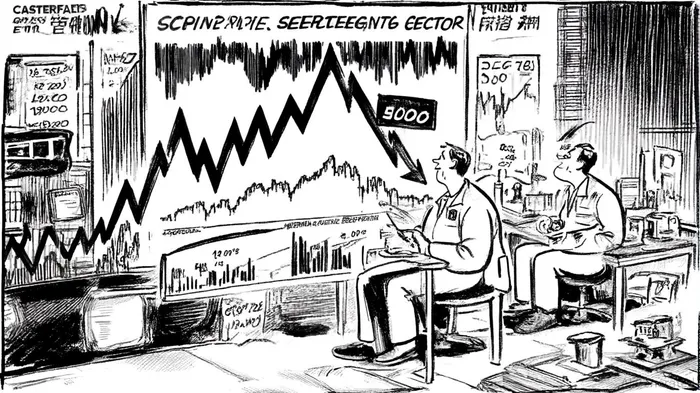





Comentarios
Aún no hay comentarios