
Strategic Divestitures in the Iron Ore Sector: Capital Reallocation and Market Dynamics in 2023-2025
The global iron ore sector has undergone a seismic shift from 2023 to 2025, driven by strategic divestitures, capital reallocation, and evolving market dynamics. As major producers like Rio TintoRIO--, BHPBHP--, and Fortescue pivot to address China's potentially peaking demand, geopolitical tensions, and decarbonization pressures, the industry's structural transformation is reshaping trade flows, market concentration, and investment priorities. This analysis examines the drivers, financial implications, and long-term implications of these strategic moves.
Drivers of Strategic Divestitures
The primary catalyst for divestitures lies in the recalibration of corporate portfolios to hedge against China's slowing demand. According to a report by Fastmarkets, China's steel sector-historically the largest consumer of iron ore-has curtailed production due to environmental regulations, reduced construction activity, and a shift toward scrap-based steelmaking. This has forced miners to diversify supply chains and seek alternative markets, particularly in Africa and Southeast Asia according to the same analysis.
Environmental regulations and the energy transition further amplify the urgency. The push for decarbonization is driving demand for high-grade ores (62% Fe and above) and cleaner production methods, such as hydrogen-based direct reduced iron (DRI) and electric arc furnaces as research shows. Companies are divesting older, carbon-intensive assets to fund innovation in green technologies and critical minerals like copper, which is central to renewable infrastructure.
Case Studies: Rio Tinto, BHP, and Fortescue
Rio Tinto has restructured its operations into three core sectors: iron ore, aluminum and lithium, and copper as reported in a 2025 update. This shift reflects its focus on minerals critical to the energy transition. 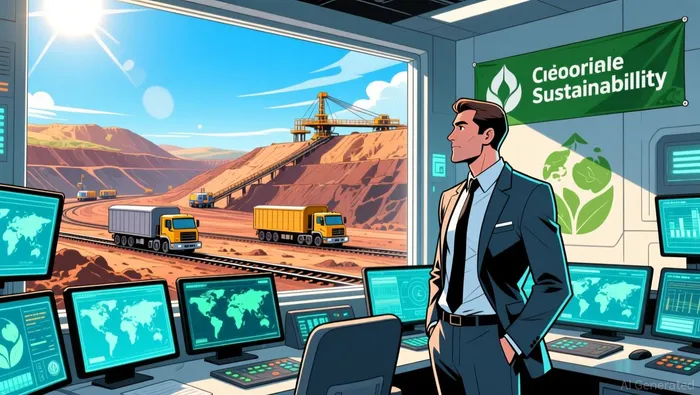 The Simandou high-grade iron ore project in Guinea, expected to produce 2.8 billion metric tons at 65.8% iron, exemplifies its strategy to secure premium assets according to market intelligence. Rio Tinto's lean cost structure and emphasis on low-cost production have allowed it to maintain profitability despite iron ore price declines as highlighted in recent analysis.
BHP, meanwhile, reported its smallest profit in five years ($10.16 billion in FY25), attributed to oversupply and weak Chinese demand. The company has prioritized maintaining its position as the lowest-cost major iron ore producer, targeting 305 million metric tons of annual output and unit costs below $17.50 per ton. BHP's diversified portfolio, including copper and energy assets, has cushioned its exposure to iron ore volatility.
Fortescue has taken a bolder approach, pivoting toward green energy and infrastructure. In 2024, it announced a joint venture with OCP Group to develop a green energy hub in Morocco and partnered with the Guinean government on the Trans-Guinean Railway to connect Simandou deposits with ports. Despite a 45% drop in its share price in 2024 due to iron ore price declines, Fortescue's lean cost structure and high dividend yield (9.1% as of June 2025) have positioned it for recovery.
Financial and Market Impacts
The financial repercussions of these divestitures are evident in stock performance and market share shifts. In October 2025, Fortescue's shares surged 14.0%, outpacing BHP (2.2%) and Rio Tinto (8.9%), driven by iron ore prices stabilizing above $104 per tonne. Conversely, BHP's FY25 profit decline underscored the sector's vulnerability to oversupply and demand fluctuations as noted in financial reports.
Capital reallocation has also influenced market dynamics. For instance, Champion Iron Limited's DRPF project in Canada, aimed at reducing emissions, highlights the industry's pivot toward sustainability. Meanwhile, resource nationalism and trade barriers-such as China's retaliatory tariffs on U.S. coal-have added volatility to supply chains.
Future Outlook
The iron ore market, valued at $279.35 billion in 2023, is projected to grow to $397.98 billion by 2032, with a 4% annual growth rate. However, this growth hinges on companies balancing short-term profitability with long-term sustainability. The adoption of green technologies, such as hydrogen-based DRI, and the pursuit of high-grade ores will be critical to aligning with decarbonization goals as market analysis indicates.
Investors must also monitor geopolitical risks and China's evolving role. While Chinese demand may plateau, emerging markets and infrastructure projects in India and Southeast Asia offer growth opportunities as reported by financial analysts. For now, the sector's resilience will depend on strategic agility, cost efficiency, and the ability to navigate a rapidly shifting regulatory and economic landscape.







Comentarios
Aún no hay comentarios