
Strategic Diversification in a Fractured World: Navigating Energy and Emerging Market Volatility Amid U.S. Tariff Escalation
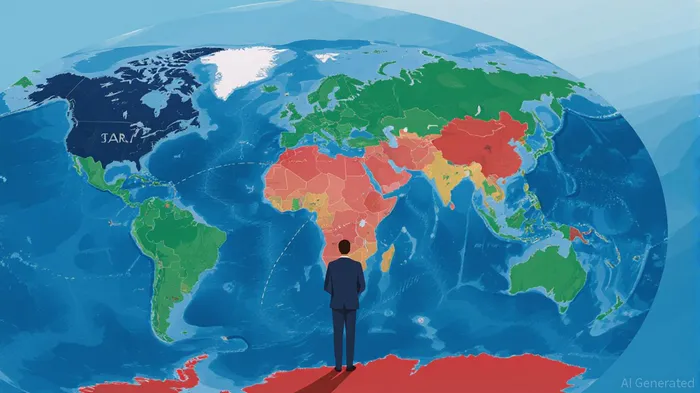
The world is no longer a single market. It is a mosaic of competing blocs, fractured by U.S. tariffs and sanctions that have rewritten the rules of global commerce. As the Trump administration's 15.8% effective tariff rate—projected to climb to 18–20% by year-end—reverberates across energy markets and emerging economies, investors face a stark reality: the old playbook of globalization is obsolete. The new imperative is strategic diversification, a disciplined approach to risk mitigation in a geopolitical crossfire.
Energy Markets: A Tale of Two Commodities
The energy sector has become a battleground for policy-driven volatility. Aluminum and copper, critical inputs for green energy transitions, are now trading under the shadow of 50% U.S. tariffs. The Midwest premium (MWP) for aluminum, once a stable metric, is now a barometer of uncertainty. J.P. Morgan estimates the MWP could surge to $0.70 per pound to incentivize U.S. imports, a price point that reflects not just supply constraints but the cost of geopolitical risk.
Copper, meanwhile, has seen its London Metal Exchange (LME) price dip to $9,100 per tonne in Q3 2025, a 12% drop from its 2024 peak. Yet this decline masks a deeper story: tariffs have distorted global supply chains, creating artificial scarcity in some regions and oversupply in others. Energy companies with diversified sourcing and robust balance sheets—think firms with exposure to lithium, nickel, and rare earths—will outperform those reliant on single-market inputs.
Emerging Markets: Winners and Losers in a Deglobalized Era
Emerging markets are being reshaped by the U.S. tariff regime. Japan's recent trade deal, which slashed automobile tariffs from 25% to 15%, has boosted corporate earnings by 3 percentage points and lifted GDP growth by 0.3%. This is a rare bright spot in a landscape where Brazil and China face 50% and 104% tariffs, respectively.
India, however, exemplifies the duality of this moment. While its exports to Africa surged 42.4% year-over-year in July 2025, a looming 50% tariff on Russian oil imports threatens to undermine its energy strategy. Similarly, Mexico and Brazil are capitalizing on nearshoring trends, but their equities remain vulnerable to U.S. policy shifts. Investors must distinguish between countries that are adapting to deglobalization and those that are being left behind.
Strategic Diversification: A Framework for Resilience
In this environment, diversification is not a passive strategy—it is a proactive hedge. Three pillars define a resilient portfolio:
- Energy Sector Resilience: Prioritize energy firms with diversified supply chains and exposure to critical minerals. Avoid companies reliant on U.S.-centric demand, which is increasingly volatile.
- Emerging Market Selectivity: Focus on regions with trade diversification, such as Latin America and Southeast Asia, where nearshoring and regional trade agreements are offsetting U.S. tariffs.
- Local Currency Debt: Emerging market sovereign bonds, particularly in Colombia, Hungary, and Brazil, offer attractive yields amid weaker dollar dynamics. However, monitor currency risks in countries like India, where rupee depreciation could amplify volatility.
The Fed's Role and the Path Forward
The Federal Reserve's next move will be pivotal. With Stephen Miran's appointment as a new governor, markets are pricing in a potential rate cut before September 17. A dovish pivot could buoy emerging markets and energy equities, but investors must remain cautious. The Fed's hands are tied by stagflationary pressures, and a 1.4% global GDP growth forecast for Q4 2025 underscores the fragility of the current outlook.
Conclusion: Navigating the New Normal
The U.S. tariff regime has accelerated deglobalization, but it has also created opportunities for those who adapt. Energy markets will stabilize as supply chains adjust, and emerging markets will diverge based on their ability to pivot. For investors, the key is to avoid broad-brush allocations and instead target assets that thrive in fragmentation.
As the world grapples with the consequences of a fractured trade order, the lesson is clear: in a geopolitical crossfire, survival belongs to the adaptable.







Comentarios
Aún no hay comentarios