
Strategic Diversification in Crypto Portfolios: The Rise of Altcoin ETFs Beyond Bitcoin and Ethereum
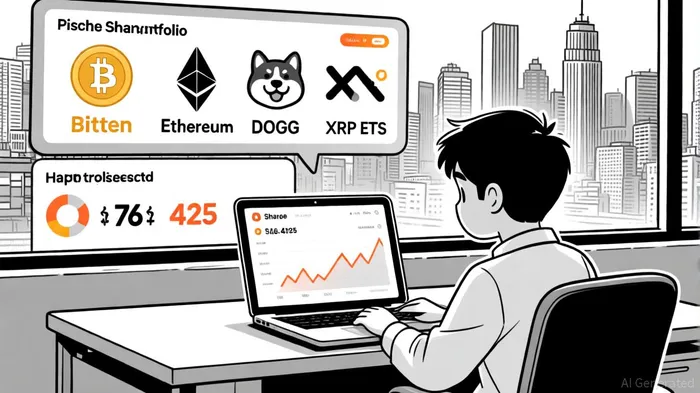
The approval of U.S. spot ETFs for altcoins like DogecoinDOGE-- (DOGE) and XRPXRP-- in late 2025 marks a seismic shift in crypto investing. These products, including the REX-Osprey XRP ETF (XRPR) and Dogecoin ETF (DOJE), have shattered expectations with combined debut trading volumes of $54.7 million—XRPR alone hitting $37.7 million, according to an EconoTimes report. This development isn't just a regulatory win; it's a strategic inflection point for investors seeking to diversify beyond BitcoinBTC-- and EthereumETH--.
The Regulatory Catalyst
The SEC's rule changes in March 2025 streamlined approvals under the Investment Company Act of 1940, bypassing the stricter Securities Act of 1933 framework, according to an OKX explainer. This shift enabled faster market entry for altcoin ETFs, with XRPRXRPR-- and DOJE launching in September 2025. Unlike Bitcoin and Ethereum ETFs, which require direct token holdings, these altcoin ETFs use offshore subsidiaries and foreign ETPs to track prices, as detailed in a CoinRepublic article. This structure reduces regulatory friction while offering institutional-grade exposure to volatile assets like DOGEDOGE-- and XRP.
Diversification Through Risk-Return Trade-Offs
Bitcoin and Ethereum ETFs remain cornerstones of crypto portfolios, but their dominance masks a critical gap: low volatility and limited upside potential. Bitcoin ETFs like IBIT have captured 75% of institutional inflows since 2024, offering stable returns (42% YTD in 2025) but minimal growth, as reported by EconoTimes. Ethereum ETFs, while more volatile, deliver higher returns (58% YTD) and staking yields, per the same EconoTimes coverage. However, altcoin ETFs introduce a new dimension.
XRP, for instance, exhibits an average daily return of 0.52% and volatility of 5.89%, outpacing Bitcoin's 0.27% return and 2.91% volatility, according to OKX's analysis. Dogecoin's volatility is even more pronounced, but its cultural staying power and community-driven adoption create asymmetric upside, noted in a MarketMinute article. By allocating 20–40% of a portfolio to altcoin ETFs, investors can balance Bitcoin's stability with XRP and DOGE's growth potential.
Quantifying Diversification Benefits
Academic and market data underscore the value of altcoin ETFs in optimizing risk-adjusted returns. A 2025 case study of a mixed portfolio (20% Bitcoin, 20% Ethereum, 20% XRP, 20% DOGE, and 20% traditional assets) achieved a Sharpe ratio of 1.93—significantly higher than the S&P 500's 0.85, according to OKX's research. This improvement stems from low correlations: XRP and DOGE correlate at 0.3 with Bitcoin and Ethereum, reducing systemic risk, per OKX's findings.
Strategic Allocation Frameworks
Institutional investors are adopting tiered allocation strategies:
1. Core (60–80%): Bitcoin and Ethereum ETFs for stability and liquidity.
2. Growth (15–30%): Ethereum ETFs with staking yields for compounding returns.
3. Satellite (5–15%): Altcoin ETFs like XRPR and DOJE for high-growth exposure, as highlighted by EconoTimes.
This approach mirrors traditional asset allocation but leverages crypto's unique dynamics. For example, XRP's role in cross-border payments and Dogecoin's meme-driven resilience offer uncorrelated returns during macroeconomic shocks, as discussed in a MarketMinute article.
The Road Ahead
With over 90 altcoin ETF applications under SEC review, the pipeline for products like SolanaSOL-- (SOL) and CardanoADA-- (ADA) ETFs is robust, per OKX's coverage. Bloomberg analysts project a 90%+ approval chance for most, citing the SEC's increased engagement with issuers, according to a CoinDesk report. This expansion will further democratize access to altcoins, enabling retail and institutional investors to hedge against Bitcoin's cyclical swings.
Conclusion
The launch of DOGE and XRP ETFs isn't just a regulatory milestone—it's a strategic tool for diversification. By blending Bitcoin's stability, Ethereum's growth, and altcoins' volatility, investors can construct portfolios that outperform traditional benchmarks. As the SEC continues to normalize crypto ETFs, the era of “digital gold” is evolving into a multi-asset paradigm where risk and reward are more precisely calibrated.







Comentarios
Aún no hay comentarios