
Strategic Digital Infrastructure Partnerships in the AI Era: Unlocking Long-Term Value Through Sovereign-Private Collaboration
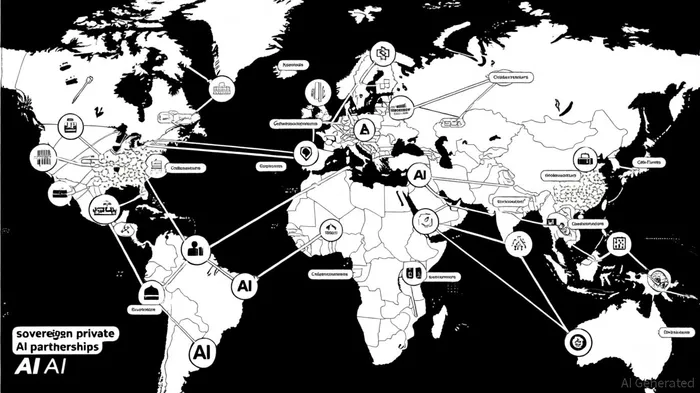
The rise of artificial intelligence has ignited a global race to secure technological sovereignty, with nations and corporations increasingly turning to sovereign-private partnerships (SPPs) to build localized, secure, and ethically aligned AI infrastructure. These collaborations are no longer theoretical—they are reshaping the digital landscape, driven by geopolitical imperatives, regulatory demands, and the urgent need to control data flows in an era of fragmented global trust. For investors, the question is no longer whether to engage in this space but how to strategically position capital to capture long-term value.
The Strategic Imperative of Sovereign-Private Partnerships
Sovereign-private partnerships in AI infrastructure are emerging as a critical response to the dual challenges of data sovereignty and technological self-reliance. According to a report by the World Economic Forum, public-private collaborations bridge the AI divide by combining public oversight with private innovation, enabling the development of inclusive, sustainable systems [2]. This is evident in Europe, where NTT DATA and Mistral AI have partnered to deliver private cloud AI solutions compliant with GDPR and the AI Act, ensuring data remains within regional jurisdictions [1]. Similarly, NVIDIA's collaboration with Deutsche Telekom to create the world's first industrial AI cloud underscores how SPPs can align national interests with cutting-edge innovation [3].
The concept of “sovereign AI” extends beyond data localization to encompass algorithmic, operational, and application sovereignty. As Bain & Company notes in its 2025 Technology Report, nations are curating local data, building domestic computational infrastructure, and fostering cross-sector partnerships to ensure AI systems reflect local languages, cultures, and values [3]. For instance, Taiwan's ASUS and the Taiwanese government are jointly developing localized AI supercomputers, while Saudi Arabia and NVIDIANVDA-- have partnered to build AI factories aimed at establishing the kingdom as a global AI hub [2]. These initiatives highlight how SPPs are not merely about infrastructure but about embedding national identity into the very fabric of AI.
Financial Momentum and Investment Trends
The financial underpinnings of sovereign-private AI partnerships are equally compelling. Global spending on AI infrastructure is projected to surpass $200 billion by 2028, with servers accounting for 95% of expenditures in the first half of 2024 alone [3]. The United States leads this surge, with strategic investments like the $500 billion Stargate joint venture between SoftBank, OpenAI, and Oracle—announced by former President Trump—demonstrating the scale of capital mobilization [1]. Meanwhile, China's state-backed AI fund of 60 billion yuan and its ambition to establish a $42.37 billion core AI industry by 2025 signal a parallel push for dominance [2].
Private equity and venture capital are also pivoting toward AI infrastructure. According to Ropes Gray's 2025 Global AI Report, private equity deal value for data center targets more than doubled in 2024 and remains on an upward trajectory in 2025 [2]. This trend is mirrored in the venture capital space, where global generative AI funding reached $49.2 billion in the first half of 2025—exceeding the 2024 annual total [2]. The AI Infrastructure Partnership (AIP), a consortium including BlackRock, Microsoft, and NVIDIA, aims to unlock $30 billion in capital to develop next-generation AI data centers and energy infrastructure, with total investment potential reaching $100 billion [3].
Navigating ROI and Long-Term Value
While the financial momentum is clear, quantifying ROI for sovereign-private AI partnerships remains complex. Traditional metrics often fail to capture the long-term value of AI, which includes strategic autonomy, innovation pipelines, and market positioning. As the NIST AI Risk Management Framework emphasizes, ROI in AI must be measured through a structured lens that balances governance, risk mitigation, and phased value realization [3].
For example, the ROI of NVIDIA's European AI cloud partnerships with Deutsche Telekom and Mistral AI may not materialize in immediate financial returns but will strengthen Germany's industrial competitiveness and reduce reliance on foreign cloud providers. Similarly, the AI Infrastructure Partnership's $100 billion target is designed to yield returns over 12–36 months, with benefits including enhanced energy efficiency, job creation, and economic productivity gains [3].
Investors must also consider the geopolitical risks and regulatory shifts inherent in sovereign AI. The fragmentation of global AI ecosystems—driven by divergent data laws and trade policies—could create both opportunities and challenges. However, as McKinsey notes, the global data center industry will require $6.7 trillion in capital expenditures by 2030 to meet AI demands, offering a clear long-term growth trajectory for those who align with sovereign priorities [1].
Conclusion: A New Era of Strategic Investment
Sovereign-private partnerships in AI infrastructure represent more than a technological shift—they are a redefinition of how nations and corporations collaborate to secure their digital futures. For investors, the key lies in identifying partnerships that balance innovation with regulatory compliance, scale with localization, and short-term gains with long-term strategic value.
As the AI era enters its sovereign phase, the winners will be those who recognize that infrastructure is not just about servers and data centers but about control, trust, and the ability to shape the next frontier of global technology.





Comentarios
Aún no hay comentarios