
The Strategic Value of Converting Coal Plants for Data Center Power Demand
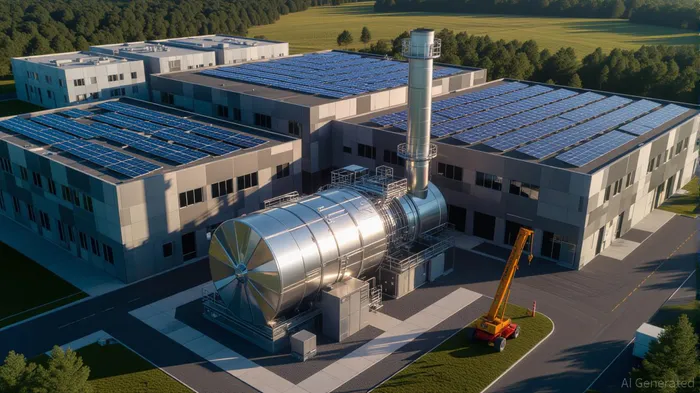
The global energy landscape is undergoing a seismic shift, driven by the explosive growth of artificial intelligence (AI) and data center infrastructure. By 2025, U.S. data centers alone are projected to consume 65 gigawatts (GW) of power annually, a 45 GW increase over current capacity [1]. This surge in demand has created a critical bottleneck: new power projects in the U.S. face interconnection timelines of up to five years, while renewable energy infrastructure struggles to scale fast enough to meet immediate needs [2]. Enter the Babcock & Wilcox (B&W) and Denham Capital partnership, which is leveraging coal-to-natural gas conversions to bridge this gap. This initiative not only addresses the urgent energy demands of the digital economy but also positions itself as a strategic linchpin in the clean energy transition.
The 45 GW Shortfall and the Role of Legacy Assets
The 45 GW shortfall for U.S. data centers is not merely a technical challenge—it's a market opportunity. Coal-fired power plants, many of which are aging and economically unviable, represent a vast untapped resource. B&W and Denham's approach repurposes these plants into natural gas-powered facilities, offering a cost-effective and rapid solution. According to a report by BusinessWire, the partnership combines B&W's engineering expertise in coal-to-gas conversions with Denham's global development and financing capabilities, enabling the deployment of 10 gigawatts (GW) of new capacity across six continents [1]. This model circumvents the lengthy permitting and construction timelines of greenfield projects, delivering reliable power in months rather than years.
Natural gas, while not a long-term decarbonization solution, serves as a critical transitional fuel. A 2025 analysis by Deloitte notes that natural gas is projected to meet over 60% of new U.S. data center demand between 2023 and 2030, acting as a bridge until renewables can scale [3]. For data centers, which require both high power density and grid stability, natural gas offers a pragmatic compromise between affordability and emissions reduction.
Strategic Alignment with Energy Transition Goals
The B&W-Denham initiative is not a step backward for the climate—it's a pragmatic step forward. Converting coal plants to natural gas reduces carbon intensity by approximately 50% compared to coal [4], while preserving existing infrastructure. This aligns with the Inflation Reduction Act (IRA), which incentivizes lower-emission technologies through tax credits, and complements state-level programs like New Jersey's Garden State Energy Storage Program [5].
Moreover, the partnership's focus on existing assets accelerates the energy transition. As noted in a 2025 industry outlook, 81% of new utility-scale energy capacity additions in 2024 were attributed to storage projects, underscoring the need for hybrid systems that balance reliability with sustainability [5]. By repurposing coal plants, B&W and Denham are creating a “bridge to renewables,” where natural gas facilities can eventually be paired with carbon capture or replaced by solar/wind as infrastructure matures.
Investment Case: Infrastructure as a Transition Play
For investors, the B&W-Denham model represents a unique intersection of infrastructure resilience and energy transition. The partnership's ability to deliver power quickly and affordably addresses a near-term market need, while its alignment with decarbonization goals ensures long-term relevance. According to a 2025 report by AInvest, infrastructure stocks leveraging transitional energy solutions are projected to outperform the S&P 500 by 5% annually through 2035 [5].
Natural gas's role as a transitional fuel is further bolstered by its cost advantages. A case study of TransAlta's coal-to-gas conversions in Canada highlights that retrofitting existing plants can reduce capital expenditures by up to 40% compared to building new facilities [4]. For data centers, which operate on razor-thin margins, this cost efficiency is invaluable.
Conclusion: A Bridge to the Future
The B&W-Denham partnership exemplifies the kind of innovative thinking required to navigate the dual imperatives of energy security and climate action. By converting coal plants into natural gas facilities, the initiative addresses the 45 GW shortfall while laying the groundwork for a renewable future. For investors, this represents a compelling opportunity: a transitional energy play that balances immediate profitability with long-term sustainability. As AI and data center demand continue to surge, the ability to repurpose legacy infrastructure will be a defining factor in the energy transition.







Comentarios
Aún no hay comentarios