
Strategic Value of Consumer Trust and Proactive Brand Protection in Utility Sector Fraud Prevention
The Erosion of Trust: Fraud's Toll on the Utility Sector
Recent data underscores the severity of fraud in the utility sector. The Federal Trade Commission (FTC) reported 28,000 cases of stolen identities used to open new utility accounts in 2024 alone, with an additional 2,000 tied to existing accounts according to a 2024 report. These incidents, often underreported due to legal exemptions for utilities, enable fraudsters to exploit lax verification systems. The consequences extend beyond financial losses: synthetic identities created through utility fraud serve as gateways to broader schemes, including credit fraud and government program infiltration.
High-profile scandals further exacerbate trust erosion. revealed that utility sector corruption, including the FirstEnergyFE-- nuclear bailout scandal, has cost consumers at least $6.6 billion over five years. Such cases highlight systemic issues of political influence and deregulation, which undermine public confidence in utility providers' ethical standards. According to a 2025 consumer survey, 41% of respondents expressed concerns about payment fraud, particularly among financially vulnerable populations. This growing anxiety signals a fragile trust landscape, where even minor incidents can trigger reputational damage.
Proactive Brand Protection: A Strategic Imperative
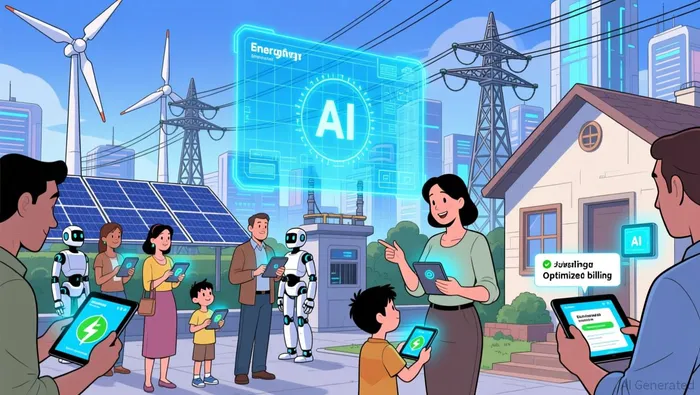
Energy companies are increasingly adopting proactive measures to counter fraud and rebuild trust. Capco, a global energy consultancy, has partnered with OpenAI to integrate GPT-5 technology into compliance systems, automating risk detection and enhancing operational efficiency. This shift from reactive to predictive strategies exemplifies how AI-driven tools can identify anomalies in account onboarding and billing processes, reducing fraud losses before they escalate.
Similarly, BYD Energy Storage's Chess Plus system, launched in 2025, combines AI-driven risk prediction with fire suppression technology to bolster system reliability. Such innovations not only mitigate physical and cyber risks but also reinforce brand credibility, a critical factor in retaining customers. A 2025 report by Escalent found that utilities recognized as "Most Trusted Brands" outperformed industry averages by 7% in perceived value, driven by investments in customer service, transparency, and community engagement. These firms also allocated 17% more resources to communications, enhancing brand recall and trust.
Quantifying the Business Impact of Trust and Fraud Prevention
The financial benefits of proactive brand protection are evident. For instance, Recorded Future's threat intelligence platforms have helped energy companies reduce typosquatting incidents by 51%, mitigating phishing risks and preserving brand reputation. Cyber insurance premiums for firms with robust cybersecurity measures have also dropped by up to 32%, reflecting reduced liability exposure.
 .
.
Moreover, governance, risk, and compliance (GRC) platforms are emerging as critical tools for fraud prevention. The global GRC market, valued at $62.5 billion in 2024, is projected to grow at a 13.2% CAGR through 2034, driven by AI integration and real-time compliance monitoring. Energy companies leveraging these systems report streamlined risk management and improved productivity, directly correlating with higher revenue growth. For example, Gorilla's Energy Margin Intelligence solution, launched in 2025, enables retailers to optimize margins amid volatile markets, demonstrating how strategic data analytics can turn fraud prevention into a revenue driver.
Consumer Trust as a Competitive Advantage
Consumer trust is not merely a reputational asset but a measurable business outcome. The 2025 Connected Consumer study by Deloitte revealed that 67% of parents and 62% of teens worry about device tracking, emphasizing the demand for transparent data practices. Energy companies that prioritize privacy-such as those simplifying data control mechanisms-see higher customer retention and spending. Encino Energy's Community Partnership Program, which invested $3 million in local initiatives since 2019, illustrates how trust-building through community engagement strengthens brand loyalty.
Conversely, breaches of trust carry severe financial consequences. A 2025 study found that 75% of consumers would abandon a brand after a cybersecurity incident, with stock values underperforming the NASDAQ by 8.6% in the first year post-breach. These risks underscore the necessity of integrating fraud prevention into core business strategies, rather than treating it as a peripheral concern.
Conclusion: Investing in Trust for Sustainable Growth
For investors, the utility sector's shift toward proactive brand protection and consumer trust presents both challenges and opportunities. Companies that invest in AI-driven fraud detection, transparent governance, and community engagement are better positioned to navigate regulatory scrutiny, cyber threats, and reputational risks. As the GRC market expands and consumer expectations evolve, energy firms that prioritize trust will likely outperform peers in both financial resilience and market share. In an industry where trust is as vital as infrastructure, strategic investments in fraud prevention are no longer optional-they are essential for long-term viability.







Comentarios
Aún no hay comentarios