
Strategic Consolidation in Eastern European Telecom Markets: Vodafone's Acquisition of Hellenic Telecommunications' Romanian Assets and Its Investment Implications
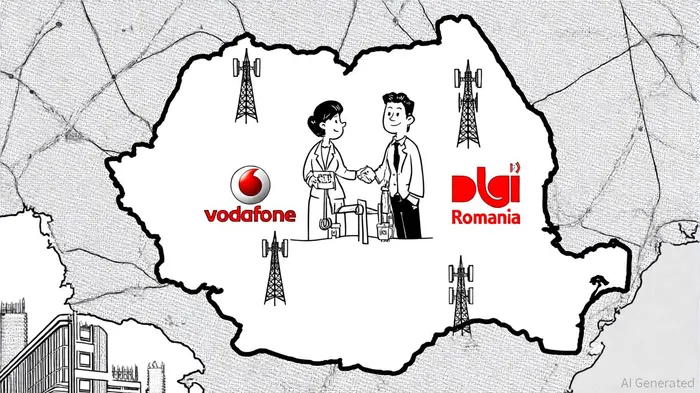
The telecommunications sector in Eastern Europe is undergoing a transformative phase, driven by the need for enhanced connectivity, digital infrastructure, and competitive market dynamics. A pivotal development in this landscape is Vodafone's acquisition of Hellenic Telecommunications' Romanian assets via Digi Romania, a deal that underscores the strategic importance of consolidation in the region. This transaction, finalized in early 2025, not only reshapes Romania's telecom ecosystem but also offers critical insights into the investment implications of such moves in a market characterized by regulatory scrutiny and evolving consumer demands.
Strategic Rationale: Market Expansion and Network Synergies
The acquisition of Telekom Romania Mobile Communications (TKRM) by VodafoneVOD-- and Digi Romania represents a calculated effort to consolidate market share and strengthen network capabilities. Vodafone Romania acquired TKRM's core assets, including postpaid customers, business clients, retail stores, and technical infrastructure, for €30 million, while Digi Romania secured the prepaid business, radio frequencies, and towers for €40 million [1]. This division of assets allows both companies to expand their customer bases and infrastructure without duplicating efforts. For Vodafone, the move enhances its position as a leading provider of postpaid and business services, while Digi gains control of the prepaid market, a segment critical to reaching price-sensitive consumers.
The strategic rationale extends beyond market share. By integrating TKRM's assets, Vodafone and Digi can accelerate investments in 5G infrastructure and digital services, aligning with broader EU goals of bridging the digital divide. As noted by Vodafone CEO Nedim Baytorun, the deal reinforces the company's commitment to “world-class connectivity and Romania's digital development” [2]. This emphasis on infrastructure modernization is particularly relevant in Eastern Europe, where telecom operators face pressure to deliver high-speed connectivity amid rising demand for data-driven services.
Regulatory Context: Balancing Competition and Investment
The Romanian Competition Council's conditional approval of the deal highlights the delicate balance between fostering consolidation and preserving competition. The regulator raised eight concerns, including potential declines in service quality, reduced infrastructure investment, and risks to the wholesale market [3]. To address these, Vodafone and Digi committed to improving mobile coverage along public roads, enhancing data quality, and providing mobile virtual network operators (MVNOs) with access to their networks at competitive rates [4]. These commitments are not merely regulatory hurdles but strategic investments in long-term market stability.
The approval process also reflects broader EU trends. As competition intensifies in the telecom sector, regulators are increasingly favoring mergers that include public benefits, such as infrastructure upgrades and fair pricing. For investors, this signals that successful consolidation in Eastern Europe will require not only financial acumen but also a willingness to align with regulatory priorities.
Investment Implications: Risk Mitigation and Long-Term Value
From an investment perspective, the Vodafone-Digi deal exemplifies how strategic consolidation can mitigate risks while unlocking value. By splitting TKRM's assets, both companies avoid overexposure to a single market segment, reducing the likelihood of antitrust challenges. Additionally, the regulatory commitments—such as continued investment in network coverage—ensure that the merged entities remain competitive in the long term. This is particularly important in Romania, where the Competition Council has emphasized maintaining high service quality post-merger [5].
The financial terms of the deal further underscore its prudence. At a total valuation of RON 100 million (approximately €21 million), the acquisition is relatively modest compared to cross-border telecom deals in Western Europe. However, its strategic value lies in the synergy benefits, including expanded customer bases and shared infrastructure costs. For instance, Vodafone's €30 million investment is expected to boost its local scale and operational efficiency, while Digi's acquisition of spectrum licenses positions it to compete more effectively in the prepaid segment [6].
Future Outlook: A Model for Eastern European Telecom Consolidation
The Vodafone-Digi acquisition sets a precedent for future consolidations in Eastern Europe, where fragmented markets and regulatory complexity often deter large-scale deals. By demonstrating that strategic partnerships can align with regulatory expectations, this transaction may encourage other operators to pursue similar synergies. Investors should monitor how Vodafone and Digi execute their post-merger commitments, particularly in areas like rural connectivity and MVNO support, as these will determine the long-term success of the deal.
Conclusion
The acquisition of Hellenic Telecommunications' Romanian assets by Vodafone and Digi Romania is a masterclass in strategic consolidation. It highlights the importance of regulatory alignment, infrastructure investment, and market-specific tailoring in Eastern Europe's telecom sector. For investors, the deal underscores that successful consolidation in this region requires not only financial resources but also a commitment to addressing public concerns and fostering competition. As the digital economy continues to evolve, such strategic moves will likely define the next phase of growth in Eastern European telecommunications.





Comentarios
Aún no hay comentarios