
The Strategic Case for South African Banks in 2025
The South African banking sector is emerging as a compelling investment opportunity in 2025, driven by a confluence of macroeconomic tailwinds, institutional credibility gains, and sector-specific resilience. While the country's broader economy faces structural headwinds-such as a fragile coalition government and external trade tensions-the financial sector is bucking the trend, supported by aggressive monetary easing, fiscal consolidation, and a landmark regulatory milestone: its exit from the . For investors, this creates a rare alignment of macro-driven sector outperformance and improving institutional trust, making South African banks a strategic bet for 2025 and beyond.
Macroeconomic Tailwinds: Rates, Inflation, and Growth
The South African Reserve Bank's (SARB) 150-basis-point rate cut since September 2024, , has been a game-changer. for the year, the central bank's accommodative stance has injected liquidity into the system, easing borrowing costs for banks and their clients. This is critical for a sector where net interest margins are often squeezed by high inflation and rigid lending rates. Meanwhile, real GDP growth, , is being propped up by the finance, real estate, and business services sectors, which . These sectors are not only stabilizing the economy but also creating a fertile environment for banks to expand credit and fee-based income.
Institutional Credibility: The FATF Delisting and Regulatory Reforms
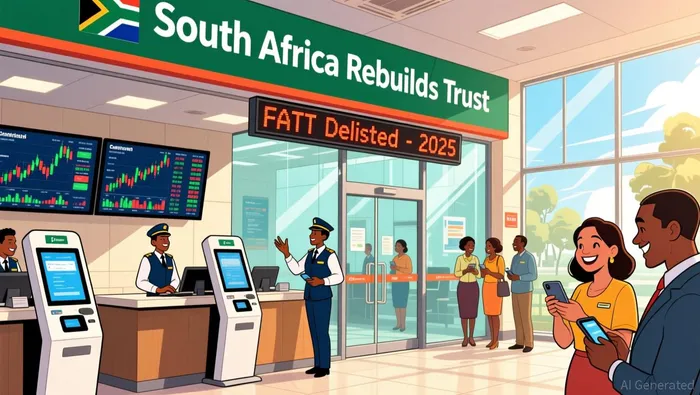 The most transformative development for South African banks in 2025 has been their country's removal from the FATF gray list in October. This followed 33 months of reforms, including stricter beneficial ownership transparency, expanded mandates for the Financial Intelligence Centre, and enhanced (AML) enforcement according to analysis. The delisting has done more than restore reputational credibility-it has unlocked practical benefits. Correspondent banking relationships, previously strained by compliance risks, are now more stable, and international transaction costs have dropped significantly. For foreign investors, this means reduced risk premia and smoother access to South Africa's financial markets. As one analyst noted, "The delisting is a " that will flow directly to banks through restored cross-border payment corridors and lower operational friction.
Sector Resilience: Profitability, Ratings, and
South African banks have demonstrated remarkable resilience despite macroeconomic headwinds. By May 2025, , a testament to disciplined risk management and cost control. This financial fortitude has not gone unnoticed: in November 2025, credit ratings for eight major banks were upgraded, according to S&P Global. These upgrades reflect improved fiscal governance, including the government's shift to a 3% inflation target and reduced bond issuance, which has stabilized investor sentiment. S&P Global's pending sovereign rating decision further underscores the sector's improving credit profile according to Reuters.
The Macro-Sector Link: Policy Reforms and Capital Inflows
The government's fiscal consolidation and structural reforms are amplifying the sector's outperformance. By anchoring inflation expectations and reducing budget deficits, policymakers have created a more predictable environment for banks to lend and invest. This is particularly important in a country where electricity and logistics bottlenecks have historically constrained growth. Meanwhile, (FDI) inflows, . Post-FATF delisting, inflows are expected to stabilize as multinational firms regain confidence in South Africa's regulatory framework. For banks, this means increased demand for corporate lending and wealth management services, especially from regional African clients seeking South Africa as a financial hub according to Moonstone.







Comentarios
Aún no hay comentarios